Reverse Osmosis vs. Water Softener vs. Carbon Filter: Which Water Treatment System Does Your Home Actually Need?




July 30, 2026
Have you ever looked at all the different water treatment systems on the market and wondered which one is actually right for your home? Many homeowners assume that reverse osmosis systems, water softeners, and carbon filters all do the same thing. In reality, each system solves a very different water quality problem.
If you choose the wrong system, you may still end up with hard water, unpleasant tastes, staining, or contaminants that were never removed in the first place. Understanding the differences can help you invest in the solution that best fits your household, your local water supply, and your long-term goals.
At Trident Plumbing & Drain, we help Arizona homeowners improve their water quality every day. Whether you’re looking for cleaner drinking water, softer water for your appliances, or a complete water treatment solution, understanding the strengths and limitations of each system is the first step toward making an informed decision.
Summary
If you’re comparing reverse osmosis vs water softener systems, the answer depends entirely on what you’re trying to solve.
- Reverse osmosis removes dissolved contaminants from drinking water.
- Water softeners remove hardness minerals that damage plumbing and appliances.
- Carbon filters improve taste, odor, and chlorine levels throughout your home or at individual fixtures.
- Many Arizona homes benefit from combining two or even all three technologies.
- Professional water testing is the best way to determine which system provides the greatest value for your home.
Why Water Quality Matters More Than Ever
Water is something every household depends on, yet many homeowners rarely think about what’s flowing through their pipes until problems begin to appear. Hard water deposits, unpleasant tastes, cloudy drinking water, soap that won’t lather properly, or appliances that fail prematurely are often signs that your water could benefit from treatment.
Municipal water systems work hard to provide safe drinking water, but they cannot eliminate every concern homeowners may have. Minerals, chlorine, sediment, naturally occurring contaminants, and aging plumbing infrastructure can all affect water quality by the time it reaches your faucet.
Arizona homeowners face an additional challenge because much of the state’s water supply contains extremely high mineral concentrations. These minerals, primarily calcium and magnesium, create hard water that leaves scale buildup inside plumbing systems, water heaters, faucets, showerheads, and household appliances.
Installing the right water treatment system can improve drinking water quality, extend the life of your plumbing, reduce maintenance costs, and even improve your daily comfort.
If you’re considering upgrading your home’s water quality, exploring professional water filtration systems is an excellent place to start.
Understanding the Three Most Common Water Treatment Systems
Many homeowners compare reverse osmosis systems, water softeners, and carbon filters because all three improve water quality in different ways. However, they should not be viewed as competing products. Instead, think of them as specialized tools designed to solve different problems.
Here’s a quick overview.
Reverse Osmosis
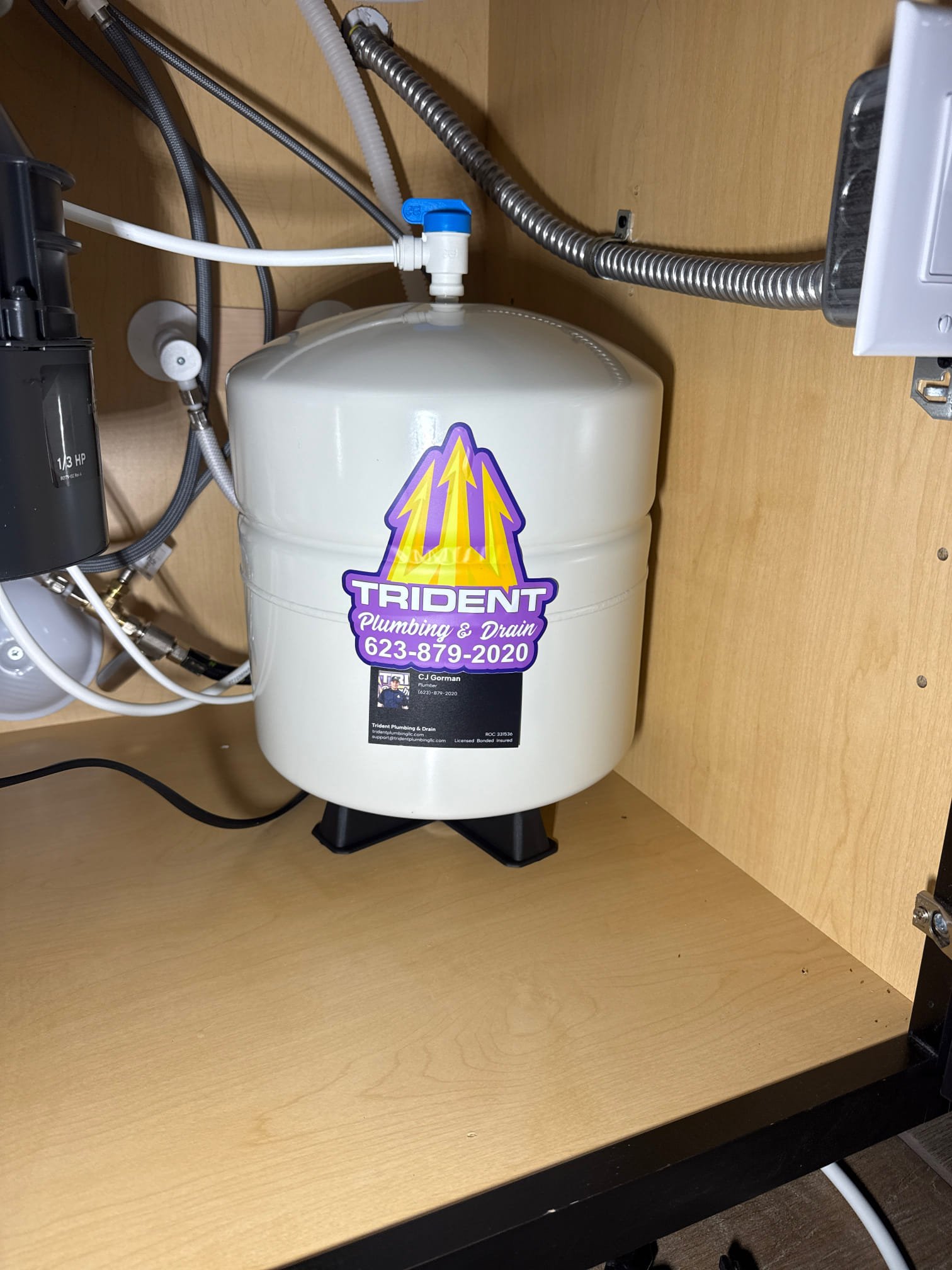
A reverse osmosis (RO) system is designed to produce exceptionally clean drinking water. Water passes through several stages of filtration before reaching a semi-permeable membrane capable of removing many dissolved contaminants, including:
- Lead
- Arsenic
- Nitrates
- Fluoride
- Sodium
- PFAS (many models)
- Total dissolved solids (TDS)
Reverse osmosis systems are most commonly installed beneath kitchen sinks to provide purified drinking and cooking water through a dedicated faucet.
If your primary concern is the quality of the water your family drinks every day, a professionally installed reverse osmosis system is often one of the most effective solutions available.
Water Softeners
A water softener addresses an entirely different issue.
Rather than filtering contaminants, a water softener removes calcium and magnesium minerals that cause hard water. It accomplishes this through an ion exchange process that replaces hardness minerals with sodium or potassium ions.
Benefits include:
- Less scale buildup inside pipes
- Longer appliance lifespan
- Cleaner dishes
- Softer laundry
- Better soap performance
- Reduced mineral staining
- Improved efficiency for water heaters
In Arizona, where hard water is extremely common, installing a water softener can significantly reduce plumbing maintenance and improve overall water quality throughout the home.
Carbon Filters
Carbon filtration focuses primarily on improving water taste, smell, and appearance.
Activated carbon captures chlorine, volatile organic compounds (VOCs), and numerous chemicals responsible for unpleasant odors and tastes.
Carbon filters are excellent for:
- Removing chlorine taste
- Eliminating odors
- Improving drinking water flavor
- Reducing certain organic compounds
- Protecting reverse osmosis membranes by removing chlorine before water reaches the RO system
Unlike reverse osmosis, however, carbon filters generally do not remove hardness minerals or many dissolved contaminants.
Many homeowners choose carbon filtration systems to improve the overall quality of household water while pairing them with other treatment technologies for more comprehensive protection.
Reverse Osmosis vs Water Softener: What’s the Biggest Difference?
This is the comparison homeowners ask about most often, and it’s easy to understand why.
Although both systems improve water quality, they solve completely different problems.
A reverse osmosis system is designed to make drinking water cleaner by removing dissolved contaminants that may affect health, taste, or water purity.
A water softener, on the other hand, focuses on protecting your plumbing system by removing hardness minerals that cause scale buildup and reduce appliance efficiency.
One system filters contaminants.
The other removes hardness.
Because their purposes are so different, many homeowners discover that choosing between them isn’t necessary at all. Instead, the best long-term solution often involves installing both systems together, allowing each to do what it does best.
Reverse Osmosis vs. Water Softener vs. Carbon Filter: Side-by-Side Comparison
Choosing the right water treatment system becomes much easier once you compare what each option is designed to remove, where it is installed, and how it affects the water throughout your home.
A reverse osmosis system is typically used for drinking and cooking water. A water softener treats the entire home’s water supply to control hardness. A carbon filter can be installed at a single faucet or at the point where water enters the home, depending on the system.
The most important question is not which system is best overall. The better question is which water problem you need to solve.
Water Treatment System Comparison Table
| Feature | Reverse Osmosis | Water Softener | Carbon Filter |
| Primary purpose | Removes dissolved contaminants from drinking water | Removes calcium and magnesium that cause hardness | Reduces chlorine, odors, and unpleasant tastes |
| Common installation | Under the kitchen sink | Main water supply line | Under a sink or on the main water line |
| Treats the entire home | Usually no | Yes | Yes, if installed as a whole-house system |
| Removes hardness minerals | Some reduction, but not designed for whole-home softening | Yes | No |
| Reduces chlorine | Usually, through a carbon prefilter | No | Yes |
| Reduces total dissolved solids | Yes | No | Generally no |
| Helps prevent scale buildup | Only at the treated fixture | Yes | No |
| Improves drinking water taste | Yes | Sometimes indirectly | Yes |
| Protects plumbing and appliances | Limited | Yes | Can reduce chlorine exposure, but does not prevent hard-water scale |
| Best for | Purified drinking and cooking water | Hard-water protection throughout the home | Better taste, odor, and chlorine reduction |
What Reverse Osmosis Systems Remove
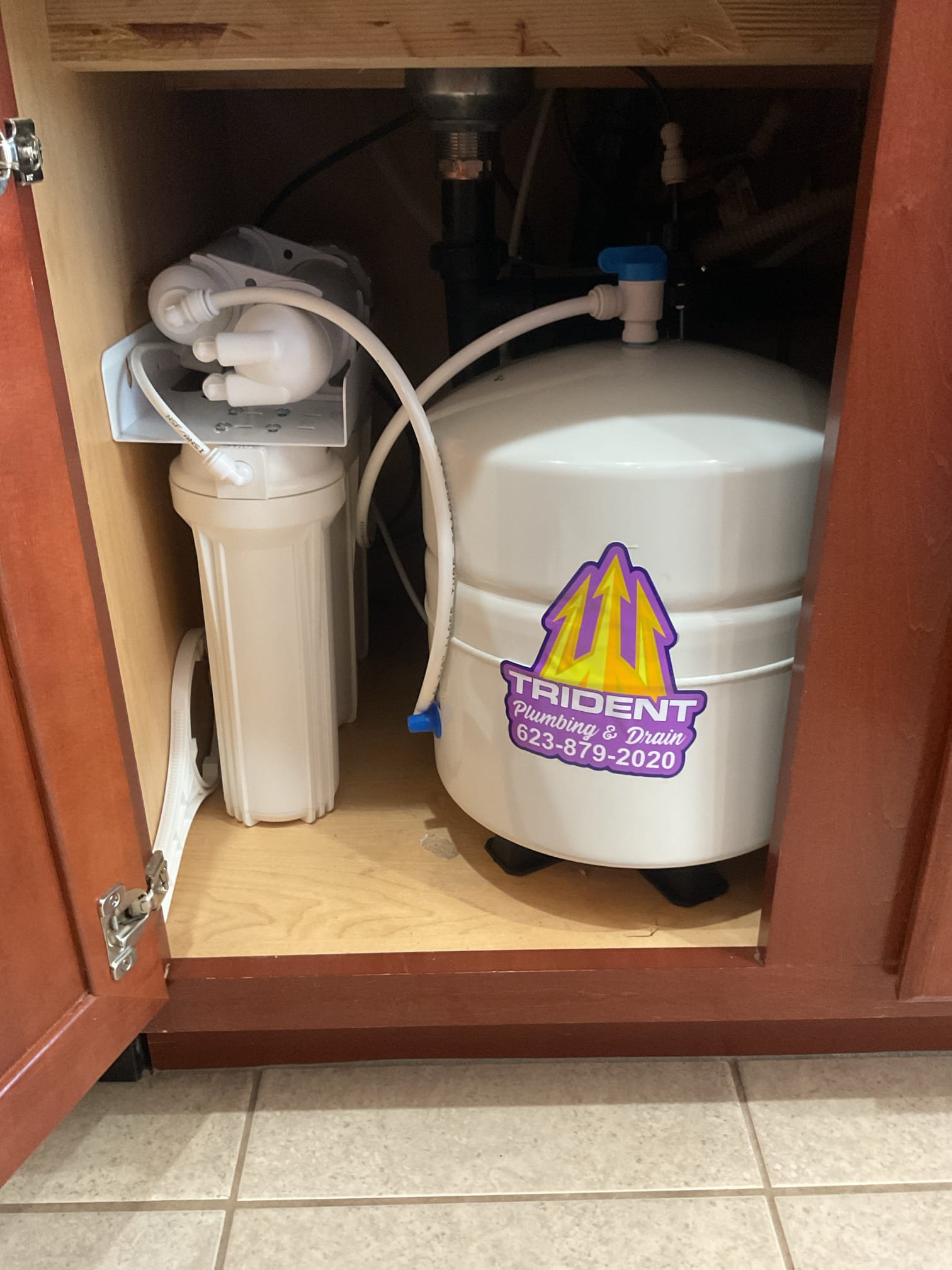
Reverse osmosis uses water pressure to push water through a specialized membrane with extremely small pores. Many contaminants and dissolved substances are unable to pass through the membrane, while treated water continues to a storage tank and dedicated faucet.
Most residential reverse osmosis systems also include sediment and carbon filters. These additional stages remove larger particles and chlorine before the water reaches the membrane.
Depending on the model and its certifications, an RO system may reduce:
- Lead
- Arsenic
- Nitrates and nitrites
- Fluoride
- Sodium
- Copper
- Chromium
- Certain PFAS compounds
- Total dissolved solids
- Unpleasant tastes and odors
Performance varies between systems, so homeowners should review the manufacturer’s contaminant reduction claims and independent certifications before selecting a unit.
The Main Advantages of Reverse Osmosis
The greatest benefit of reverse osmosis is the quality of the water it produces. RO systems are especially useful for homeowners who want cleaner water for drinking, cooking, making coffee, preparing baby formula, or filling reusable bottles.
Reverse osmosis can also reduce dependence on bottled water. This may lower household expenses and decrease the amount of plastic waste your family produces.
Another advantage is that the system treats water at the point where your household consumes it. Rather than treating every gallon used for showering, laundry, or landscaping, an under-sink RO system focuses on drinking and cooking water.
The Limitations of Reverse Osmosis
Reverse osmosis is not usually the best answer for hard water throughout the home. Although the membrane may remove some calcium and magnesium from the water it processes, a standard under-sink system does nothing to prevent scale buildup in showers, appliances, or the rest of your plumbing.
RO systems also require periodic filter and membrane replacement. They produce wastewater during filtration, although modern systems are often more efficient than older models.
Homes with extremely hard water may benefit from installing a softener before the reverse osmosis system. Softer incoming water can reduce mineral scaling on the RO membrane and may help extend its useful life.
What Water Softeners Remove
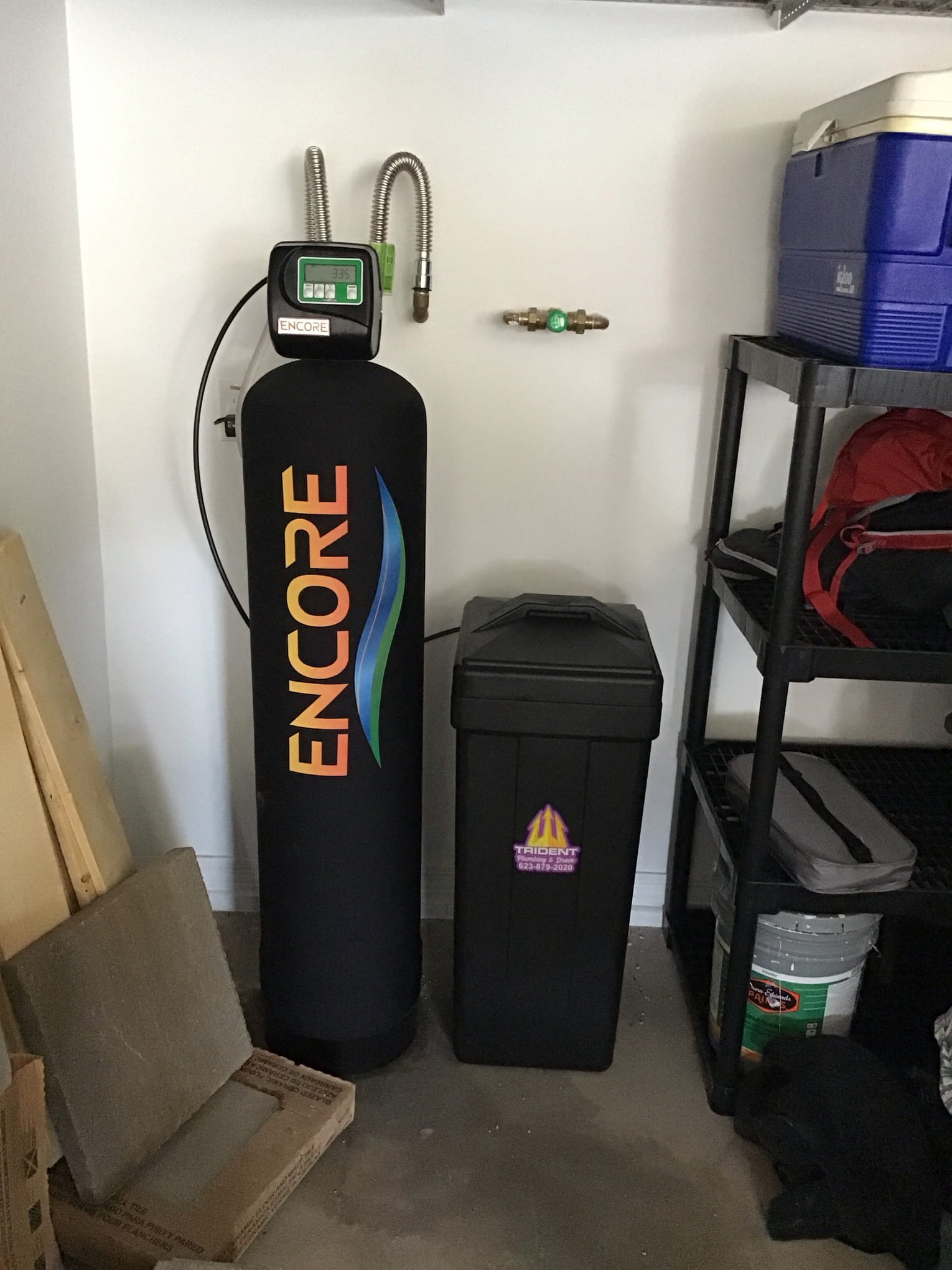
Water softeners target calcium and magnesium, the two minerals most responsible for hard water. Inside the softener tank, resin beads attract these hardness minerals and exchange them for sodium or potassium ions.
The system periodically regenerates by flushing the collected minerals from the resin using a salt solution. After regeneration, the resin is ready to soften additional water.
A softener does not function like a conventional filter. It is not designed to remove chlorine, sediment, lead, microorganisms, or most other contaminants. Its purpose is hardness control.
Signs Your Home May Need a Water Softener
You may have hard water if you notice:
- White crust around faucets and showerheads
- Cloudy spots on dishes and glassware
- Soap that does not lather well
- Dry-feeling skin after bathing
- Stiff or dull laundry
- Mineral buildup inside kettles or coffee makers
- Frequent water heater maintenance
- Reduced water flow through scaled fixtures
Hard water can create problems that extend well beyond appearance. Scale may collect inside pipes, valves, washing machines, dishwashers, and water heaters. Over time, this buildup can reduce efficiency and contribute to premature equipment failure.
Homeowners dealing with mineral buildup in a tank or tankless unit should also consider professional water heater maintenance to help restore performance and identify developing problems.
The Main Advantages of Water Softeners
A whole-home softener protects the entire plumbing system rather than a single faucet. Every shower, sink, appliance, and hot-water fixture receives softened water.
This can result in:
- Less scale on fixtures
- Cleaner-looking dishes
- More effective soap and detergent use
- Reduced mineral deposits in appliances
- Softer-feeling laundry
- Easier bathroom and kitchen cleaning
- Better long-term plumbing protection
Because mineral scale can reduce heat-transfer efficiency, softened water may also help water heaters operate more effectively.
The Limitations of Water Softeners
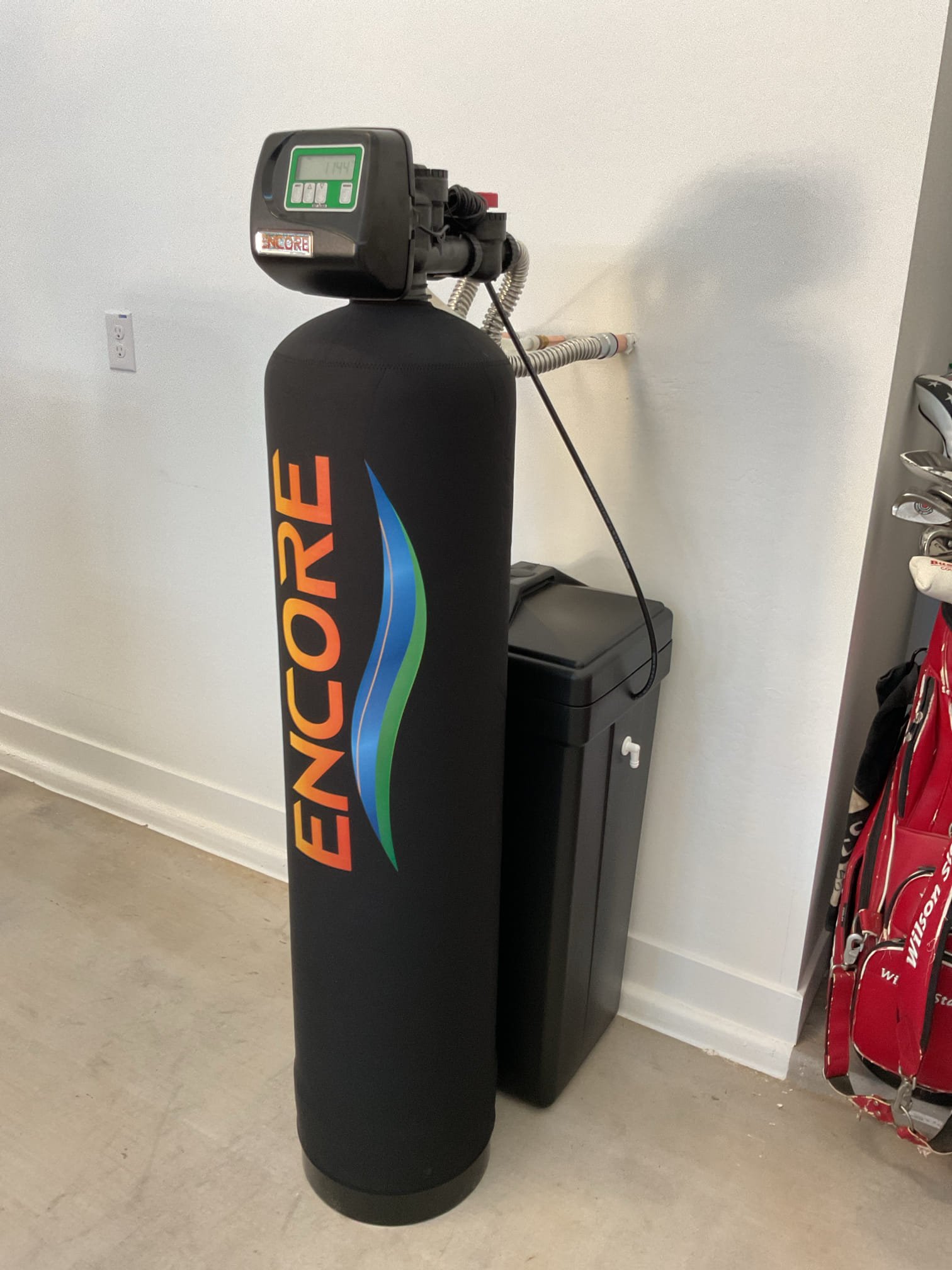
Water softeners do not purify drinking water. They address hardness, but they do not remove the broad range of dissolved contaminants that a reverse osmosis system can reduce.
Traditional salt-based softeners also require ongoing salt refills and occasional maintenance. The amount of sodium added to the water depends on the original hardness level and the system’s settings.
Homeowners who are concerned about drinking-water sodium can pair a softener with reverse osmosis at the kitchen sink. The softener protects the home, while the RO system reduces sodium and other dissolved substances from drinking water.
What Carbon Filters Remove
Activated carbon is a porous material with a large surface area that attracts and holds certain chemicals through a process called adsorption. Carbon filters are commonly used to reduce chlorine, tastes, odors, and some organic compounds.
They are available in several forms, including:
- Faucet-mounted filters
- Refrigerator filters
- Under-sink systems
- Carbon stages inside reverse osmosis units
- Whole-house carbon filtration systems
A whole-house carbon filter treats water before it reaches the home’s fixtures. This can reduce chlorine exposure in drinking water, showers, laundry, and household plumbing.
The Main Advantages of Carbon Filtration
Carbon filtration can make municipal water taste and smell better. This is especially useful for households that dislike noticeable chlorine odors or flavors.
A whole-house system can also improve the experience of bathing and showering by reducing chlorine throughout the home. Carbon filters do not require salt, and they typically operate without electricity.
When installed ahead of reverse osmosis, carbon filtration protects the RO membrane from chlorine, which can damage certain membrane materials.
The Limitations of Carbon Filters
Carbon filters do not soften water. If your home has scale buildup, spotted dishes, or mineral deposits, a carbon filter alone will not solve those problems.
Carbon also does not reliably remove all dissolved minerals, salts, nitrates, fluoride, or microorganisms. Its performance depends on the type of carbon used, filter size, flow rate, contact time, and system certifications.
Filters must be replaced on schedule. Once the carbon reaches capacity, its ability to capture additional chemicals declines.
Do You Need More Than One Water Treatment System?
For many households, the most effective answer is a combination of technologies.
A homeowner may install:
- A water softener to remove hardness throughout the home.
- A whole-house carbon filter to reduce chlorine, odors, and certain chemicals.
- A reverse osmosis system at the kitchen sink for highly filtered drinking water.
This approach allows each system to perform the task it was designed to handle.
It can also provide layered protection. The carbon filter reduces chlorine, the softener controls scale, and the reverse osmosis membrane addresses dissolved contaminants in drinking water.
The right order and configuration depend on your water chemistry, household size, plumbing layout, and treatment goals. A professional assessment can prevent unnecessary equipment purchases and ensure the systems work together correctly.
Routine plumbing maintenance can also help identify mineral buildup, corrosion, pressure problems, and other conditions that may influence your water treatment decision.
How to Choose the Right Water Treatment System for Your Home
The right water treatment system depends on what is actually in your water and which problems affect your household most. Choosing based only on a product name or a general recommendation can lead to unnecessary costs and disappointing results.
Before deciding between reverse osmosis, a water softener, or a carbon filter, consider the following questions.
What Problem Are You Trying to Solve?
Start with the symptoms you can see, taste, or smell.
Choose reverse osmosis if your main concern is:
- Drinking water purity
- High total dissolved solids
- Sodium in drinking water
- Certain dissolved contaminants
- Reducing bottled water use
- Improving water used for cooking and beverages
Choose a water softener if your main concern is:
- White scale on fixtures
- Hard-water spots on dishes
- Soap that does not lather well
- Dry-feeling skin or hair
- Mineral buildup in appliances
- Water heater efficiency
- Long-term plumbing protection
Choose carbon filtration if your main concern is:
- Chlorine taste
- Chemical odors
- Unpleasant drinking water flavor
- Improving water throughout the home
- Protecting an RO membrane from chlorine
If your household experiences more than one of these problems, a combined system may be the most practical choice.
Is the Problem at One Faucet or Throughout the Home?
This distinction can help you decide between point-of-use and whole-house treatment.
A point-of-use system treats water at one location, usually the kitchen sink. Reverse osmosis is commonly installed this way because households generally need highly filtered water for drinking and cooking rather than for every shower, toilet, or outdoor faucet.
A point-of-entry system treats water as it enters the home. Water softeners and whole-house carbon filters are usually installed on the main supply line because hardness and chlorine can affect plumbing fixtures, appliances, bathing water, and laundry throughout the property.
Homeowners sometimes install a point-of-use filter when the actual problem affects the entire house. For example, an under-sink carbon filter may improve the taste of kitchen water, but it will not reduce chlorine in showers or elsewhere. Similarly, an RO system may provide excellent drinking water while hard-water scale continues to develop inside the plumbing.
What Does Your Water Test Show?
Visible symptoms can be useful, but water testing provides a more reliable basis for selecting equipment.
A professional water test may measure:
- Water hardness
- Total dissolved solids
- Chlorine levels
- Iron
- Manganese
- pH
- Nitrates
- Arsenic
- Lead
- Other contaminants relevant to the local water supply
Testing is especially important for homes that rely on private wells. Municipal water customers can also review their local water quality report, but conditions inside the home’s plumbing may still affect the water at the tap.
A water treatment professional can use the test results to recommend the correct system size, filter media, flow rate, and maintenance schedule.
Common Water Treatment Mistakes to Avoid
Even a high-quality system can underperform if it is selected, installed, or maintained incorrectly. Avoiding the following mistakes can help you get better results from your investment.
Assuming One System Removes Everything
No single residential treatment system solves every water quality problem.
A water softener removes hardness minerals but does not provide comprehensive contaminant filtration. A carbon filter improves taste and reduces chlorine but does not remove hardness. Reverse osmosis removes many dissolved substances from drinking water but usually does not treat the entire home.
The best setup is based on the specific contaminants and conditions found in your water.
Buying Equipment Without Testing the Water
Water treatment systems should be sized and configured according to water chemistry and household demand. Purchasing equipment without testing may lead to overspending, poor performance, or a system that solves the wrong problem.
For example, a homeowner may buy a carbon filter because the water tastes unpleasant, only to discover that high mineral content is also damaging the water heater and fixtures.
Choosing the Wrong System Size
Whole-home equipment must support the property’s peak flow rate. An undersized filter or softener may create pressure loss, provide incomplete treatment, or require excessive maintenance.
Household size, number of bathrooms, fixture demand, water hardness, and daily usage all influence system sizing.
Ignoring Ongoing Maintenance
Every water treatment system requires maintenance.
Reverse osmosis systems need periodic prefilter, postfilter, and membrane replacement. Water softeners need salt replenishment and may require resin or control valve service over time. Carbon filters need media or cartridge replacement before they reach capacity.
Delaying maintenance can reduce water quality and system efficiency. It may also allow trapped contaminants or mineral deposits to create additional problems.
Installing Systems in the Wrong Order
When several treatment systems are combined, their installation order matters.
A common configuration may include sediment filtration first, followed by carbon filtration, water softening, and point-of-use reverse osmosis. However, the correct sequence depends on the water source and equipment.
Professional installation helps ensure that one system protects and supports the next rather than interfering with it.
Reverse Osmosis vs Water Softener for Arizona Homes
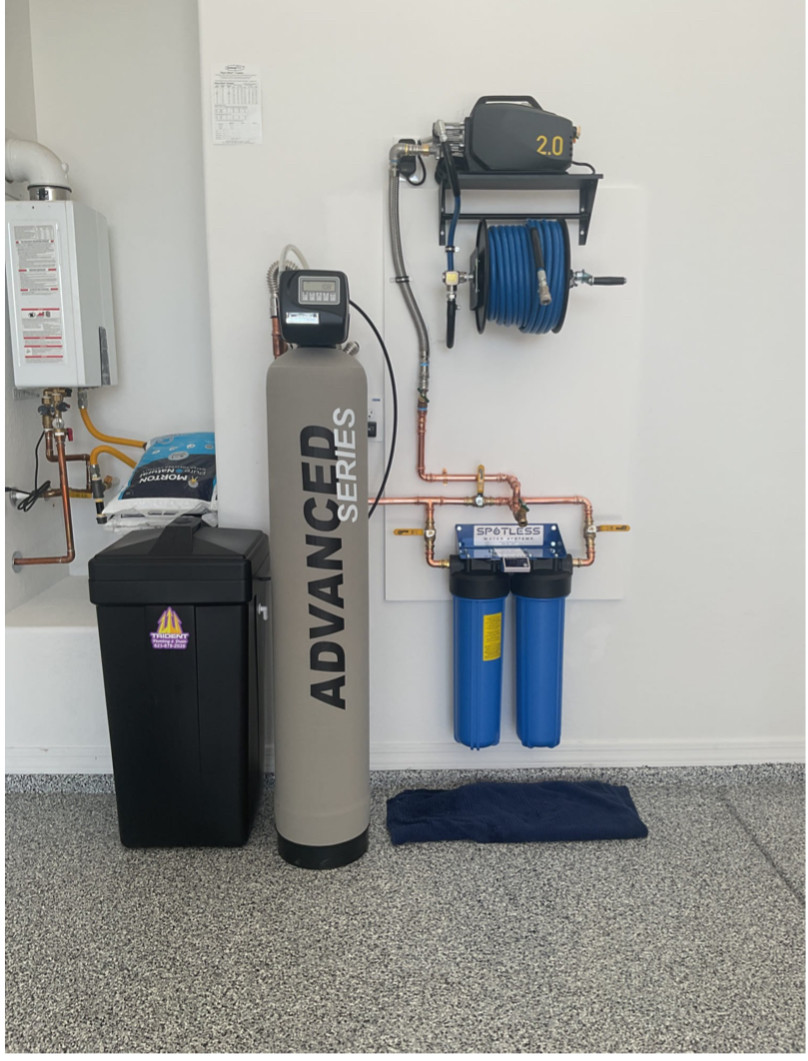
Arizona’s water conditions make the reverse osmosis vs water softener question especially important.
Hard water is widespread across the state, so many homeowners experience scale buildup on faucets, glass shower doors, appliances, and water heaters. A water softener can address these household-wide effects by removing the calcium and magnesium responsible for hardness.
At the same time, Arizona water may contain high levels of dissolved minerals that affect drinking water taste. A reverse osmosis system can reduce total dissolved solids and provide cleaner water at the kitchen sink.
For many Arizona households, these systems are complementary rather than interchangeable.
The water softener protects the plumbing system, fixtures, and appliances. The reverse osmosis unit improves water used for drinking, cooking, and beverages. A carbon filter may also be added to reduce chlorine and improve water quality throughout the home.
How Water Treatment Can Help Protect Your Plumbing
Water treatment is often discussed in terms of taste and comfort, but it can also support the health of your plumbing system.
Hard-water minerals may accumulate inside:
- Water supply lines
- Faucet aerators
- Showerheads
- Washing machines
- Dishwashers
- Water heater tanks
- Tankless water heater heat exchangers
- Valves and plumbing fixtures
As deposits build, they can restrict flow, reduce efficiency, and place additional stress on equipment.
A whole-home water softener can reduce the rate of scale formation. This may make fixtures easier to clean and help appliances operate more effectively.
Carbon filtration may also benefit plumbing components by reducing chlorine exposure. Chlorine is useful for municipal disinfection, but extended exposure may affect some rubber seals, gaskets, and plumbing materials over time.
If mineral buildup or corrosion has already contributed to pipe damage, Trident Plumbing & Drain also offers professional piping and repiping services and water line repair for more extensive plumbing concerns.
Frequently Asked Questions About Reverse Osmosis, Water Softeners, and Carbon Filters
Is reverse osmosis better than a water softener?
Neither system is universally better because they perform different functions. Reverse osmosis removes many dissolved contaminants from drinking water, while a water softener removes calcium and magnesium throughout the home. If you have both drinking-water concerns and hard water, you may benefit from installing both.
Does reverse osmosis soften water?
Reverse osmosis may remove calcium and magnesium from the water that passes through the membrane, but a typical under-sink RO system does not soften water throughout the house. It will not prevent scale in showers, water heaters, washing machines, or plumbing lines.
Can a carbon filter replace a water softener?
No. Carbon filters reduce chlorine, odors, and certain organic compounds, but they do not remove the minerals responsible for hard water. A home with scale buildup will still need a softener or another hardness treatment method.
Do I need reverse osmosis if I already have a water softener?
A water softener can improve whole-home water performance, but it does not remove many dissolved contaminants. Reverse osmosis may still be useful if you want highly filtered drinking and cooking water or if you want to reduce sodium added during softening.
Can I use a water softener and carbon filter together?
Yes. These systems are often paired because they address different problems. The carbon filter reduces chlorine and odors, while the softener removes hardness minerals. Correct installation order depends on the equipment and water chemistry.
Is whole-house reverse osmosis available?
Whole-house reverse osmosis systems are available, but they are more complex and expensive than under-sink units. They may require pretreatment, large storage tanks, repressurization pumps, and specialized maintenance. Most municipal water households do not need whole-house RO unless testing identifies a specific reason.
How often should reverse osmosis filters be replaced?
Replacement schedules vary by system and water quality. Prefilters and postfilters may need replacement every six to twelve months, while RO membranes often last two to five years. Always follow the manufacturer’s instructions and monitor changes in taste, pressure, and water production.
How long does a water softener last?
A properly maintained water softener may last 10 to 15 years or longer. Lifespan depends on water quality, system size, usage, salt maintenance, and the condition of the resin and control valve.
How often should a carbon filter be changed?
The replacement schedule depends on filter capacity, water usage, chlorine concentration, and the type of carbon system. Small cartridges may need replacement every few months, while whole-house carbon media may last several years. Testing and manufacturer guidance are essential.
Build the Right Water Treatment Plan for Your Home

The reverse osmosis vs water softener comparison does not have a single answer that applies to every household. Reverse osmosis is designed to produce cleaner drinking water. A water softener protects the entire home from hardness minerals. Carbon filtration reduces chlorine, odors, and unwanted tastes.
Your home may need one system, or it may benefit from a carefully designed combination. The best decision starts with understanding your water quality, identifying your priorities, and selecting equipment that is properly sized for your household.
Trident Plumbing & Drain provides professional guidance and installation for water filtration systems, reverse osmosis units, water softeners, and carbon filters. Contact our team to schedule a water quality assessment and find the right treatment solution for your home.
by Internal Admin