Glendale, Arizona

Water Filtration & Softening in Glendale, AZ

Water treatment starts with what you want to change, whether that is taste, odor or mineral buildup on fixtures. Trident installs and services filtration and softening systems for Glendale homes and businesses.

Request service online

Woman, Veteran, & Family Owned

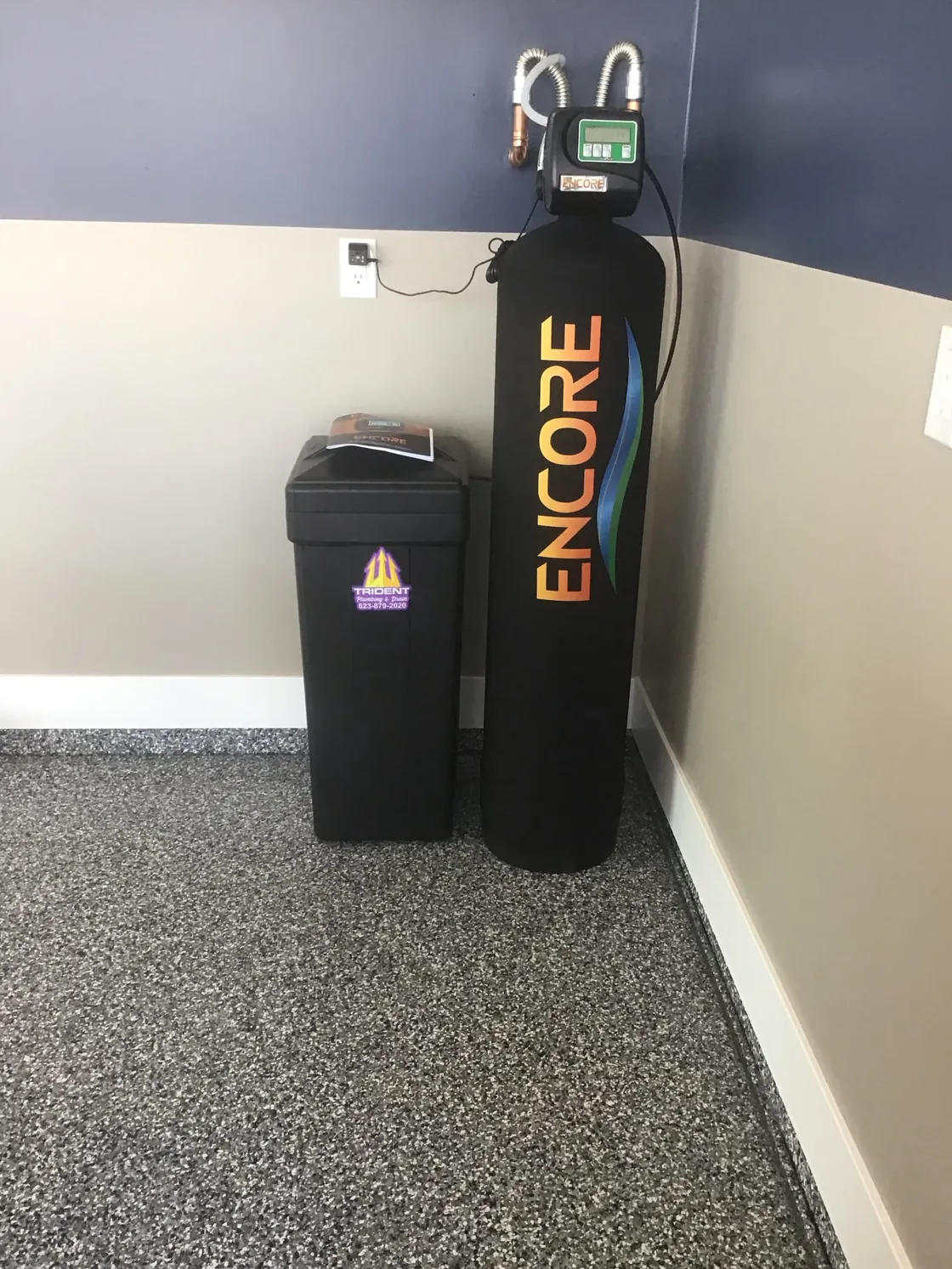
An Encore Reveal water treatment tank and brine tank in a garage
Trident at workA water treatment tank and brine tank in a garage.

Licensed in ArizonaROC 331536

Open 24/7Call when you need us

Peoria officeServing Glendale

Hear from our customersRead their Trident stories

Installation and service

Water Filtration & Softening

Water filtration and softening systems in Glendale, AZ

Trident Plumbing & Drain installs, repairs and maintains water softeners, reverse osmosis systems and carbon filtration systems. The right system depends on the specific impurities in your water and what you want the treatment to accomplish.

Let our Peoria office know what prompted the question: scale on fixtures, spots on dishes, a taste or odor, or a wish to rely less on bottled water. If you have a water test result or an existing system, mention it so the conversation starts from facts.

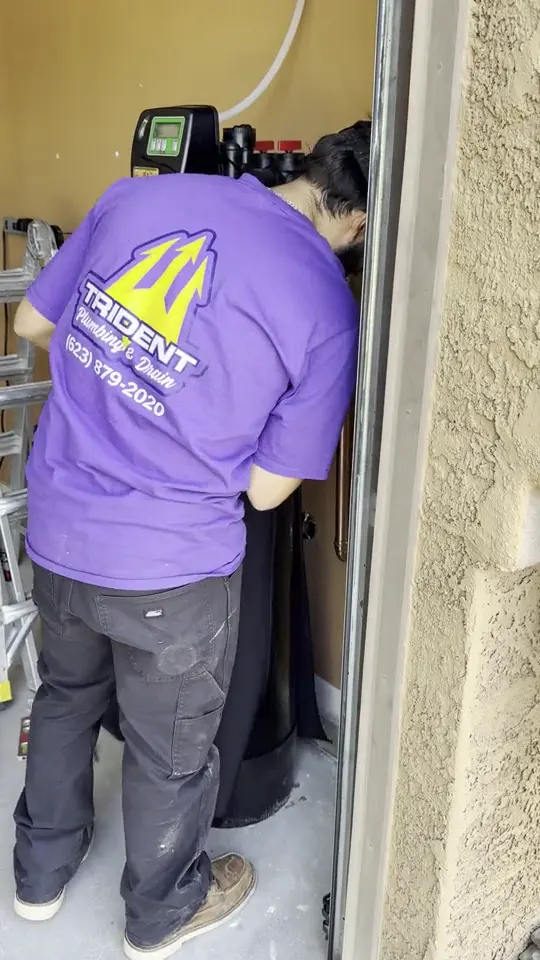
On the job: water treatment equipment. Silent footage from Trident's project library.

Start with the goal

What water treatment can help with
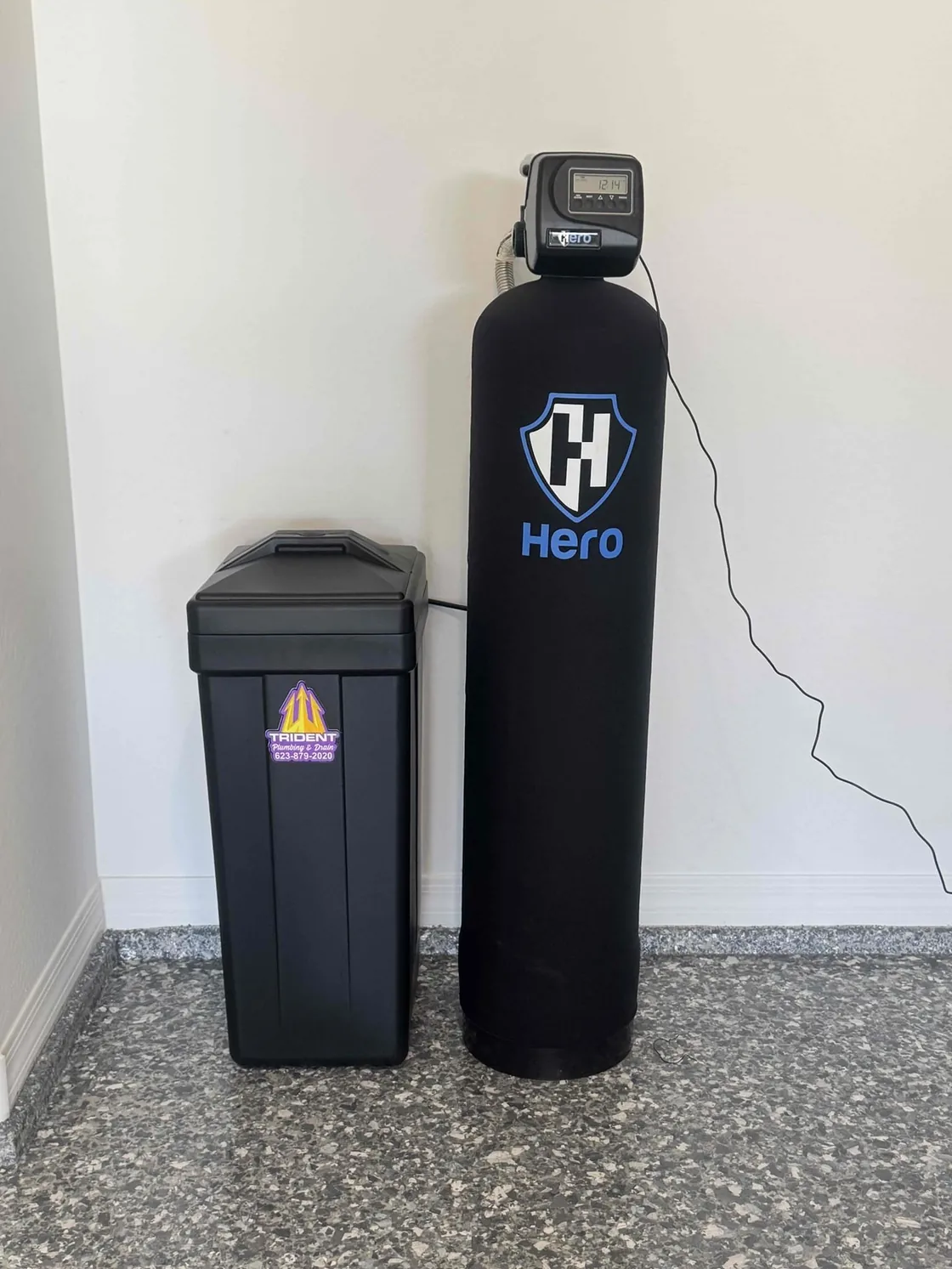
A Hero water treatment system installed beside its salt tank
Whole-home treatment equipment from Trident's project library.

Treatment systems can reduce the minerals that leave scale in pipes, fixtures and water-using appliances, and they can improve the taste, odor and clarity of drinking water. Treated water at the tap can also reduce how much bottled water a household buys.

Different concerns call for different equipment. Mineral buildup points toward softening, while taste and odor complaints point toward filtration, and some properties combine both. Describe the specific problem rather than asking for a system by name, and the options can be matched to it.
For mineral buildup

How water softeners work

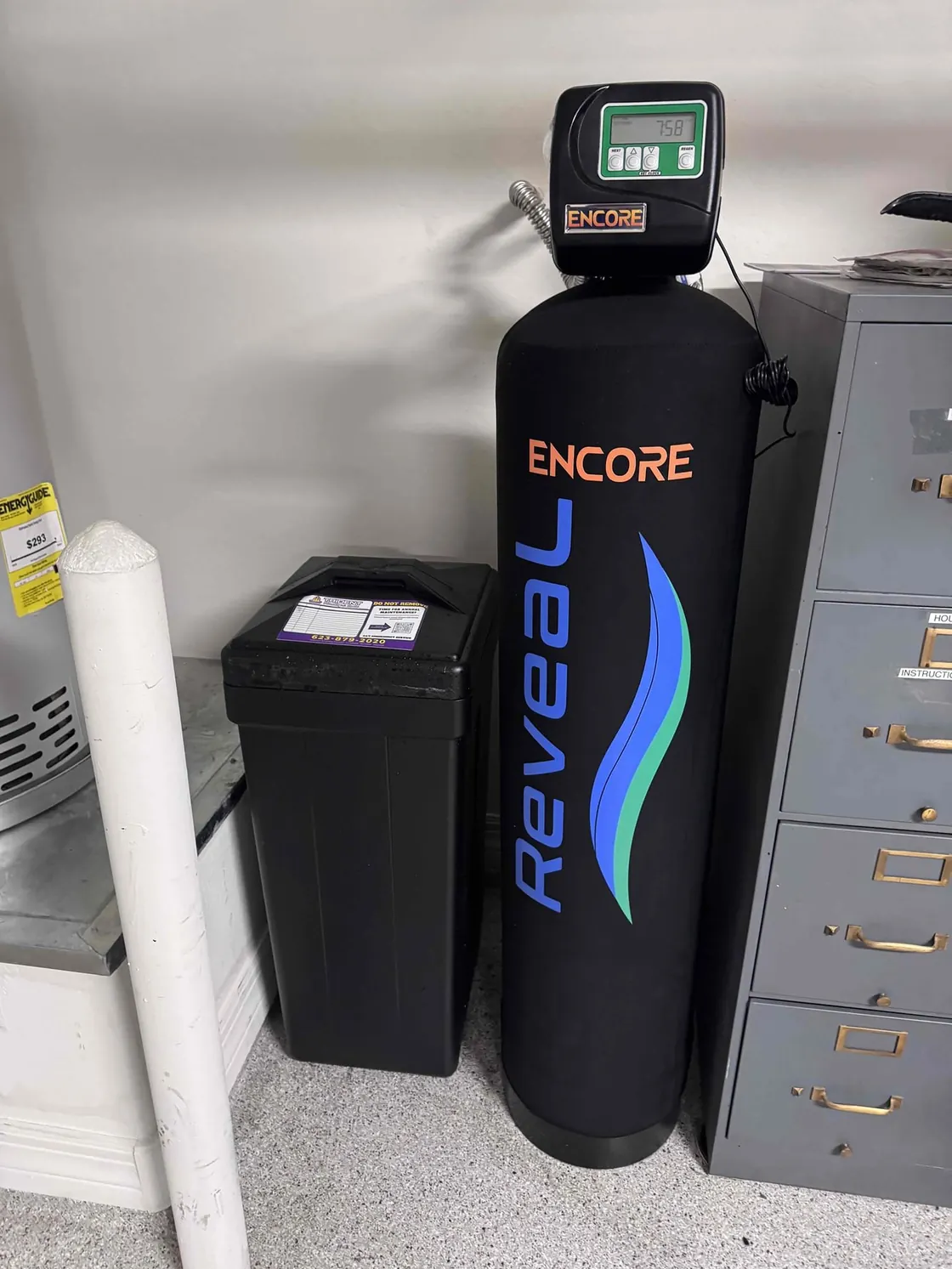
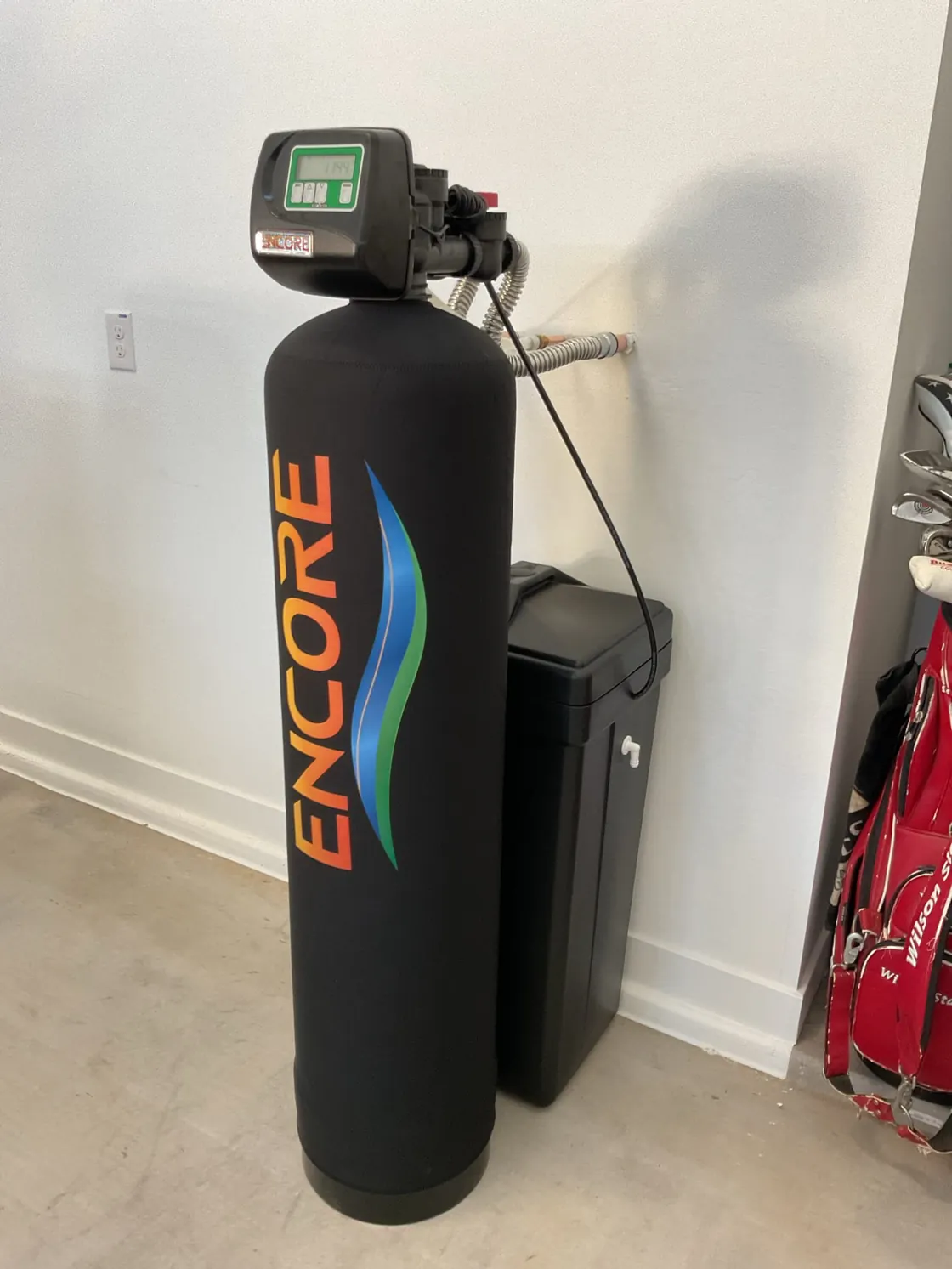
An Encore water treatment tank and its connections
An installed Encore water treatment system.

Water softeners reduce calcium and magnesium, the minerals that make water hard. They typically work by ion exchange, swapping those minerals for sodium as water passes through the unit. Softer water helps limit scale in pipes and appliances, which can help them last longer.

Softened water also tends to need less soap and detergent for cleaning. Because a softener treats the water for the whole home, its location, the plumbing connections and its ongoing upkeep are all part of the installation discussion.

For drinking water

Reverse osmosis systems

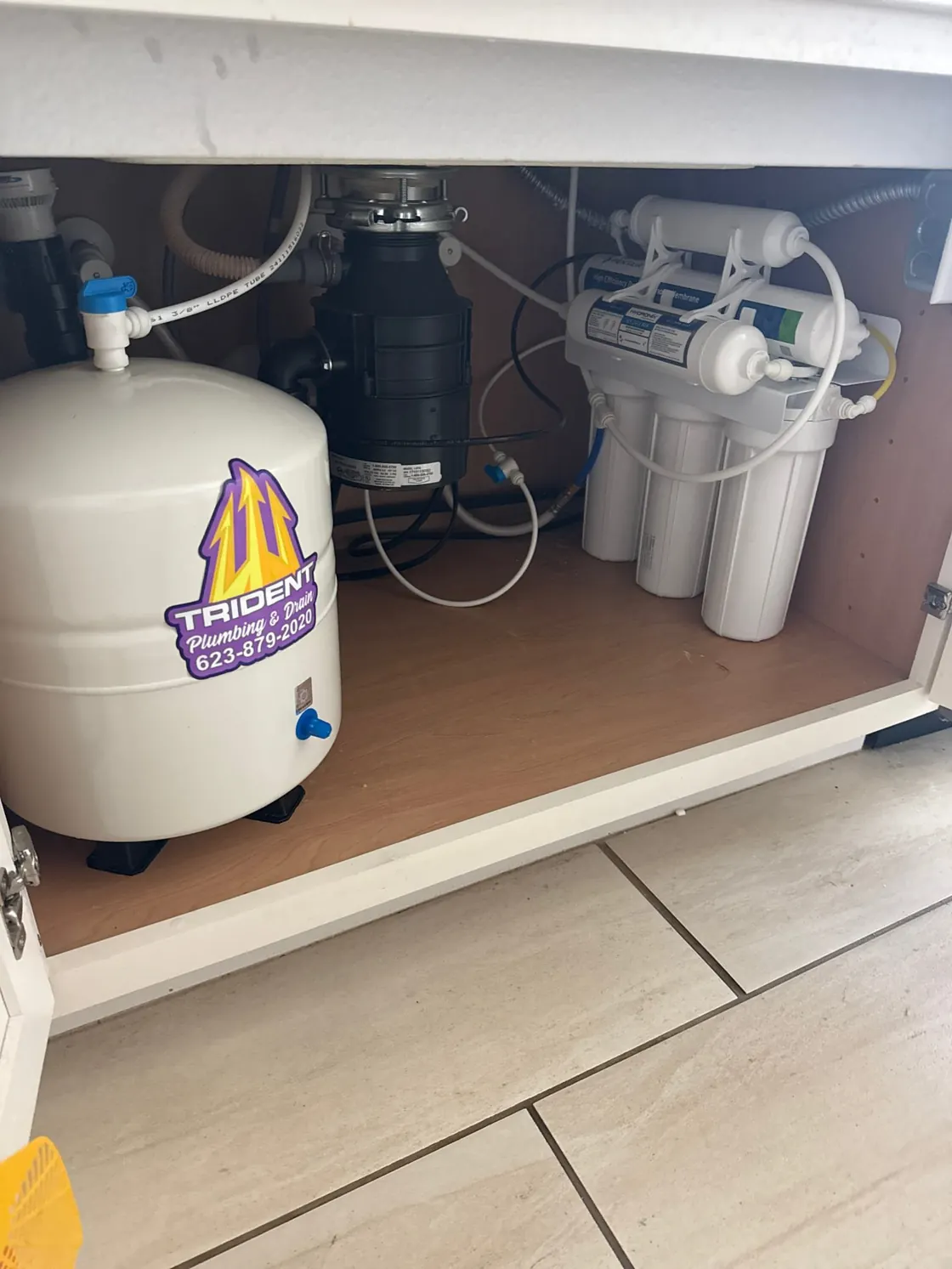
A reverse osmosis system and storage tank beside a garbage disposal in a sink cabinet
A drinking-water system installed beneath the sink.

Reverse osmosis systems push water through a semi-permeable membrane that removes a wide range of contaminants, including dissolved solids. They are typically used to produce drinking water with improved taste, odor and clarity.

Because the system is usually installed to serve a particular tap, discuss where you want treated water and how much you expect to use. Ask about the filter and membrane upkeep the system will need so maintenance is planned from the start.

For taste and odor

Carbon filtration systems

An Encore treatment tank and brine tank installed in a closet
Water treatment equipment installed in a utility closet.

Activated carbon filters use a porous form of carbon to trap contaminants. They are commonly used to reduce chlorine, volatile organic compounds and sediment, which can improve the taste and odor of water. Carbon filtration can serve the whole house or a single point of use.

Ask which contaminants the proposed filter is designed to reduce and how often the media needs replacing. If you also have scale concerns, discuss whether carbon filtration should be paired with a softener.

Start with the numbers

Match the system to the City's water report

Glendale's 2025 water quality report gives a clear starting point. Hardness averaged 13.8 grains per gallon, or 237 mg/L. Sodium averaged 120 mg/L, sulfate 153, chloride 158 and total dissolved solids 548. The federal limit for arsenic is 10 parts per billion; the City's samples averaged 3.0 and peaked at 7.5. The figures are ranges and averages across the City's samples, and the report also notes that health standards do not regulate taste, odor or hardness.

Each concern points to different equipment. A softener targets the calcium and magnesium behind scale. Reverse osmosis at the kitchen tap reduces dissolved solids. Carbon filtration handles taste and odor, from the chlorine dioxide the City disinfects with to the musty note canal algae can bring in late summer and fall. Whatever you choose, the report stresses that home treatment devices need regular maintenance, with filter cartridges changed as the manufacturer advises.

Equipment and upkeep

What goes into a water treatment quote

Treatment pricing depends on how much water you treat and how the system connects to your plumbing.

Trident currently offers 20% off a new water softener or filtration system. One per household. Offers can't be combined; some restrictions apply. Our salt service membership adds softener salt every 6 to 8 weeks, and the reverse osmosis plan covers annual filter changes for five years.

  • Whole-home softening or filtration, or treatment at a single tap.
  • Softener capacity sized for household use and hardness up to 18.5 grains.
  • An existing softener loop, or new plumbing to create one.
  • Drain and power at the install location.
  • Ongoing salt, filters and membranes.

Inside the 2025 report

What the City's report says about your water

Figures from the City of Glendale's 2025 water quality report, and what each one points to when choosing treatment.

Hardness range across the City's 2025 samples
5.4–18.5 gr

Samples ranged from 5.4 to 18.5 grains per gallon, or 93 to 317 mg/L as the report also lists it. That hardness is what a softener removes.

Source: City of Glendale, 2025 Water Quality Report (opens in a new tab)
Average total dissolved solids, 2025 report
548 mg/L

Dissolved solids ranged from 217 to 1,360 mg/L across the samples. Reverse osmosis is the treatment designed to reduce them at a drinking water tap.

Source: City of Glendale, 2025 Water Quality Report (opens in a new tab)
Removes the chlorine dioxide used to disinfect
Carbon filter

The City disinfects with chlorine dioxide and says an activated carbon filter removes it, which prevents the odors it can form with household scents.

Source: City of Glendale, Your Water (opens in a new tab)

Your local team

Here for your
Glendale home.

Our Peoria office serves Glendale. Call about your address, tell us what needs attention, and we'll help you arrange service.

Explore Glendale on the map (opens in a new tab)
Glendale, ArizonaLocal service
Glendale and Trident's Peoria office Major roads near Glendale, with separate markers for the city location and the Peoria office that serves it. PhoenixYoungtownSurprise
City locationTrident office
Roads © OpenStreetMap (opens in a new tab) contributors. Locations: U.S. Census Bureau.

Your Peoria team

Choose treatment for the water you have

Tell our Peoria office what you want to change about the water at your Glendale property.

Peoria office
26134 N. 121st Ave
Peoria, AZ 85383
Office directions (opens in a new tab)Send a service request

Trident memberships

Yearly care, 10% off repairs.

  • Preventative maintenanceOne year: water heater flush, whole-home inspection, 10% off plumbing services, waived emergency fee
  • Salt serviceOne year: softener salt added every 6–8 weeks
  • Reverse osmosisFive years: annual filter changes; sanitizing not included

Ask our Peoria team for current pricing.

From a Trident customer

Good work.
Real experiences.

Read more customer stories
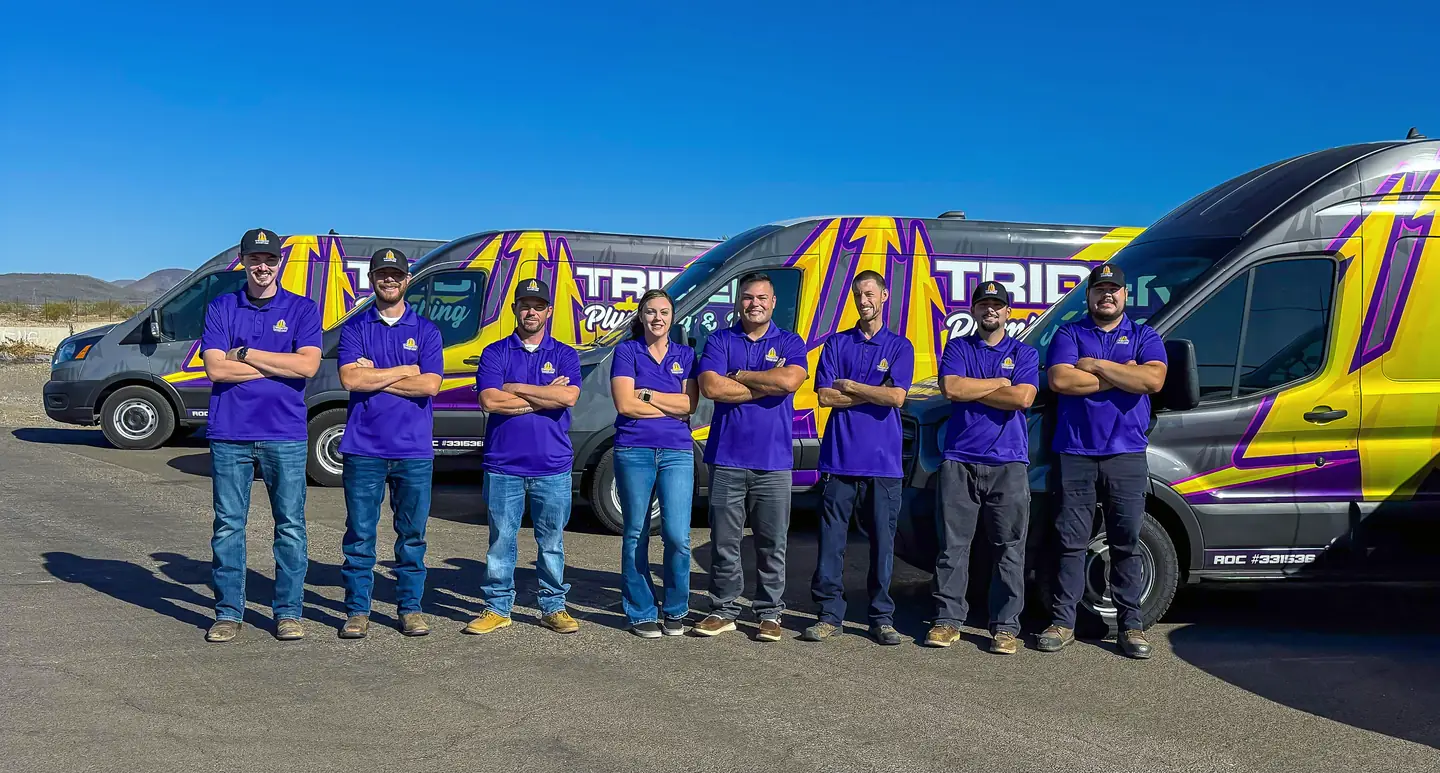
The Trident team standing together in front of their purple and gold service vans
The Trident team from our Peoria office.
Tyler did an outstanding job installing our water softener… The installation was clean, efficient, and everything was working perfectly before he left.
Tyrrell F.Peoria Google review ·

Answers before you book

Questions about
water filtration and softening in Glendale.

Questions about water filtration and softening in Glendale? Start here, or tell us what is happening at your home.

Ask our team
How do I know which water treatment system I need?

It depends on the impurities in your water and what you want to change. Describe the problem you have noticed and share any test results so the options can be matched to it.

Does a water softener remove contaminants?

A softener is designed to reduce hardness minerals such as calcium and magnesium. For taste, odor or other contaminants, filtration such as carbon or reverse osmosis is usually the better fit.

Can you service a system that is already installed?

Yes. Trident repairs and maintains water softeners, reverse osmosis systems and carbon filtration systems as well as installing new ones. Share the system details when arranging service.

Can filtration and softening be combined?

Yes, some properties use both. A softener addresses mineral buildup, while a filter targets taste, odor and other contaminants. The combination depends on your goals.

Which hardness number should I use for a softener here?

The City's 2025 report lists an average of 13.8 grains per gallon, with samples from 5.4 to 18.5. Setting the softener for the harder end of that range, or testing the water at your own tap, keeps it from falling behind.

Why does my tap water smell like chemicals at times?

The City disinfects with chlorine dioxide, which can mix with household odors such as those from new carpet, furniture or paint. The City suggests better ventilation and notes that an activated carbon filter removes chlorine dioxide.

24 hours · 7 days

Choose treatment for the water you have

Tell our Peoria office what you want to change about the water at your Glendale property.

Call Now Book Online