
Fountain Hills, Arizona

Plumbers in Fountain Hills, AZ

Water treatment, routine maintenance and kitchen and bathroom fixtures are part of keeping plumbing in good order. Trident serves Fountain Hills homes and businesses through our North Phoenix office.

Request service online

Woman, Veteran, & Family Owned

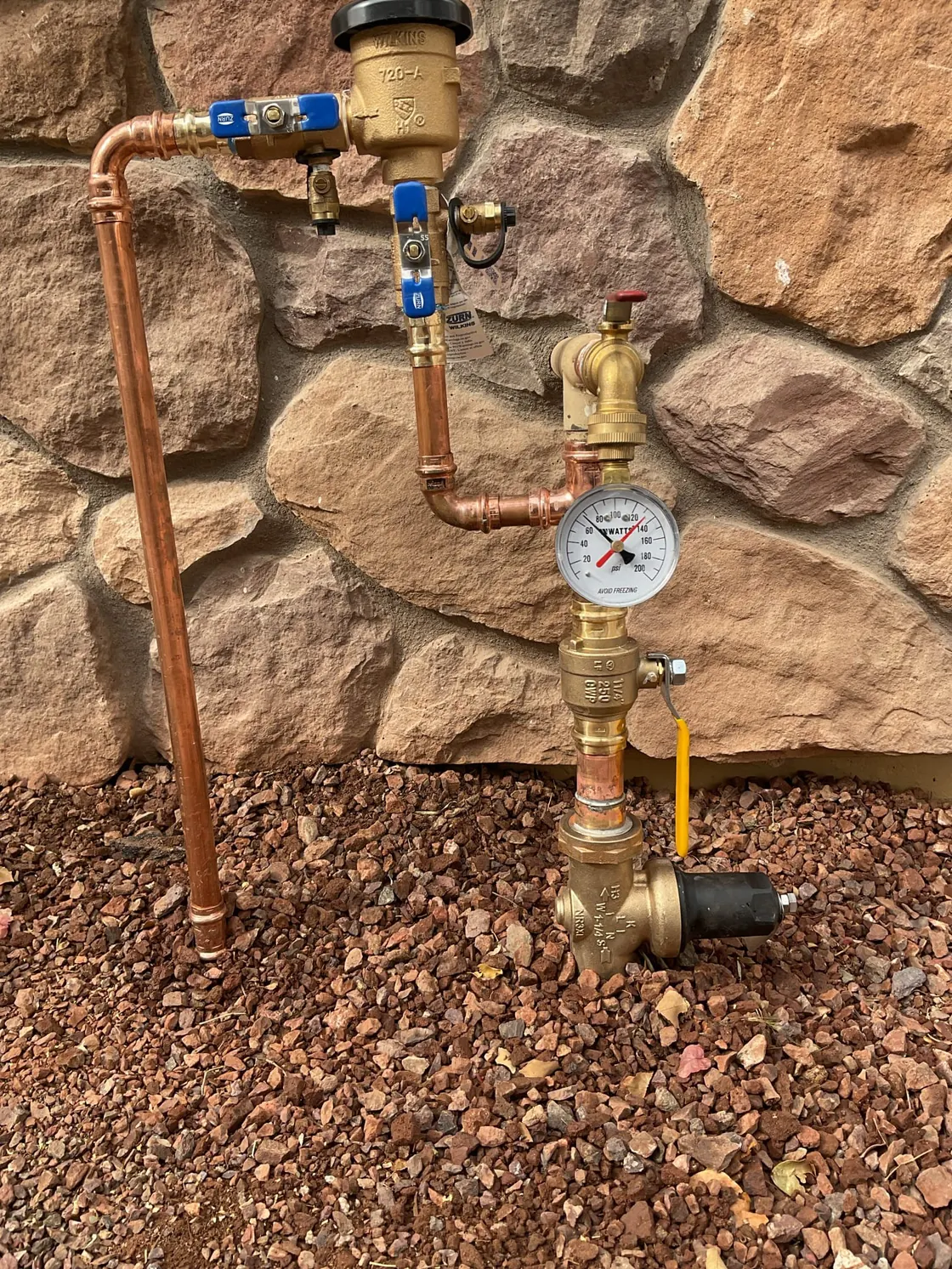
New copper supply piping with a pressure gauge and valves against a stone wall
Trident at workCopper supply piping and a pressure gauge at an exterior wall.

Licensed in ArizonaROC 331536

Open 24/7Call when you need us

North Phoenix officeServing Fountain Hills

Hear from our customersRead their Trident stories

Homes and businesses

Fountain Hills, AZ

Complete plumbing services for Fountain Hills homes and businesses

Whether it is a sudden plumbing issue or a planned upgrade, Trident Plumbing & Drain provides service tailored to the property. As a woman-, veteran- and family-owned company, we explain what we find and the options available, then complete the work you choose.

This guide covers deciding on a water softener, keeping plumbing maintained, dealing with clogs that return and updating kitchen and bathroom fixtures. Repairs, leaks, hot water and emergencies are linked in the service groups below.

A Trident technician organizing equipment inside a stocked service van
A Trident technician and the equipment behind a service visit.

Water softening

Deciding whether a water softener makes sense
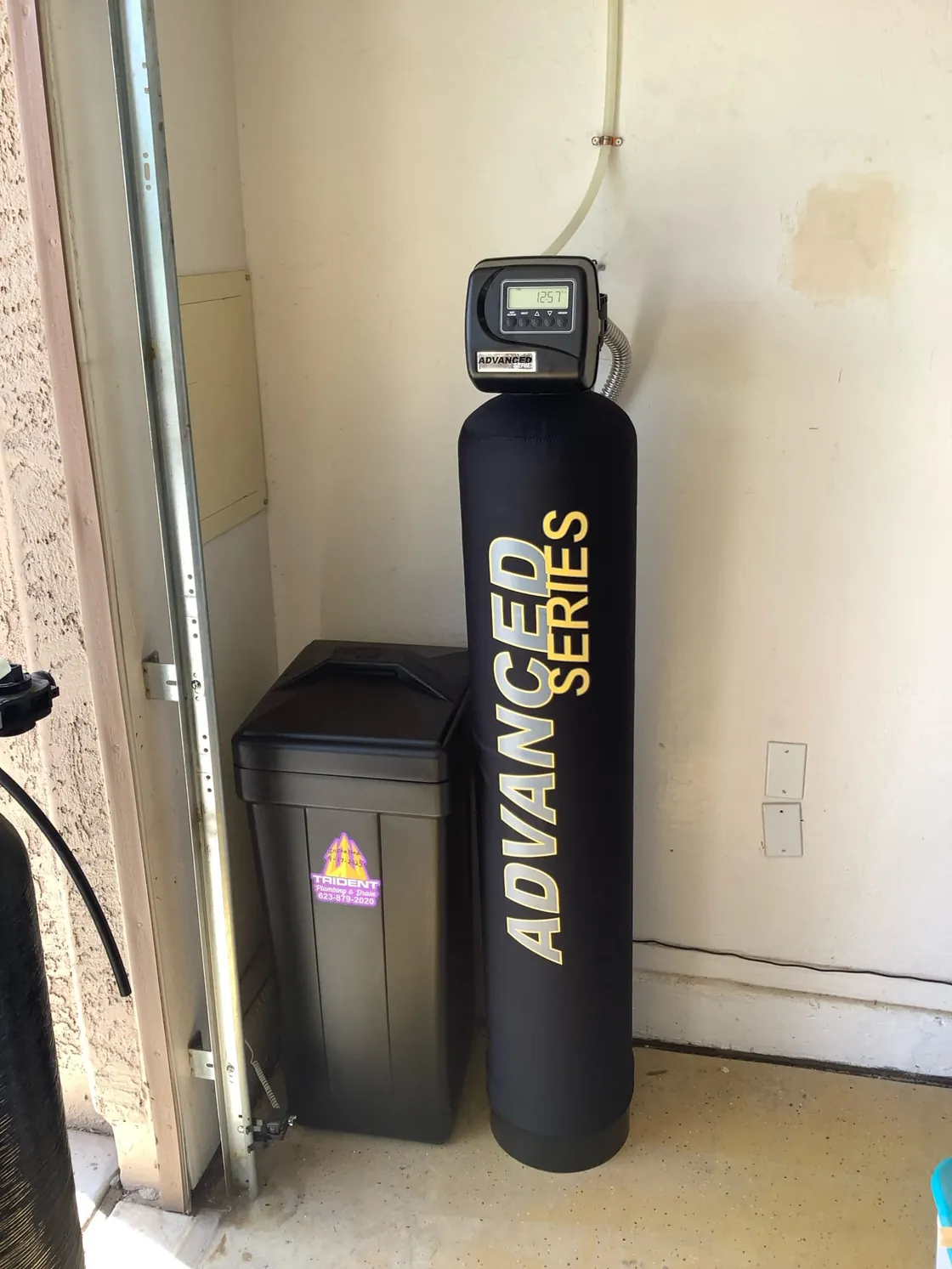
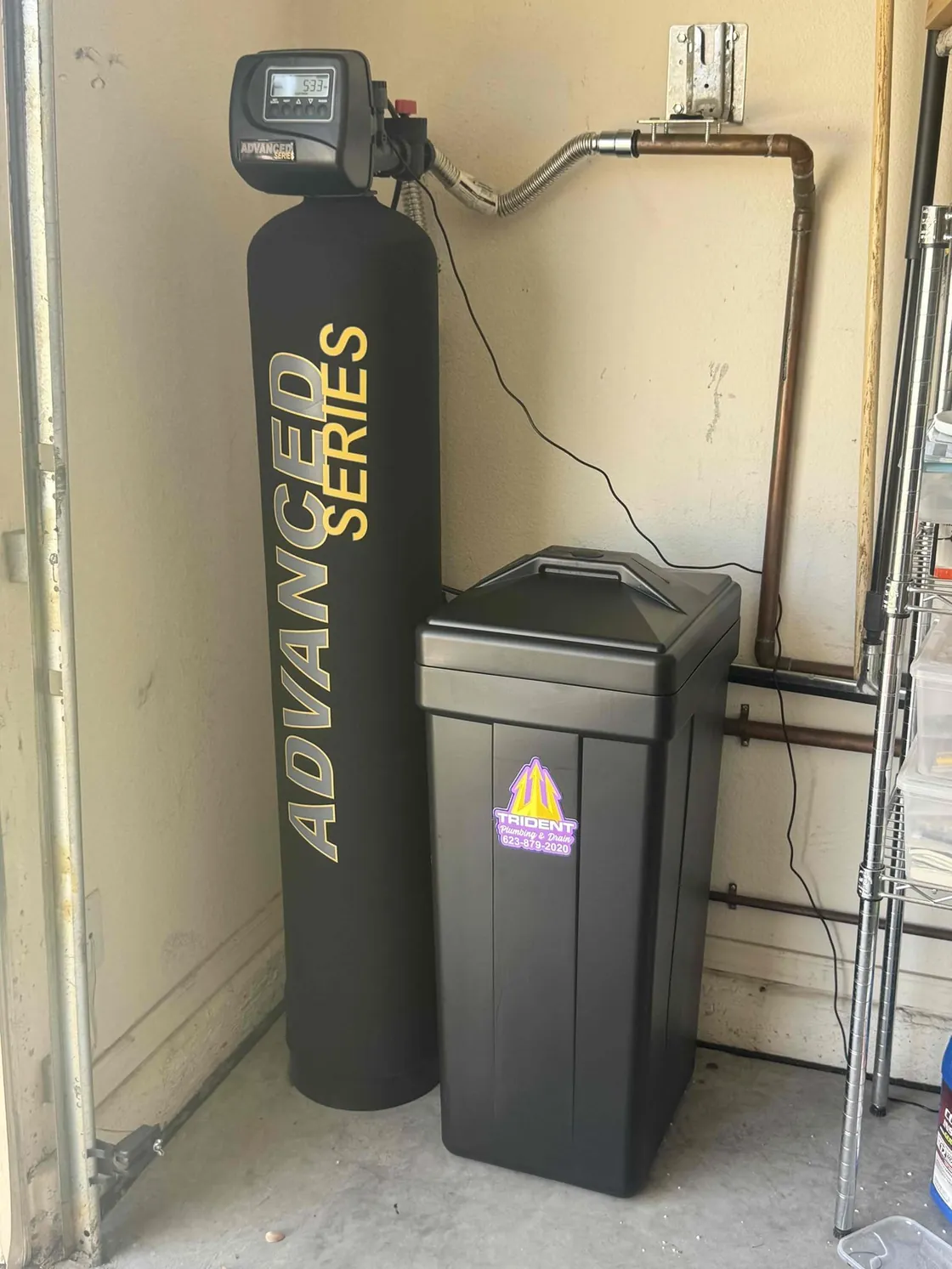
An Advantage Series water softener and its black brine tank in a garage
A water softener installed with its brine tank.

Mineral buildup shows up as scale on faucets and showerheads, spotting on glass and fixtures, and residue inside appliances and pipes. A whole-home water softener reduces the minerals that cause it, which can help protect plumbing, fixtures and water-using appliances.

Start with what you are seeing and where. If the concern is the taste or smell of drinking water rather than scale, a reverse osmosis or carbon filtration system may be the better fit. Trident can explain the difference and the upkeep each system needs.
Stay ahead of repairs

Setting a plumbing maintenance schedule

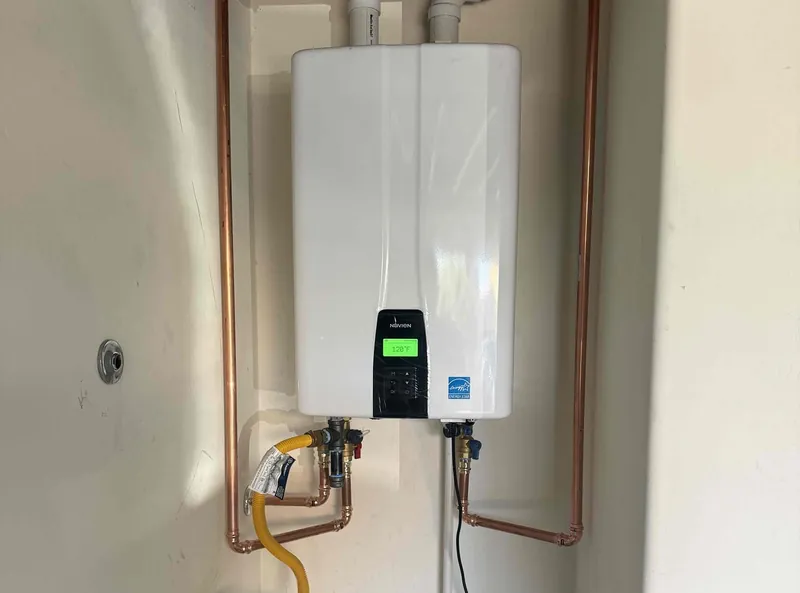
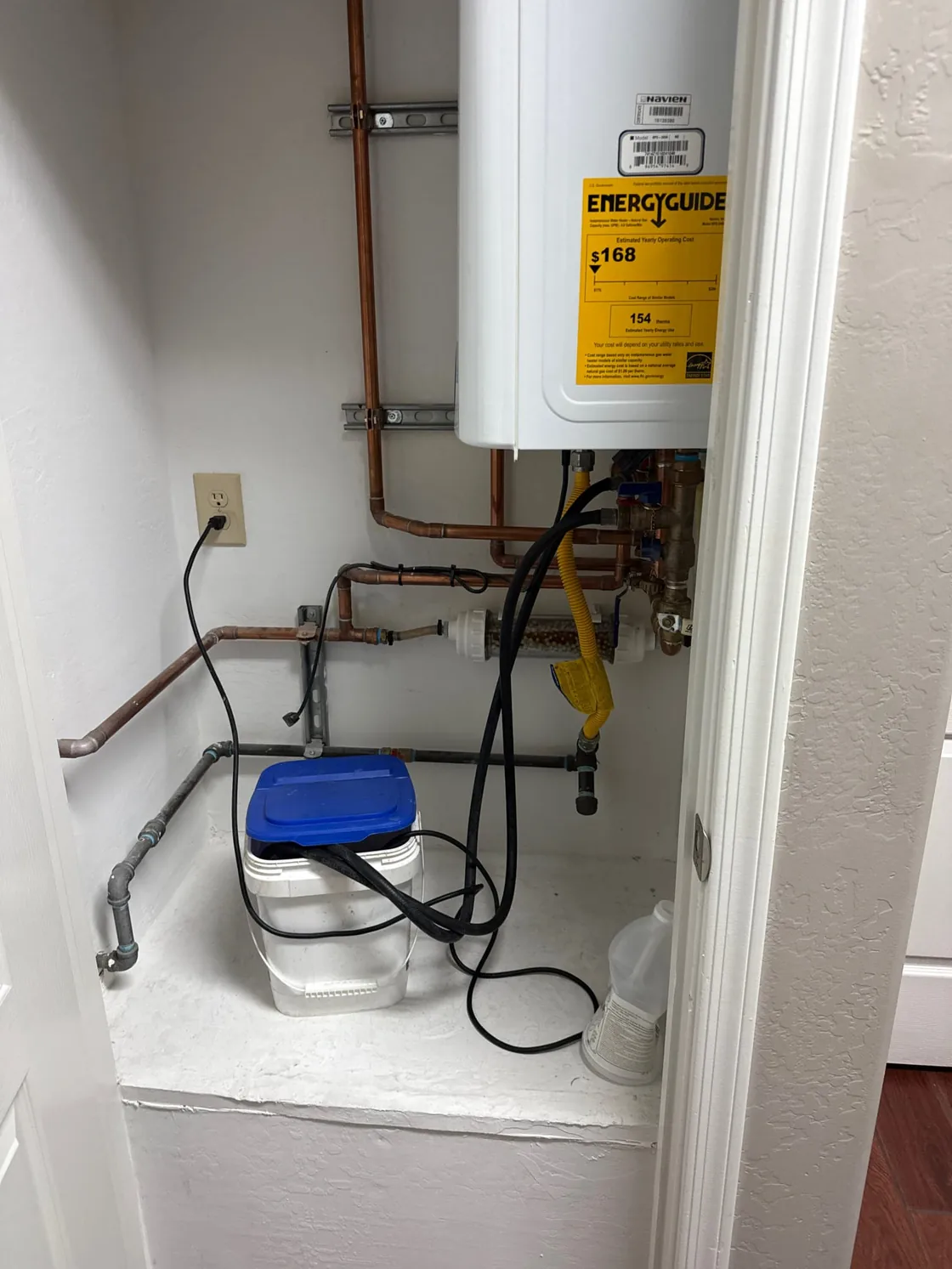
A tankless water heater connected to a bucket and service hoses for maintenance
A tankless heater connected for maintenance.

Routine maintenance catches small issues before they become larger repairs and helps keep water pressure and system performance steady. Trident commonly recommends a yearly inspection, adjusted for the age of the plumbing and any recurring problems.

A maintenance membership keeps those visits on schedule. Use each one to mention a running toilet, slow drain or water heater change that has been easy to overlook, and keep the service notes for the next visit.

Clogs that return

Why drain clogs keep coming back

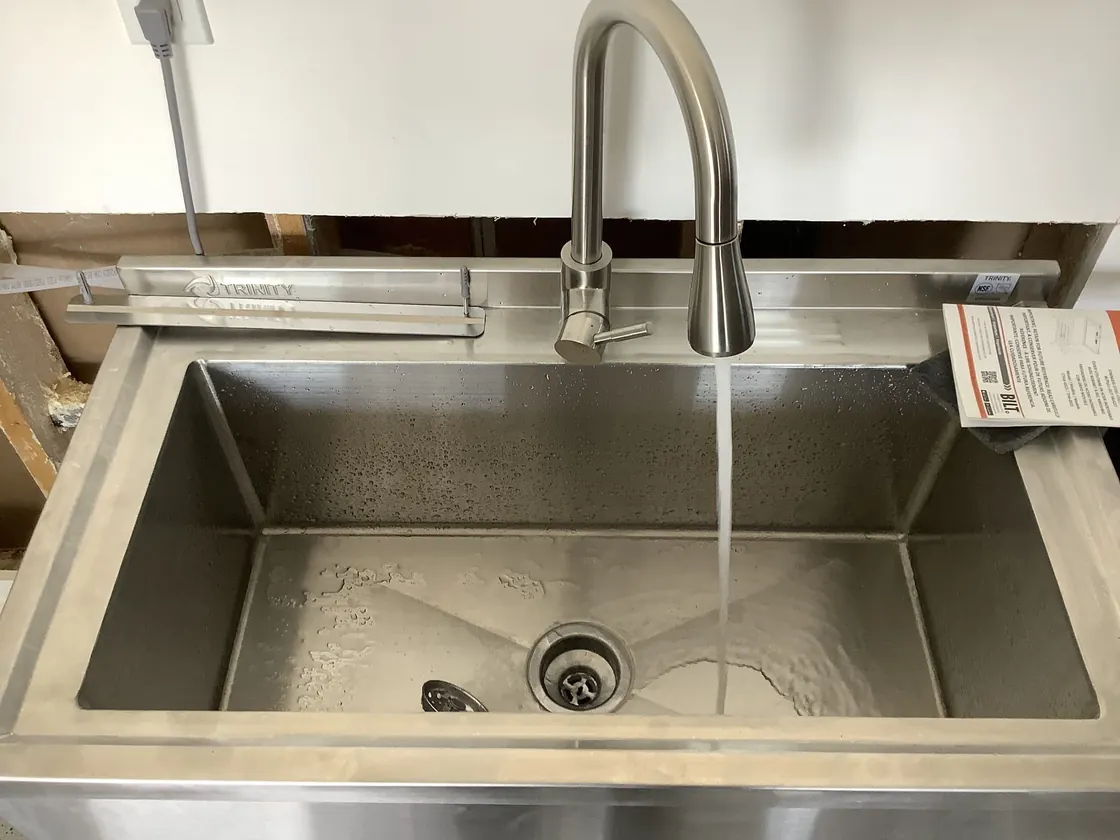
Water running from a pull-down faucet into a stainless utility sink
A stainless sink draining freely.

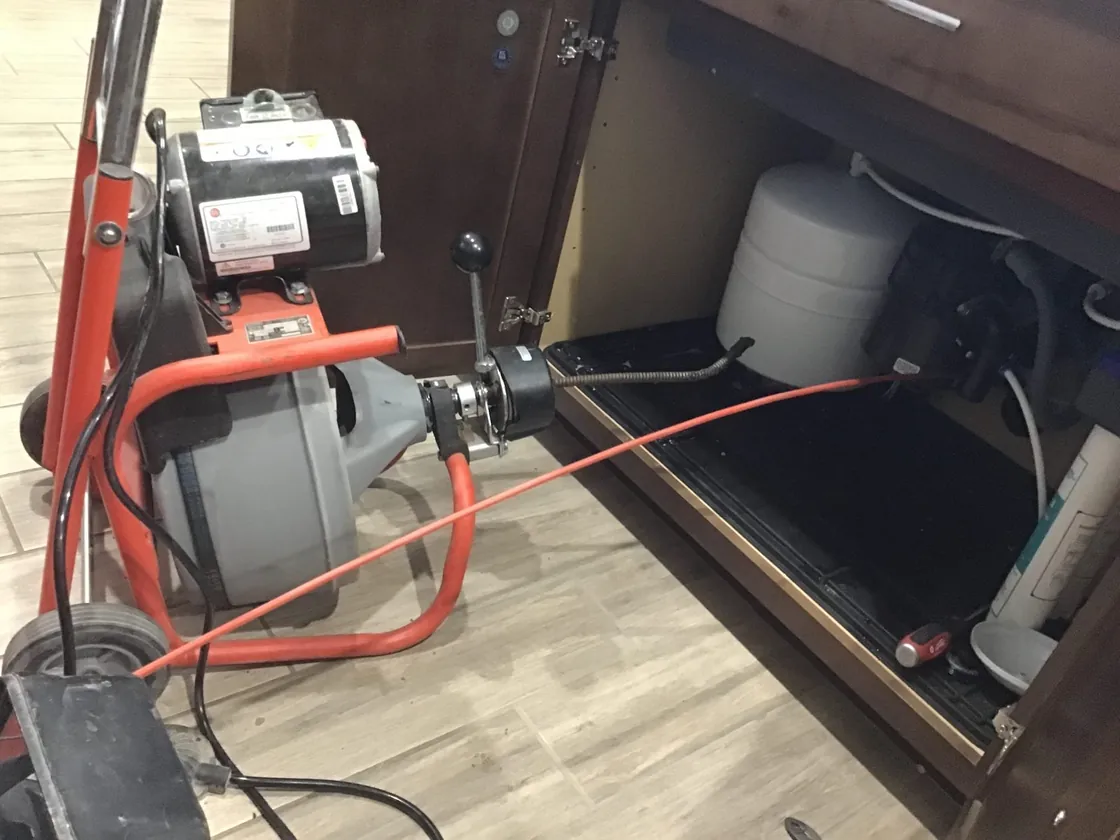
Frequent clogs are often caused by grease buildup, soap residue or foreign objects in the line. Clearing the opening can restore flow for a while, but buildup left on the pipe walls gives new debris something to catch on.

Hydro jetting can clean that buildup when the line is in suitable condition, and a sewer inspection may be needed if several drains are affected. Tell us how often the clog returns and which fixtures are involved.

Kitchens and bathrooms

Updating kitchen and bathroom fixtures

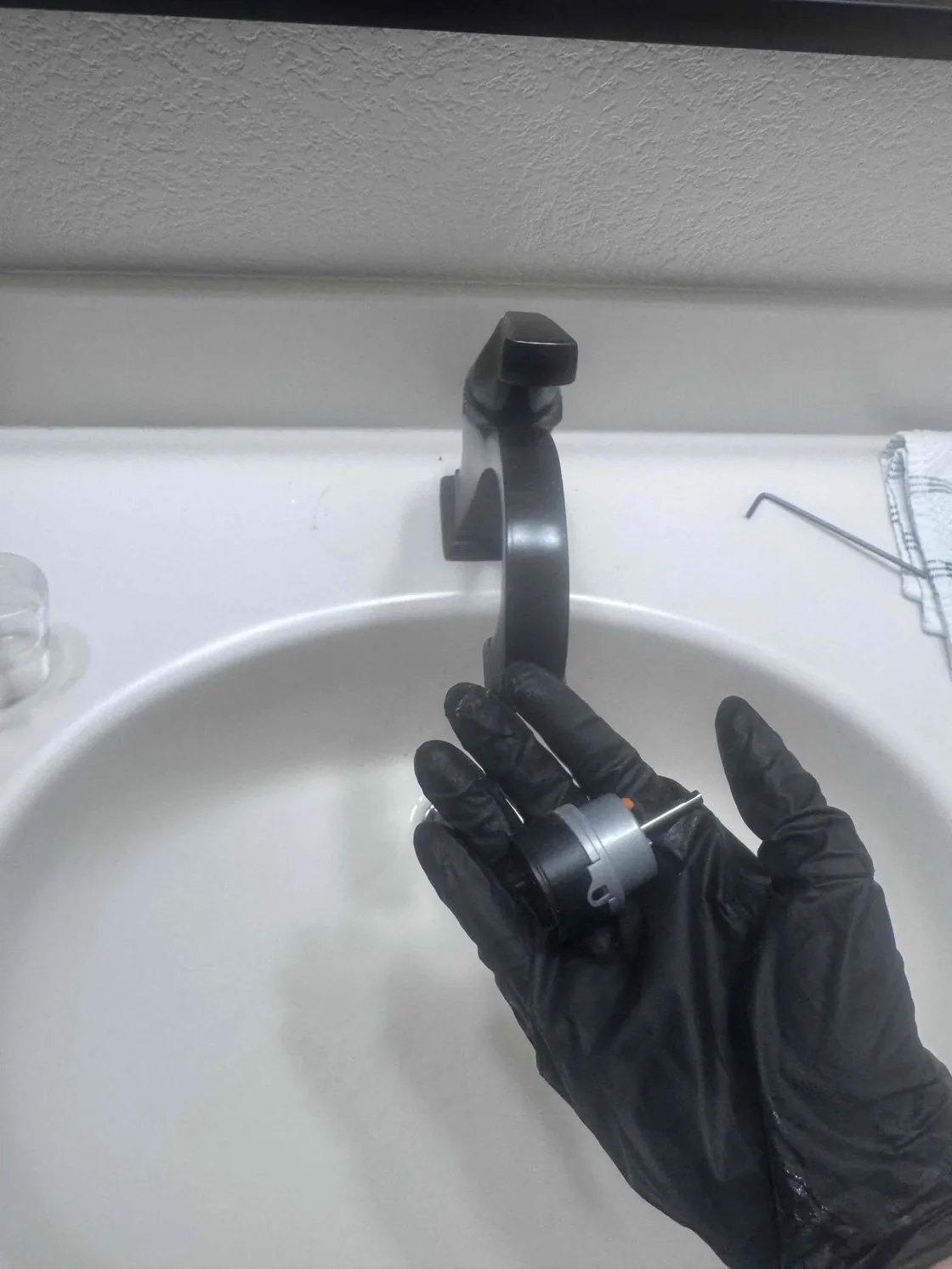
A technician holding a faucet cartridge above a bathroom sink
A closer look at a faucet component during service.

Kitchen work often includes new faucets, under-sink repairs and garbage disposal replacement. In bathrooms, clogged toilets, leaky faucets and shower repairs are common requests, along with plumbing for a full remodel.

When replacing a fixture, mention any existing leak or slow drain at the same spot so the connected plumbing can be checked. Businesses should mention when the space is in use so the work can be planned around it. Our North Phoenix office coordinates scheduling.

Your water supply

One supplier, two sources and very hard water

Water in Fountain Hills comes from EPCOR, a private utility. The Town's water page names EPCOR's Chaparral District as the supplier, and EPCOR's 2025 report counts about 14,500 service connections across the Town and part of Scottsdale. The supply has two parts: Colorado River water delivered by the Central Arizona Project, which EPCOR describes as a mix of Colorado River and Lake Pleasant water, and groundwater pumped from the aquifer beneath the Town.

EPCOR lists the hardness at about 16 grains per gallon, from a 2024 sample, and says it does not treat for hardness. On the scale printed in its report, anything above 10.5 grains counts as very hard. Because the supply mixes surface water and groundwater, the report adds that hardness and taste can change with the season. Those minerals collect on faucets and showerheads and settle inside water heaters, so plan softening, flushing or descaling with that number in mind.

Sewer and softeners

The Sanitary District and the line you maintain

Sewer service comes from the Fountain Hills Sanitary District, a separate government formed in 1969 that collects, treats and recycles the Town's wastewater. The District maintains the laterals and sewer pipes that run in streets and public easements. The lateral on private property is the owner's responsibility to clean and maintain, and the District's FAQ adds that root damage to that line is the homeowner's responsibility as well.

When sewage backs up, the District asks you to call a licensed plumber first, to clear the drains inside and the private line out to the property line. If the plumber finds the pipe broken or collapsed in the street or a District easement, call the District, which repairs defects found there. The District also has a view on softeners: its FAQ says the sodium they discharge cannot be removed economically and ends up in the recycled water used on golf courses, parks and Fountain Lake.

Homes and permits

Houses from the 1990s and the codes that apply now

The median home here dates to 1994, by Census estimates. More than half of the roughly 13,200 homes went up between 1990 and 2009, which makes them 17 to 36 years old today, and about a third are older still. About 12% were vacant for seasonal or occasional use in the 2020–2024 estimates, and the Sanitary District notes that the Town has many part-time residents. A home that stands empty for a season is worth a plumbing check when you return.

For permits, the Town adopted the 2024 International Plumbing Code for applications received on or after September 1, 2025, and it accepts applications online only. Building permits are also reviewed by the Sanitary District. The Town's 2026–27 fee schedule lists water heater replacement as a minor plumbing item only under commercial building permits; its residential section has no such line. Both sections list a penalty for failure to obtain a building permit, so ask the Building Safety division what your project needs. Trident is licensed under ROC 331536.

Fountain Hills facts

Who handles your water, sewer and permits

Local figures from EPCOR, the Sanitary District, the Town and Census estimates, and how each bears on your pipes, fixtures and water heater.

Approximate hardness from EPCOR's 2024 sample
16 gr/gal

EPCOR's own scale calls anything above 10.5 grains very hard, and the utility says it does not treat for hardness. Expect scale on fixtures and inside water heaters.

Source: EPCOR, 2025 Water Quality Report (Chaparral City) (opens in a new tab)
Colorado River water plus local groundwater
CAP + wells

The supply combines Central Arizona Project deliveries of Colorado River water with groundwater pumped from the aquifer under the Town, so hardness and taste can shift with the season.

Source: EPCOR, 2025 Water Quality Report (Chaparral City) (opens in a new tab)
Median year local homes were built
1994

Of about 13,200 homes and apartments, 57% were built between 1990 and 2009 and 35% before 1990.

Source: Census Reporter, 2020–2024 ACS data (opens in a new tab)
Homes vacant for seasonal or occasional use
12%

Roughly one housing unit in eight stood vacant for seasonal or occasional use in Census estimates. Plan ahead for the heater and drain traps in a house left empty for months.

Source: Census Reporter, 2020–2024 ACS data (opens in a new tab)
Sewer lateral on your property is your responsibility
Private side

The Sanitary District maintains laterals and sewer pipes in streets and public easements. The lateral on your lot is yours to clean out and maintain.

Source: Fountain Hills Sanitary District, Laterals (opens in a new tab)
Sewer district separate from the Town government
Since 1969

The Sanitary District is its own government, separate from the Town. It provides only sewer service; building permits come from the Town.

Source: Fountain Hills Sanitary District, FAQs (opens in a new tab)

Your local team

Here for your
Fountain Hills home.

Our North Phoenix office serves Fountain Hills. Call about your address, tell us what needs attention, and we'll help you arrange service.

Explore Fountain Hills on the map (opens in a new tab)
Fountain Hills, ArizonaLocal service
Fountain Hills and Trident's North Phoenix office Major roads near Fountain Hills, with separate markers for the city location and the North Phoenix office that serves it. ScottsdaleParadise ValleyPhoenix
City locationTrident office
Roads © OpenStreetMap (opens in a new tab) contributors. Locations: U.S. Census Bureau.

Your North Phoenix team

Book maintenance or a repair

Tell our North Phoenix office about your Fountain Hills property and the plumbing you would like checked, repaired or upgraded.

North Phoenix office
1506 W Whispering Wind Dr #110
Phoenix, AZ 85085
Office directions (opens in a new tab)Send a service request

Trident memberships

Yearly care, 10% off repairs.

  • Preventative maintenanceOne year: water heater flush, whole-home inspection, 10% off plumbing services, waived emergency fee
  • Salt serviceOne year: softener salt added every 6–8 weeks
  • Reverse osmosisFive years: annual filter changes; sanitizing not included

Ask our North Phoenix team for current pricing.

From a Trident customer

Good work.
Real experiences.

Read more customer stories
The Trident team standing together in front of their purple and gold service vans
The Trident team from our North Phoenix office.
Tyler did an outstanding job installing our water softener… The installation was clean, efficient, and everything was working perfectly before he left.
Tyrrell F.Peoria Google review ·

Explore the services

Plumbing services in Fountain Hills.

Find details about the work you need, then talk with our team about your home.

Answers before you book

Questions about
plumbing.

Questions about plumbing services in Fountain Hills? Start here, or tell us what is happening at your home.

Ask our team
Is a water softener worth installing?

It depends on what you are seeing. Scale on fixtures, spotting and mineral residue in appliances are reasons to consider one, since a softener reduces the minerals behind that buildup.

What causes recurring drain clogs?

Grease, soap residue and foreign objects are frequent causes. Buildup left on the pipe walls lets clogs return, which hydro jetting can address when the line suits it.

How often should I schedule plumbing maintenance?

Trident commonly recommends a yearly inspection. Older plumbing or recurring problems may call for more frequent visits, and a membership helps keep the schedule.

Should I mention a leak when booking a fixture replacement?

Yes. A leak or slow drain at the same spot can involve the connected plumbing, so it should be checked as part of the fixture work.

Who provides water and sewer service in Fountain Hills?

Two separate providers. EPCOR, a private utility, supplies the water through its Chaparral District. The Sanitary District, a government of its own apart from the Town, handles sewer service. Water outages go to EPCOR, and a broken sewer pipe in the street goes to the District.

How hard is the water here?

EPCOR's 2025 report for its Chaparral City district lists about 16 grains per gallon from a 2024 sample, which sits in the very hard range on EPCOR's own scale. The utility does not treat for hardness, and the level can shift with the season as the mix of river water and groundwater changes.

What does the Sanitary District say about salt-based softeners?

Its FAQ says “the single most impactful thing that conscientious water users can do is to remove salt-based water softeners,” because their sodium “cannot be removed with the current, economical treatment processes” and ends up in the recycled water used for irrigation and Fountain Lake. It lists four options: removing the softener, switching to potassium salt, using a conditioner that doesn't use salt or using an exchange-tank service. Our team can explain the upkeep each softening or filtration system needs.

What should I do first when a sewer line backs up?

Call a licensed plumber. The Sanitary District asks that the drains inside the house and the private line to the property line be cleared before it investigates. If the plumber finds the pipe broken or collapsed in the street or a District easement, call the District at 480-837-9444, which takes those calls around the clock.

How should I leave my plumbing when the house sits empty?

Before a long absence, consider shutting off the main water valve and setting the water heater to its vacation or pilot setting. When you return, the Sanitary District suggests running water through every drain, since traps that dry out let sewer odors in. It also recommends pouring water into all drain traps once a month.

24 hours · 7 days

Book maintenance or a repair

Tell our North Phoenix office about your Fountain Hills property and the plumbing you would like checked, repaired or upgraded.

Call Now Book Online