
New River, Arizona

Plumbers in New River, AZ

Slow drains, sewer odors and upkeep that is easy to put off are common starting points. Trident’s plumbers handle them for New River homes and businesses, with visits arranged by its North Phoenix office.

Request service online

Woman, Veteran, & Family Owned

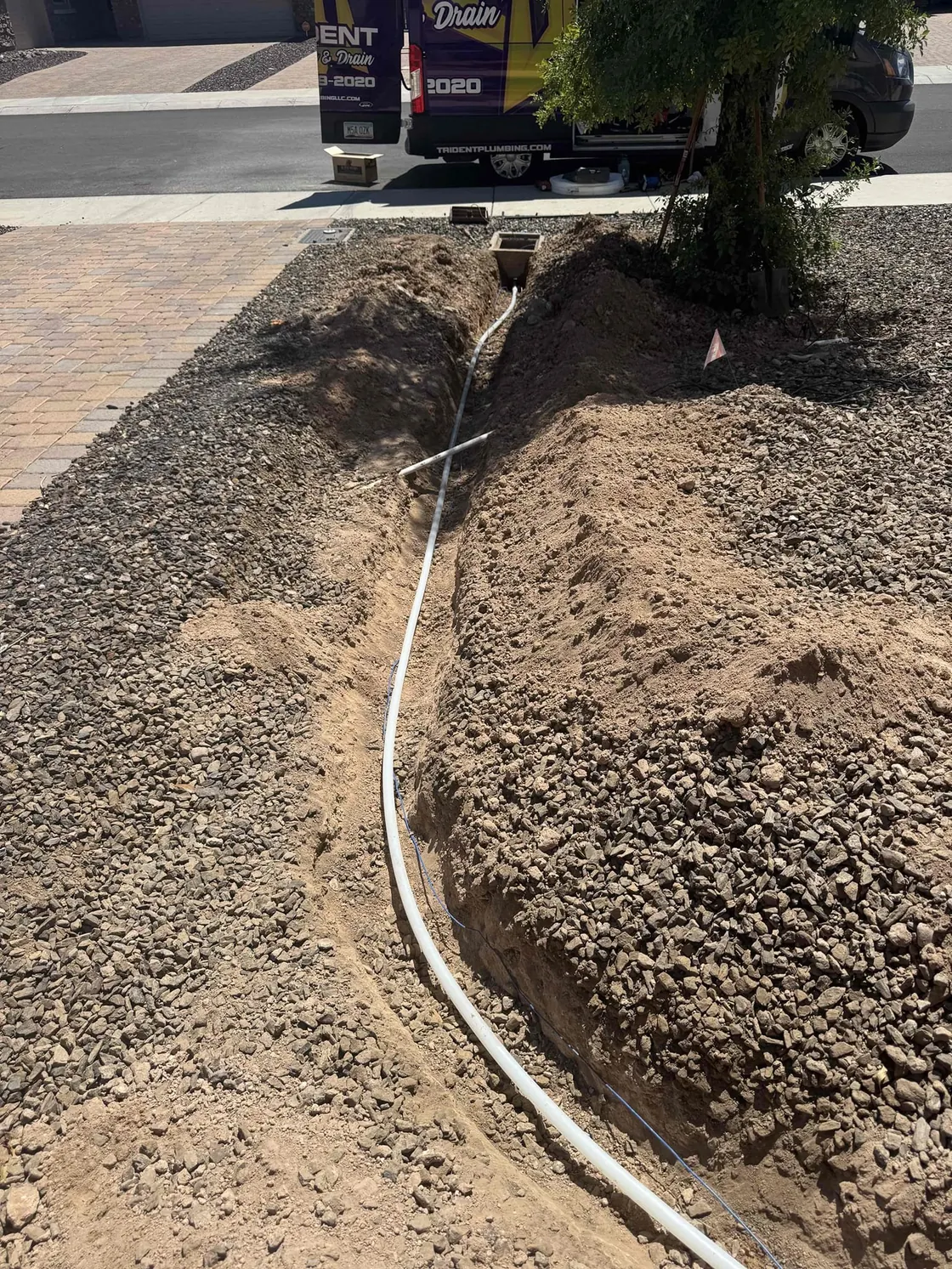
A narrow trench through a gravel yard with a white water line laid along it
Trident at workA water line laid in a yard trench.

Licensed in ArizonaROC 331536

Open 24/7Call when you need us

North Phoenix officeServing New River

Hear from our customersRead their Trident stories

Honest, practical plumbing

New River, AZ

Honest, hassle-free plumbing solutions in New River

Whether you are dealing with an urgent plumbing issue or planning ahead for an upgrade, Trident Plumbing & Drain works with homeowners and business owners in New River to understand the problem and explain the options clearly. Trident is a woman-, veteran- and family-owned business.

The sections below cover sewer-line warning signs, planned maintenance, hot water and water treatment, and how to arrange a visit. Bathroom, kitchen, fixture, repiping and commercial plumbing are part of the same service.

A smiling Trident plumber in a purple polo and black cap standing in front of a purple and gold service van
A member of the Trident plumbing team.

Below the surface

Signs the sewer line may need attention
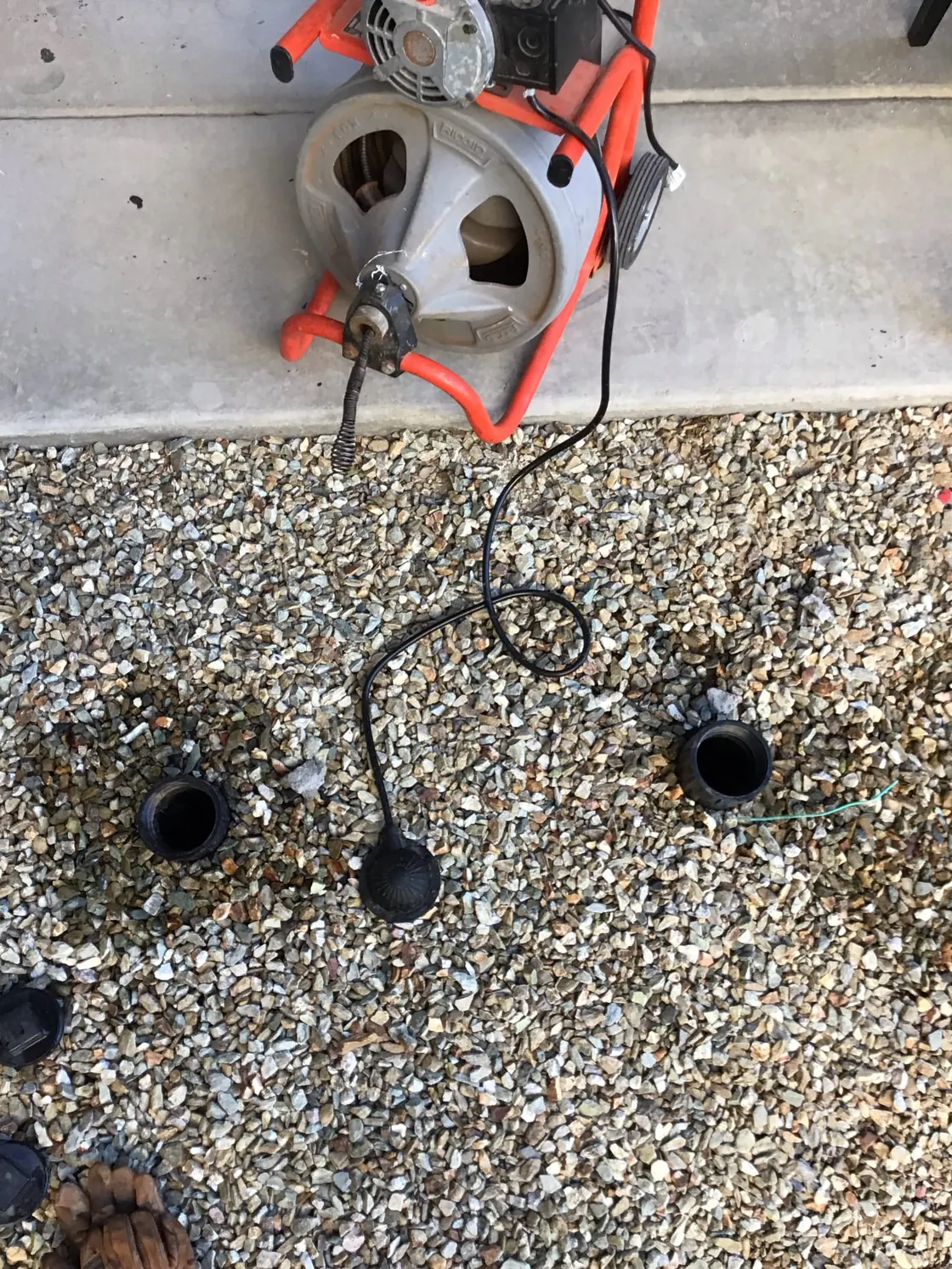
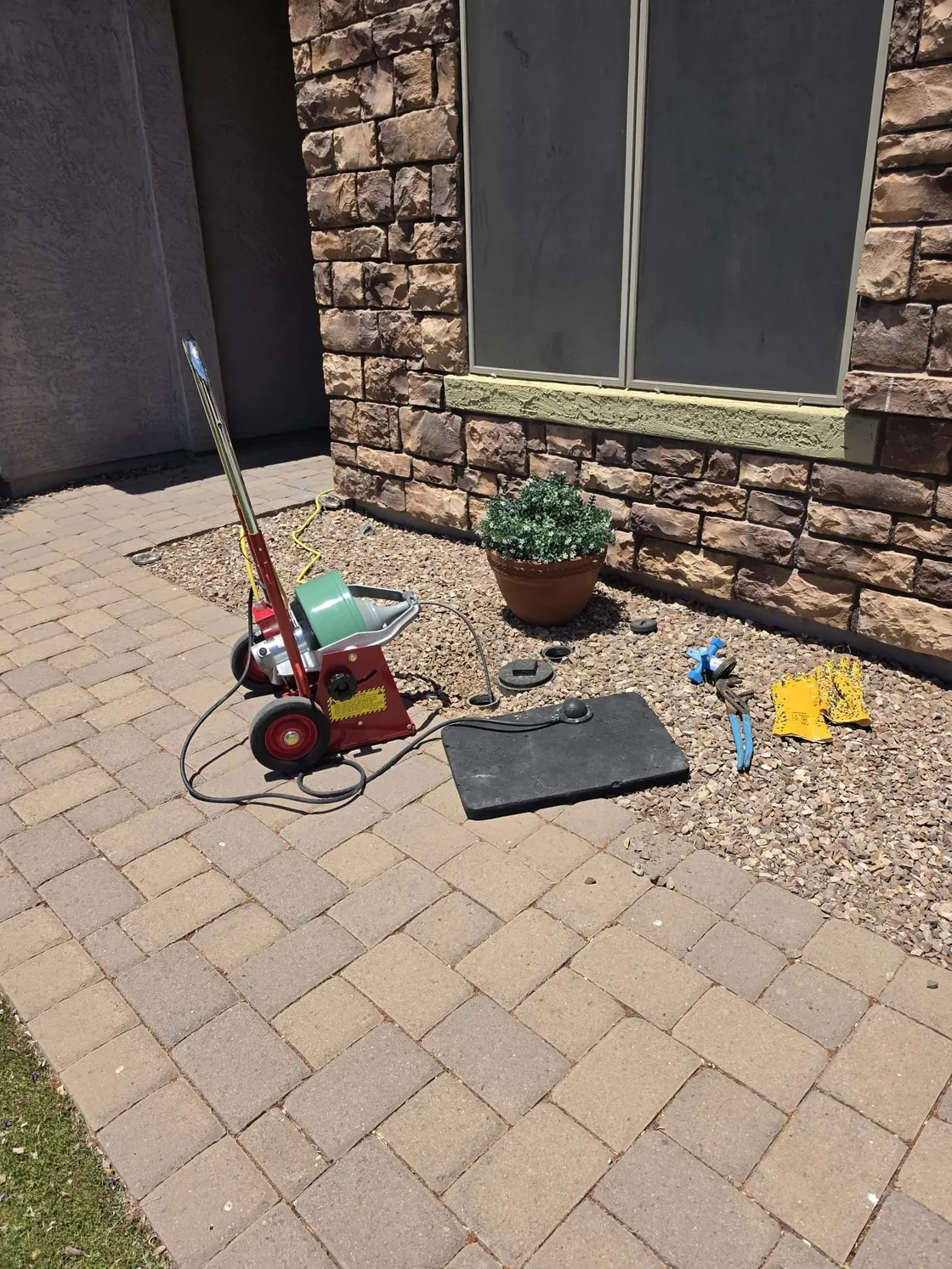
Drain cable equipment set up beside outdoor cleanouts
Drain-service equipment positioned at outdoor cleanouts.

Slow drains throughout the house, sewage odors and gurgling sounds from toilets or tubs can indicate a problem in the sewer line rather than in a single fixture. A backup that appears in one drain when another fixture is used is another sign worth reporting.

A camera inspection lets the technician see inside the line to locate a blockage, root intrusion or damaged section before a repair is chosen. Depending on what it shows, the next step may be cleaning, hydro jetting or a targeted repair.
Planned upkeep

How often to schedule plumbing maintenance

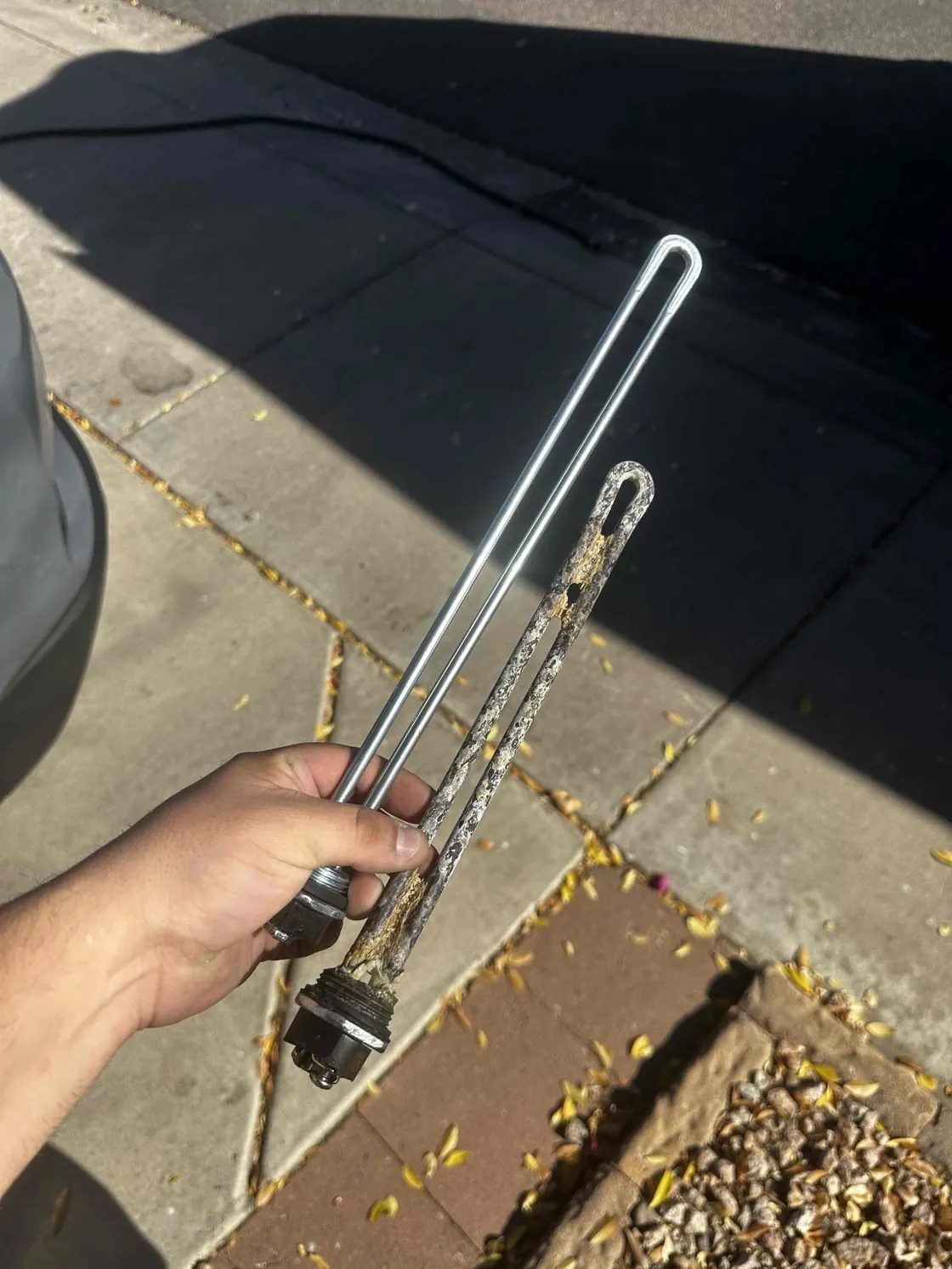
New and worn water heater anode rods held side by side
A comparison of new and worn water heater anode rods.

Routine maintenance gives a plumber the chance to catch small problems, such as a minor leak, a corroding connection or a slow drain, before they turn into larger repairs. How often a property needs it depends on the condition of the plumbing, the equipment installed and its repair history.

Trident’s membership plans cover preventative plumbing maintenance, with options for water softener salt service and reverse osmosis filter changes. Ask which plan suits the systems you have, and keep the notes from each visit as a record of the plumbing.

Equipment upgrades

Water heaters and water treatment

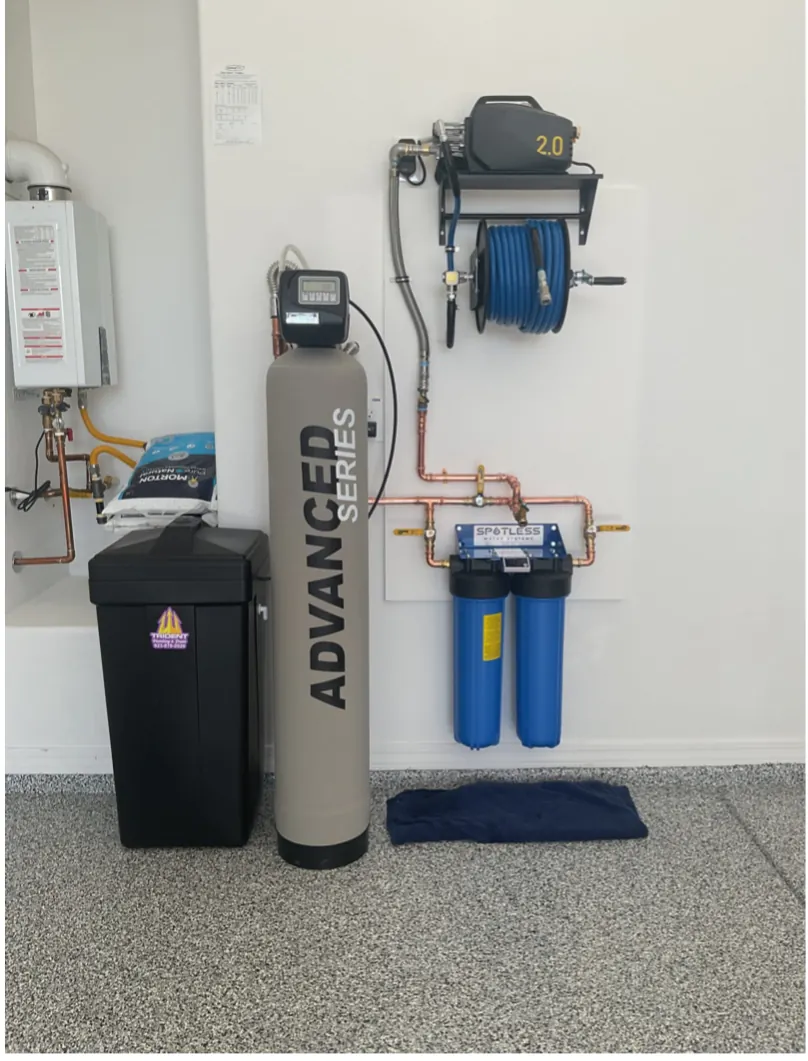
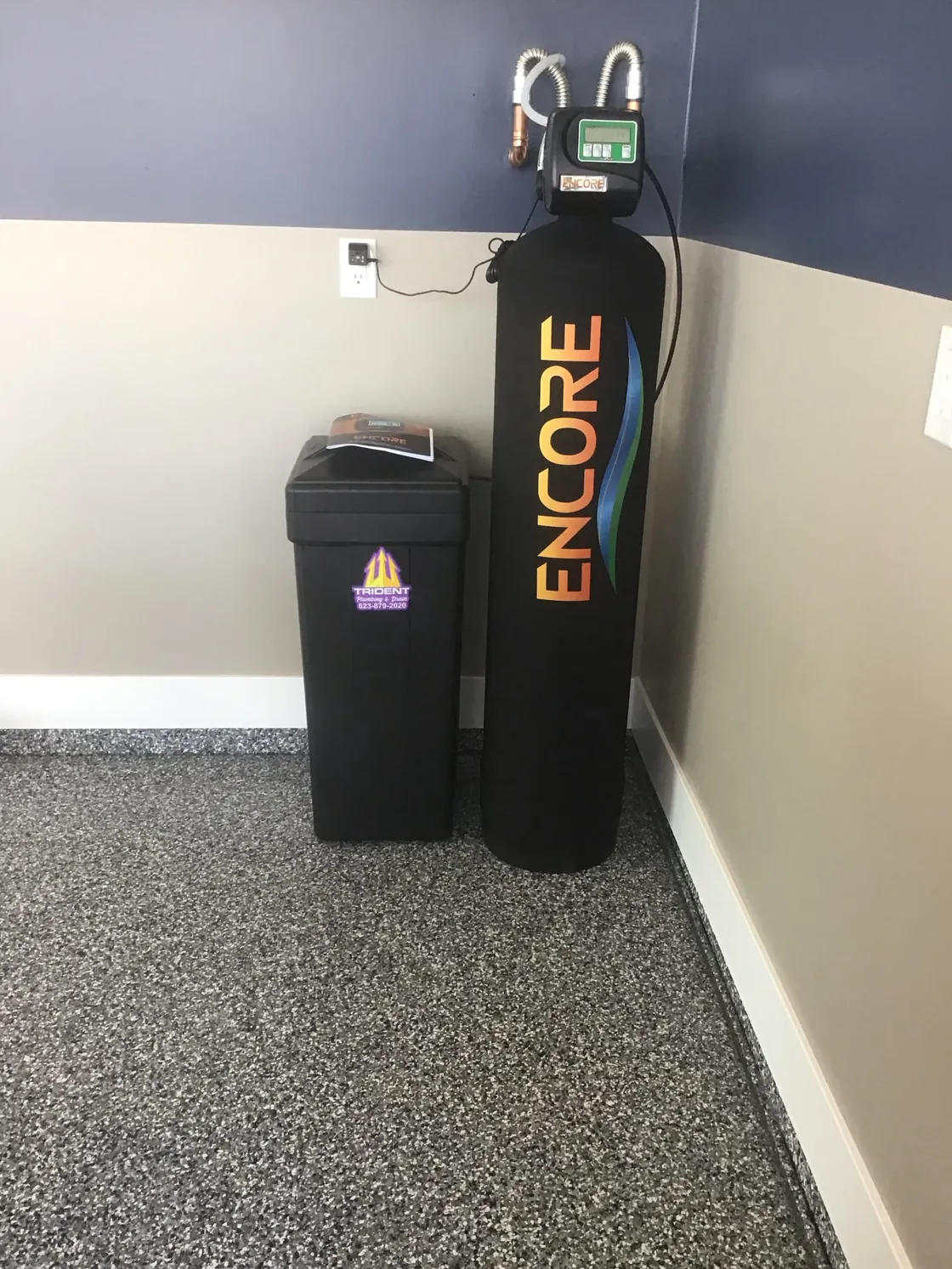
An Encore treatment tank and brine tank installed in a closet
Water treatment equipment installed in a utility closet.

A water heater that leaks, makes new noises or delivers uneven temperatures should be inspected to find the cause. Trident repairs, replaces and maintains tank water heaters and installs tankless systems that heat water on demand, along with hybrid and Marathon models.

For water quality, reverse osmosis treats drinking water at the tap, carbon filtration addresses chlorine, odor and sediment, and a softener reduces the hardness minerals that build up on fixtures and appliances. The right choice depends on what you notice and where you want treatment.

Request a visit

Arranging service through our North Phoenix office

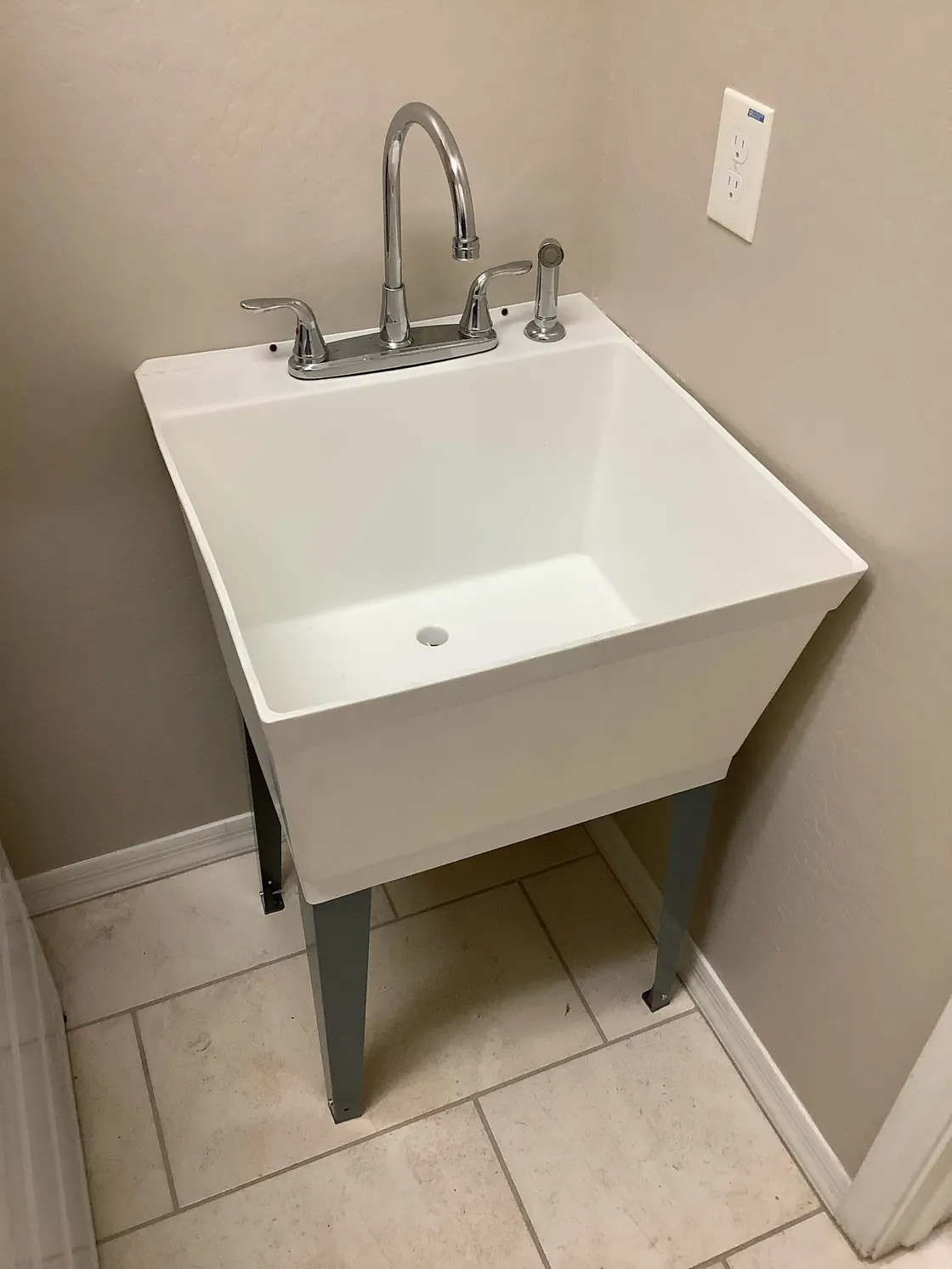
A white utility sink with exposed drain piping below
A utility sink with accessible drain connections.

Our North Phoenix office arranges Trident service in New River for homes and businesses. Provide the property address, the plumbing involved and how to access it, along with any earlier repairs, so the visit can start with the right information.

When something is urgent, such as a burst pipe or an overflowing toilet, keep the fixture out of use and isolate the water at its valve if you can, then mention that when you call. Larger projects can be discussed alongside Trident’s financing options.

Wells and hauled water

Where the water comes from on a rural lot

Water here comes from several places rather than one city utility. Maricopa County's Daisy Mountain/New River Area Plan, adopted in 2019, says most residents outside Anthem depend on individual or shared wells, that residents report well output varying with the season and the well's depth, and that some residents haul water from a station provided by EPCOR. EPCOR's current page describes that fill station, built for state-licensed water haulers and for residents who have opened an EPCOR account.

How your home gets water decides which equipment matters most. A well adds a pump and a pressure tank, and a hauled supply relies on a storage tank and a pump to move water into the house. If you pay a water company, its annual report covers your water; on a private or shared well, no utility report does, so a test of your own supply is the place to start before choosing treatment. Shared wells have limits too: the County says one may serve no more than 15 lots or houses, and electrical service to it needs a permit.

Septic care

Pumping, permits and selling a home on septic

The County's 2019 area plan says most homes outside Anthem treat their wastewater with conventional or alternative septic systems, which Maricopa County Environmental Services permits. The County's upkeep guidance is specific: pump the tank every three to five years, clean the effluent filter every six to twelve months, and keep grease, coffee grounds, paper towels, dental floss and kitty litter out of the drains. It ties most failures to inappropriate design and poor maintenance.

When a system stops working, the County advises calling a plumbing or septic specialist. Replacing a failed tank or disposal field takes an alteration permit, and if both have failed, a new system has to be installed. Selling the home adds a step: Arizona rules require a qualified inspector to inspect the system within six months before the transfer, and the buyer files a notice of transfer within 15 days. The County's free online septic search lets you look through the records it has available for a property.

Homes and County rules

Newer homes, County permits and winter frost

Census estimates count about 7,400 homes in the area, with a median build year of 2003. About 64% went up between 1990 and 2009 and about 21% since 2010, so only about 15% predate 1990. Around 95% of occupied homes are lived in by their owners.

Building permits come from Maricopa County's Planning and Development Department, which regulates the unincorporated areas of the county. It no longer requires a permit to replace an existing water heater when the work follows the manufacturer's specifications, and it issues minor permits online for like-for-like plumbing repair and for water, sewer or gas line repair. The County's 2019 area plan also notes regular overnight frosts in winter, so exposed pipes, hose bibs and well equipment need protection when the temperature drops.

Rural plumbing basics

Wells, septic and New River homes

Figures from Maricopa County, EPCOR and the U.S. Census Bureau, and what each one means on a property with a well, a storage tank or a septic system.

Main water source outside Anthem in the 2019 area plan
Wells

Maricopa County's area plan, adopted in 2019, says most residents outside Anthem depend on individual or shared wells, and that residents report a well's output varying with the season and its depth.

Source: Maricopa County, Daisy Mountain/New River Area Plan (2019) (opens in a new tab)
EPCOR supply point for licensed water haulers
Fill station

EPCOR runs a fill station for state-licensed water haulers and residents with EPCOR accounts, set up to help the community and neighboring Desert Hills.

Source: EPCOR, New River and Desert Hills Water Fill Station (opens in a new tab)
County advice on pumping a septic tank
3–5 years

The County recommends pumping a septic tank every three to five years and cleaning the effluent filter inside it every six to twelve months.

Source: Maricopa County, Onsite Wastewater Systems FAQs (opens in a new tab)
Minimum distance from a well to a septic system
100 ft

Arizona rules cited by the County set a minimum of 100 feet between a private well and any septic system, which limits where either one can go on a lot.

Source: Maricopa County, Shared Wells Directive DD-2019-02 (opens in a new tab)
Median year local homes were built
2003

About 64% of the area's roughly 7,400 homes were built between 1990 and 2009, and about 21% since 2010, so most homes here are less than 40 years old.

Source: Census Reporter, 2020–2024 ACS data (opens in a new tab)
County rule for replacing an existing water heater
No permit

Maricopa County no longer requires a permit to replace an existing water heater when the work follows the manufacturer's specifications. You can still apply if you want a County inspection.

Source: Maricopa County, Construction Permit Information (opens in a new tab)

Your local team

Here for your
New River home.

Our North Phoenix office serves New River. Call about your address, tell us what needs attention, and we'll help you arrange service.

Explore New River on the map (opens in a new tab)
New River, ArizonaLocal service
New River and Trident's North Phoenix office Major roads near New River, with separate markers for the city location and the North Phoenix office that serves it. Cave Creek
City locationTrident office
Roads © OpenStreetMap (opens in a new tab) contributors. Locations: U.S. Census Bureau.

Your North Phoenix team

Tell us what the plumbing is doing

Share the drain, equipment or water concern at your New River property with our North Phoenix office.

North Phoenix office
1506 W Whispering Wind Dr #110
Phoenix, AZ 85085
Office directions (opens in a new tab)Send a service request

Trident memberships

Yearly care, 10% off repairs.

  • Preventative maintenanceOne year: water heater flush, whole-home inspection, 10% off plumbing services, waived emergency fee
  • Salt serviceOne year: softener salt added every 6–8 weeks
  • Reverse osmosisFive years: annual filter changes; sanitizing not included

Ask our North Phoenix team for current pricing.

From a Trident customer

Good work.
Real experiences.

Read more customer stories
The Trident team standing together in front of their purple and gold service vans
The Trident team from our North Phoenix office.
They came out quickly, did camera work, and took the time to thoroughly track down the issue instead of rushing. Turns out we had roots breaking a pipe under our tub.
G. S.North Phoenix Google review ·

Explore the services

Plumbing services in New River.

Find details about the work you need, then talk with our team about your home.

Answers before you book

Questions about
plumbing.

Questions about plumbing services in New River? Start here, or tell us what is happening at your home.

Ask our team
Do you serve homes and businesses in New River?

Yes. Our North Phoenix office arranges residential and commercial plumbing service here, from repairs to installations and maintenance.

What are the signs that my sewer line might need repair?

Slow drains, sewage odors and gurgling from your plumbing can indicate a sewer line problem. A camera inspection can locate the issue before a repair is recommended.

How often should I schedule plumbing maintenance?

It depends on the plumbing’s condition, the equipment on the property and its repair history. Ask Trident about a maintenance membership suited to your systems.

Can you help with taste, odor or hard water?

Yes. Trident installs and services reverse osmosis systems, carbon filters and water softeners; each one targets a different concern.

Where does the water come from in New River?

It varies by property. Maricopa County's 2019 area plan says most residents outside Anthem rely on individual or shared wells, some haul water, and some get water from water companies. If you pay a water company, the name on the bill tells you whose annual report applies.

How often should a septic tank be pumped?

Maricopa County recommends pumping the tank every three to five years and cleaning the effluent filter inside it every six to twelve months. Keeping grease and other solids out of the drains helps the system last.

Does a septic system have to be inspected before a home is sold?

Yes. As Maricopa County explains the Arizona rule, the seller must have a qualified inspector inspect the system within six months before the transfer. The buyer then files a notice of transfer with the County within 15 calendar days.

How far does a well need to be from a septic system?

At least 100 feet, under the Arizona rule the County cites. Keep that distance in mind before adding a well, a septic tank or a disposal field on a lot.

What should I do if my septic system is failing?

Maricopa County advises calling a plumbing or septic specialist. If only the tank or only the disposal field has failed, replacing it needs an alteration permit; if both have failed, a new system has to be installed.

24 hours · 7 days

Tell us what the plumbing is doing

Share the drain, equipment or water concern at your New River property with our North Phoenix office.

Call Now Book Online