Sun City, Arizona

Water Heater Repair in Sun City, AZ

Leaks, strange noises, rusty water or no hot water at all each point to different faults. Trident inspects the unit, finds the source and explains the repair for Sun City homes.

Request service online

Woman, Veteran, & Family Owned

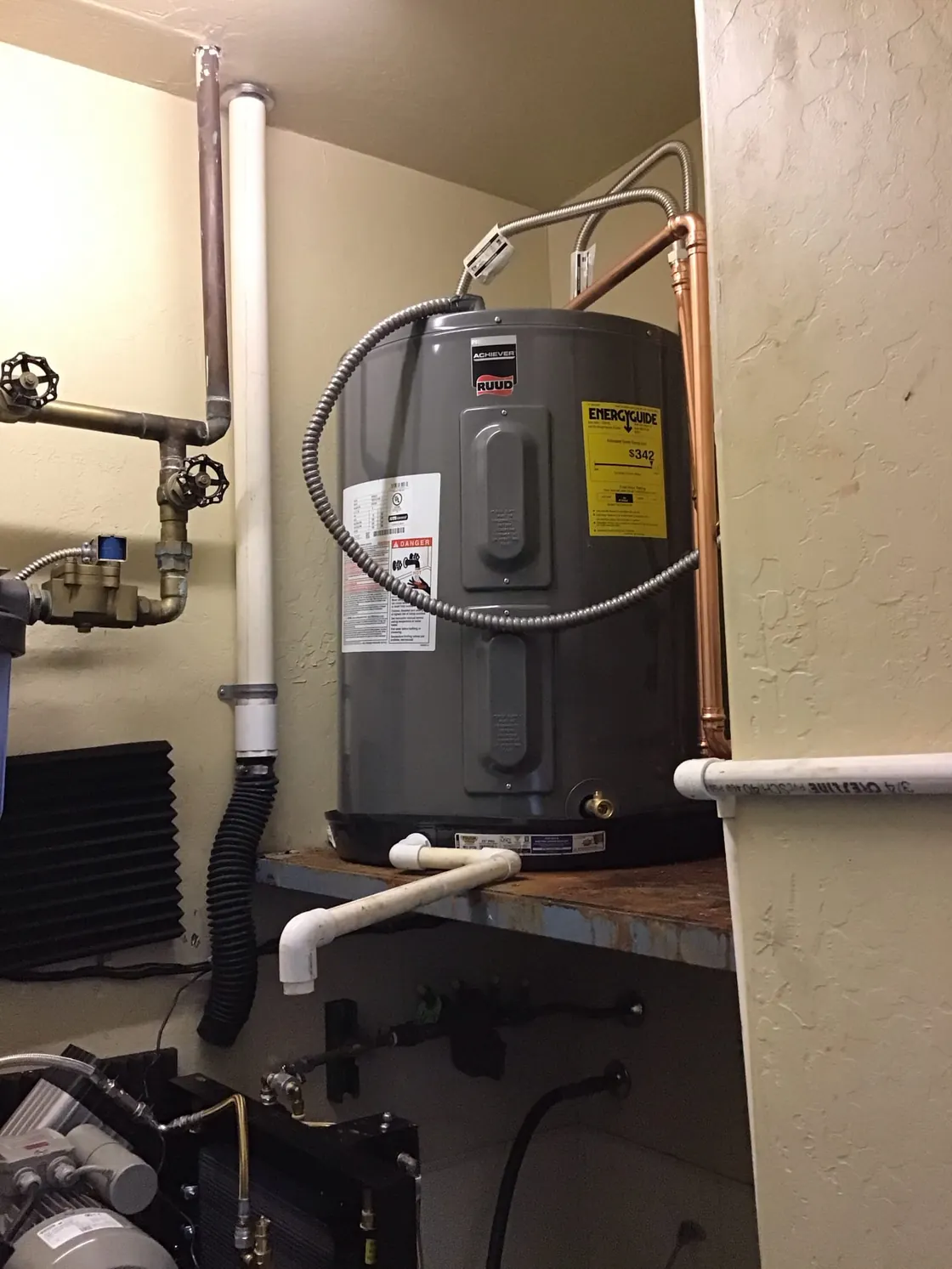
An electric tank water heater installed on a shelf in a mechanical space with copper and PVC piping
Trident at workAn electric tank water heater in a mechanical space.

Licensed in ArizonaROC 331536

Open 24/7Call when you need us

Peoria officeServing Sun City

Hear from our customersRead their Trident stories

Fix the fault, not just the symptom

Water heater repair for Sun City homes

Hot water problems can interrupt the whole day, especially when a heater starts leaking, making strange noises, producing rusty water or failing to keep up with demand. Trident Plumbing & Drain repairs traditional tank systems and tankless water heaters, including pilot, ignition and temperature problems.

Our team inspects the system, identifies the source of the issue and explains whether a repair, maintenance service or replacement is the sensible next step. Our Peoria office can schedule the visit; mention the heater type, its approximate age and what has changed.

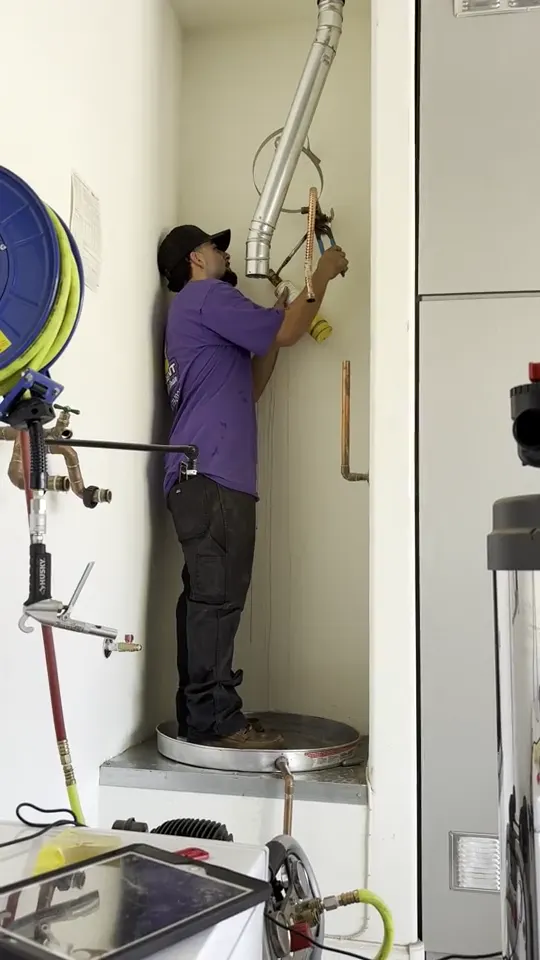
On the job: water heater connections. Silent footage from Trident's project library.

Common problems

Water heater problems we repair
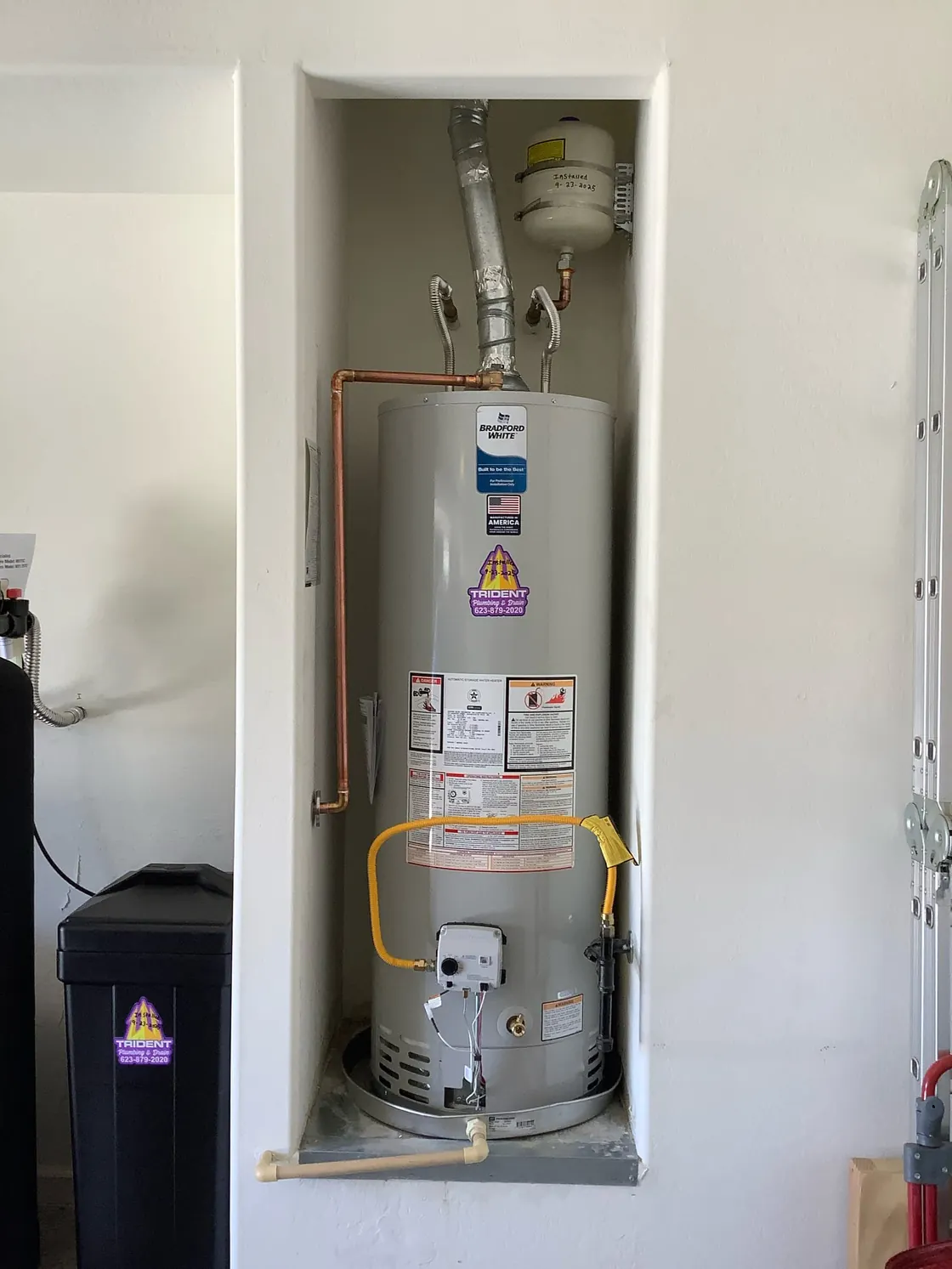
A tank water heater installed in a utility closet
A tank water heater and its available installation space.

No hot water, water that gets too hot or not hot enough, and hot water that runs out quickly are frequent reasons to call. So are leaks around the tank or its connections, popping or rumbling noises, rusty or discolored hot water and low hot-water pressure.

Problems are not always obvious at first. A small leak, a longer wait for hot water or a sudden temperature change can be an early sign that the system needs service, and addressing it early can help prevent a larger breakdown.
What the inspection checks

How the source of a fault is found

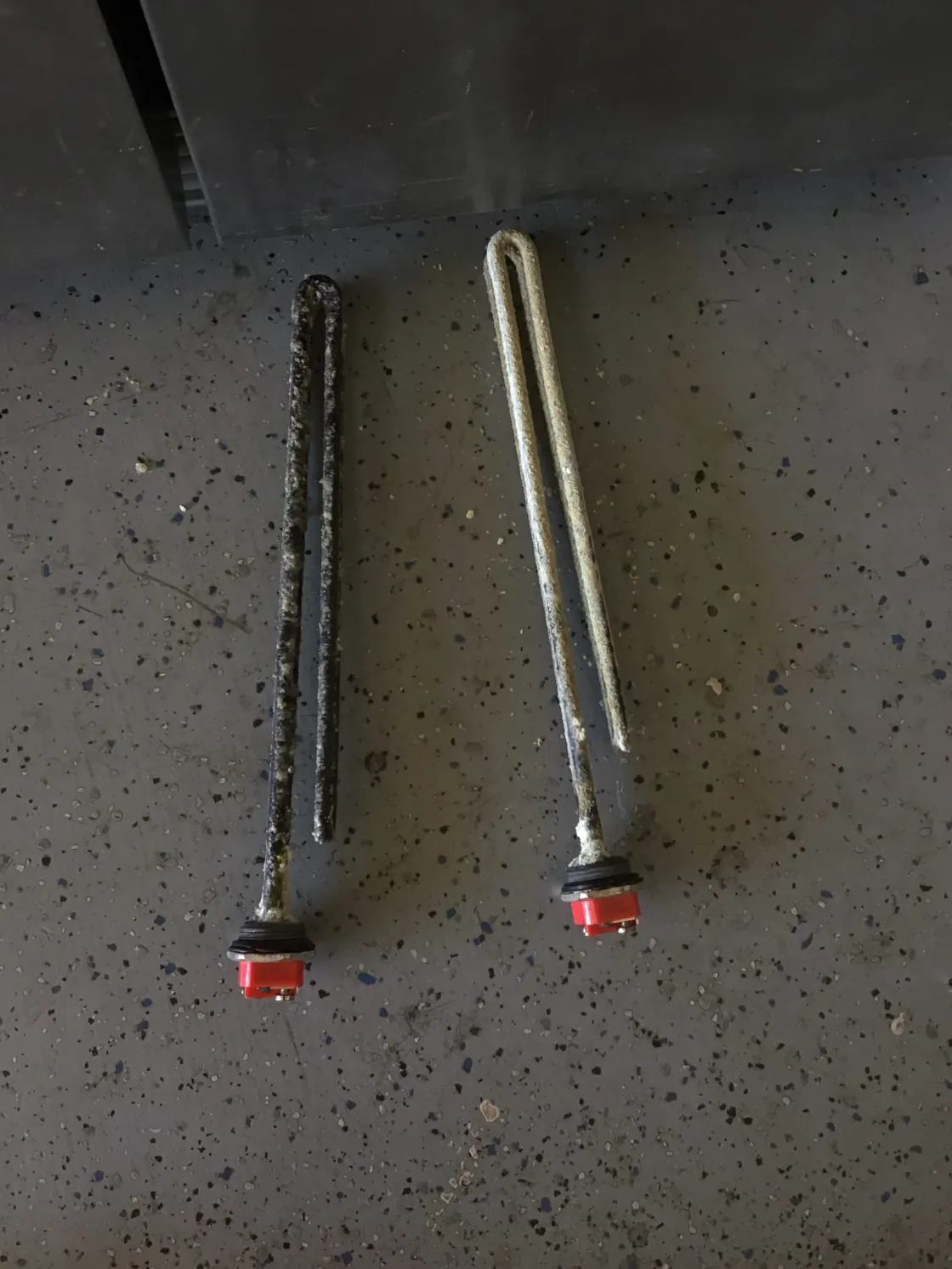
Removed water heater anode rods with visible wear
Removed anode rods showing wear from use.

Similar symptoms can come from different causes. Lukewarm water might trace to a thermostat, a heating element, a burner or sediment in the tank. A leak might come from a valve, a fitting or the tank itself. The inspection separates these before a repair is proposed.

Ask which component or connection is at fault and what else was checked. A useful recommendation names the problem and the work involved, so you know what is being fixed and why.

Tankless and gas units

Error codes, pilot lights and ignition problems

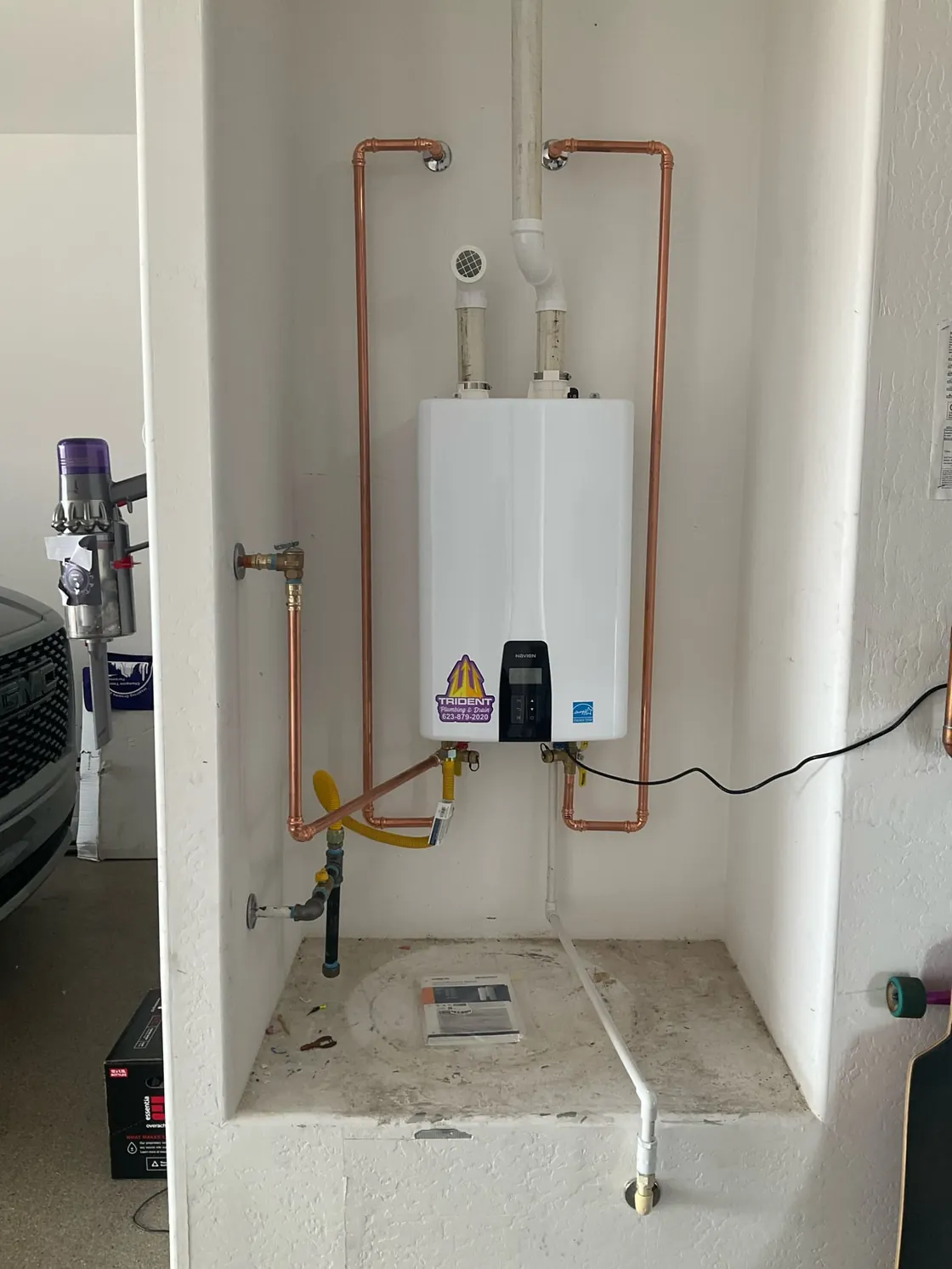
A tankless water heater installed above a raised platform
A tankless water heater and its connected pipework.

Tankless water heaters display error codes when something interrupts heating. The code is a starting point, and the technician checks the cause before replacing any parts. Note the code shown on the display when you request service.

On gas tank heaters, a pilot light that will not stay lit or a burner that will not ignite can stop hot water entirely. If it keeps going out, describe what you observed and leave further checks to the technician.

Aging units

When an aging unit may need replacement

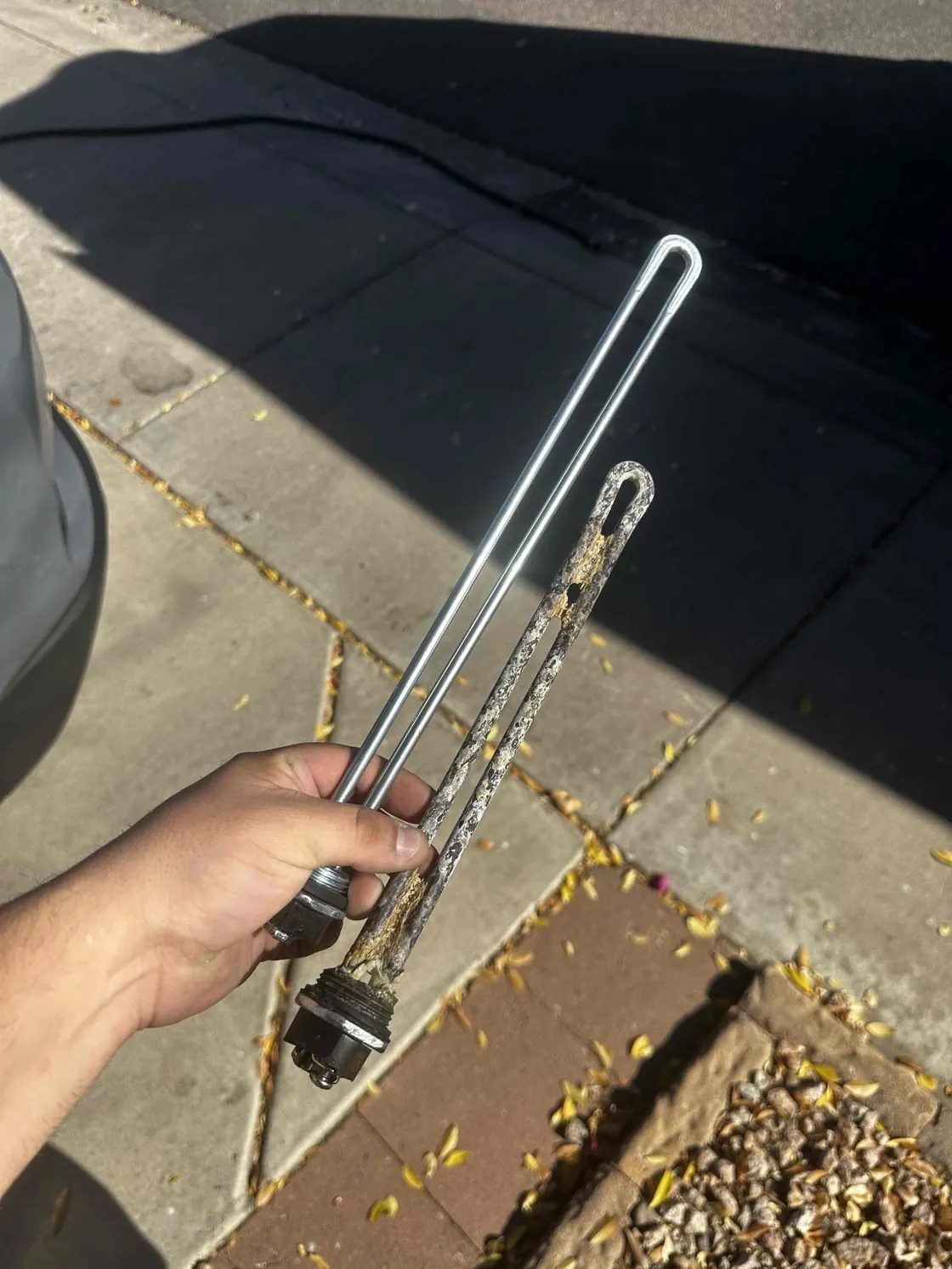
New and worn water heater anode rods held side by side
A comparison of new and worn water heater anode rods.

A heater that leaks from the tank body, has needed several service calls or is well into its service life deserves a replacement comparison. It may no longer justify further repairs, but the decision should follow the inspection findings.

If replacement makes sense, the next conversation is about sizing and type: household size, hot-water habits and whether a tank, tankless, hybrid or Marathon model fits. Regular maintenance afterward can help the new unit keep performing.

Hot side or both

Sorting a heater fault from a supply problem

EPCOR's water quality guide offers a simple first test. If cloudy or discolored water comes only from the hot side, the guide says the water heater is the source to check. If it shows up at several faucets on both hot and cold, the cause may be corrosion in the plumbing or the supply itself; EPCOR suggests running cold water until it clears, then calling its Customer Care team if it does not.

Particles tell you more. EPCOR links floating gray or white bits to a disintegrating dip tube, the pipe that carries cold water to the bottom of a tank, and advises calling a plumber. Sinking particles are likely calcium carbonate, which fits this water: EPCOR reports 7 to 11 grains of hardness and does not soften it. Tell us what you are seeing, and keep a sample in a clear glass if you can.

Repair pricing

Factors behind a water heater repair bill

A repair is priced once the fault is found. These are the parts of the job that change it.

We regularly schedule weekend appointments, with no additional fees. Preventative maintenance members save 10% on plumbing services and pay no emergency fee.

  • Which part failed, from a dip tube or thermostat to a gas control or the sensor in a tankless unit.
  • Whether heavy sediment has to be flushed before the heater can be tested.
  • Gas, electric or tankless, and how easy parts are to get for the model.
  • Access to the heater and its water, gas and vent connections.
  • Related fixes, such as a leaking drain valve or a corroded fitting.

Clues from EPCOR

Is it the heater or the water supply?

EPCOR's own water quality guide helps separate a heater fault from a supply problem. Here is what it says.

Discolored water from the hot tap alone
Hot side only

EPCOR's guide says dirty or cloudy water that comes only from the hot tap implicates the water heater, and it suggests consulting the manufacturer.

Source: EPCOR, Water quality 101 (opens in a new tab)
Particles EPCOR links to a failing dip tube
Floating bits

Gray or white particles that float point to a disintegrating dip tube, according to EPCOR. Particles that sink are likely calcium carbonate.

Source: EPCOR, Water quality 101 (opens in a new tab)
Hardness range in EPCOR's 2025 report
7–11 gr/gal

With hardness of 7 to 11 grains and no softening by EPCOR, sediment settles in tanks and can cause popping, slow recovery or lukewarm water.

Source: EPCOR, 2025 Sun City Water Quality Report (opens in a new tab)

Your local team

Here for your
Sun City home.

Our Peoria office serves Sun City. Call about your address, tell us what needs attention, and we'll help you arrange service.

Explore Sun City on the map (opens in a new tab)
Sun City, ArizonaLocal service
Sun City and Trident's Peoria office Major roads near Sun City, with separate markers for the city location and the Peoria office that serves it. Sun City WestSurprise
City locationTrident office
Roads © OpenStreetMap (opens in a new tab) contributors. Locations: U.S. Census Bureau.

Your Peoria team

Get your hot water back on track

Describe the heater and what it is doing, and our Peoria office can arrange a repair visit for your Sun City home.

Peoria office
26134 N. 121st Ave
Peoria, AZ 85383
Office directions (opens in a new tab)Send a service request

Trident memberships

Yearly care, 10% off repairs.

  • Preventative maintenanceOne year: water heater flush, whole-home inspection, 10% off plumbing services, waived emergency fee
  • Salt serviceOne year: softener salt added every 6–8 weeks
  • Reverse osmosisFive years: annual filter changes; sanitizing not included

Ask our Peoria team for current pricing.

From a Trident customer

Good work.
Real experiences.

Read more customer stories
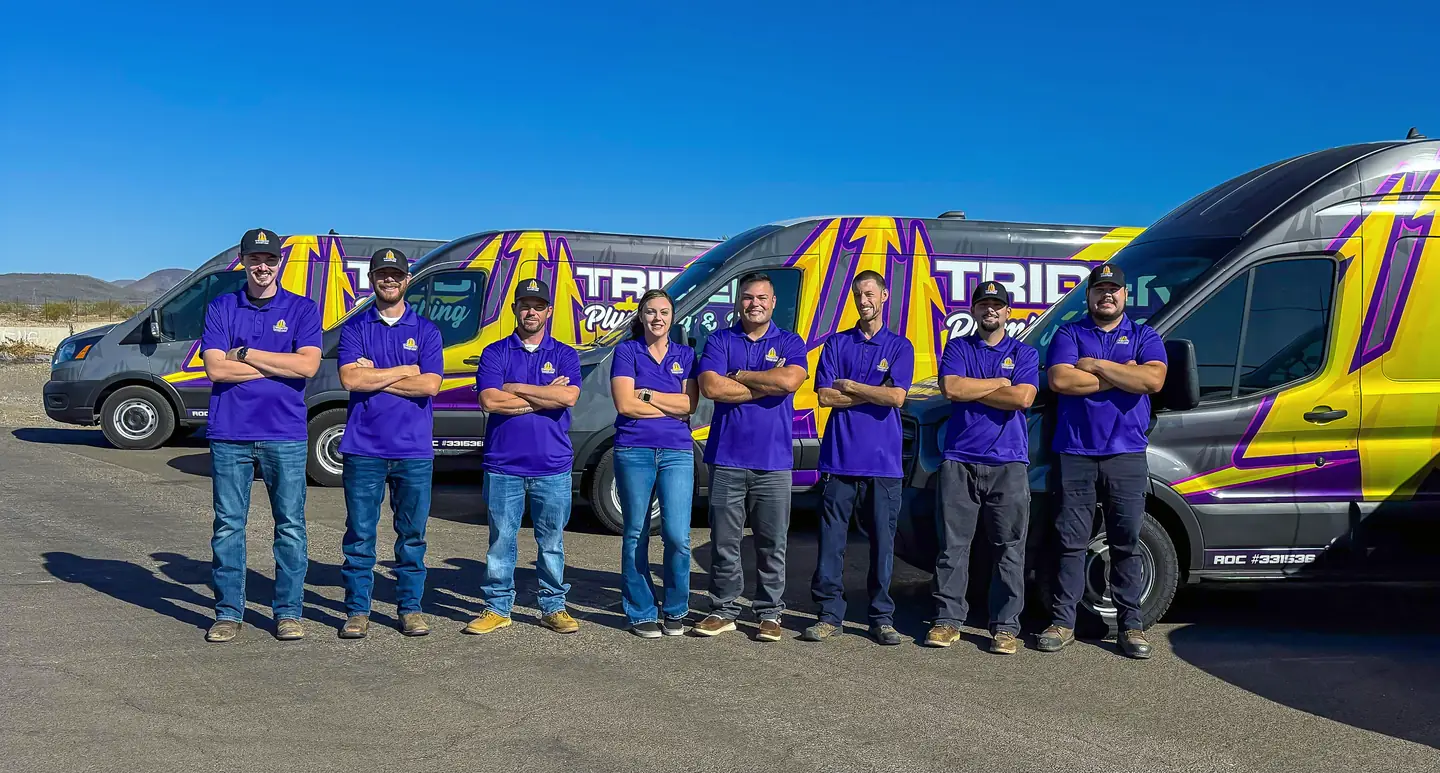
The Trident team standing together in front of their purple and gold service vans
The Trident team from our Peoria office.
Our 12 year old water heater was leaking. I called and spoke with Shelby who was able to dispatch a technician immediately, same day… Tyler arrived on time, worked efficiently and cleaned up after himself.
Amber E.Peoria Google review ·

Answers before you book

Questions about
water heater repair in Sun City.

Questions about water heater repair in Sun City? Start here, or tell us what is happening at your home.

Ask our team
Why is my hot water rusty or discolored?

Discolored hot water can come from corrosion inside the tank or from sediment. An inspection determines the source and whether repair or replacement is appropriate.

What do popping or rumbling noises mean?

Noises often come from sediment buildup in a tank heater. Flushing may help, but the technician checks whether a component or the tank also needs attention.

Can you repair tankless water heaters?

Yes. Trident repairs tankless units, including error-code and ignition problems, as well as traditional tank systems.

Is financing available if the heater needs replacing?

Financing options are available. Review the financing page or ask our Peoria office for details before deciding.

Why are there white flakes in my hot water?

EPCOR's guide says particles that sink are likely calcium carbonate and that the heater probably needs routine maintenance. Flushing the tank is the usual first step. Particles that float can mean the dip tube is breaking down, and EPCOR advises calling a plumber for that.

How do I tell whether a water problem is EPCOR's or my heater's?

Compare the taps. EPCOR says discoloration from the hot side alone points to the water heater. If hot and cold water at several faucets are both affected, run the cold water until it clears, and call EPCOR's Customer Care team if it does not.

24 hours · 7 days

Get your hot water back on track

Describe the heater and what it is doing, and our Peoria office can arrange a repair visit for your Sun City home.

Call Now Book Online