Glendale, Arizona

Your Local Experts for Slab Leak Repair in Glendale, AZ

A leak under a concrete slab is rarely visible until it has been running for a while. Trident locates and repairs slab leaks for Glendale homes and explains the repair options before work starts.

Request service online

Woman, Veteran, & Family Owned

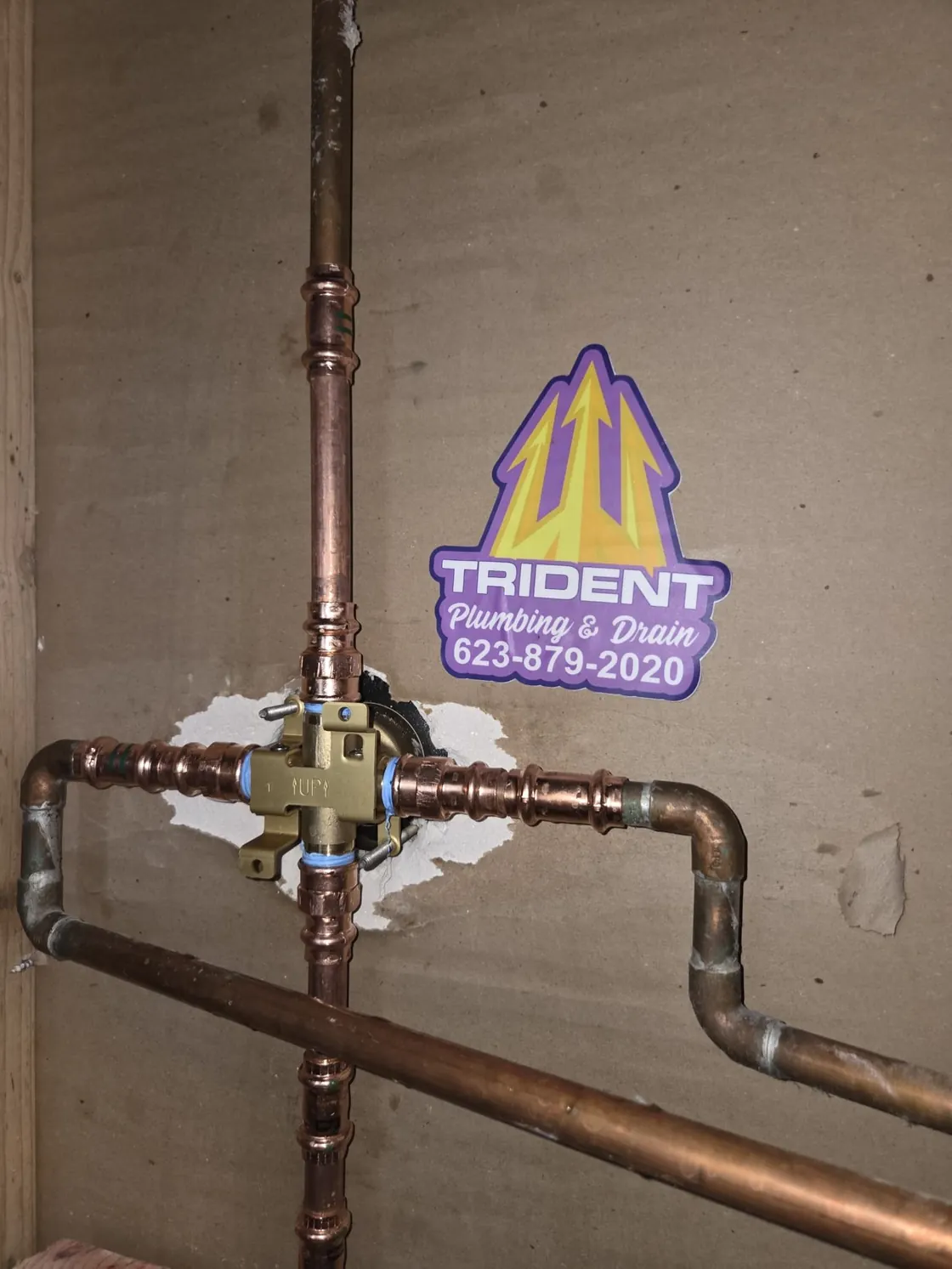
New copper water piping and a valve body on a wall with a Trident sticker beside it
Trident at workNew copper piping with a Trident sticker on the wall.

Licensed in ArizonaROC 331536

Open 24/7Call when you need us

Peoria officeServing Glendale

Hear from our customersRead their Trident stories

Hidden leaks, located and repaired

Slab leak repair in Glendale, AZ

Shifting soil, foundation movement and corrosion of buried pipes are among the conditions that can lead to slab leaks. Left unchecked, a slab leak can damage flooring and the structure around it. Trident Plumbing & Drain detects and repairs slab leaks, finding the leak first and then fixing the affected line.

Our Peoria office arranges service for Glendale. Describe the signs you have noticed and when they began. You do not need to know which pipe is involved; the detection work is there to establish that.

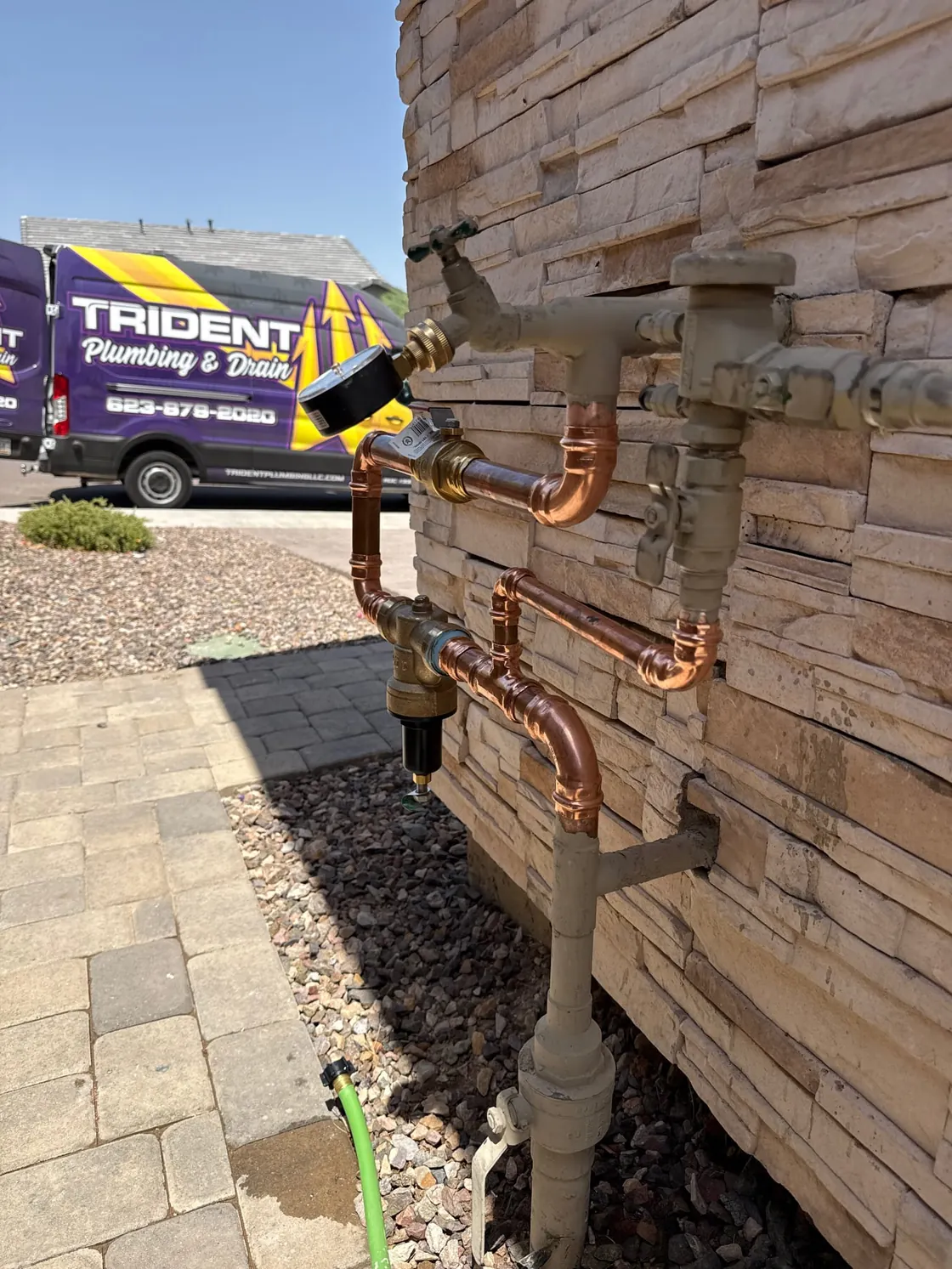
Copper water supply piping on a stacked-stone wall with a Trident van parked in the background
Exterior supply piping, with a Trident van in the background.

Watch for the clues

Warning signs you may have a slab leak
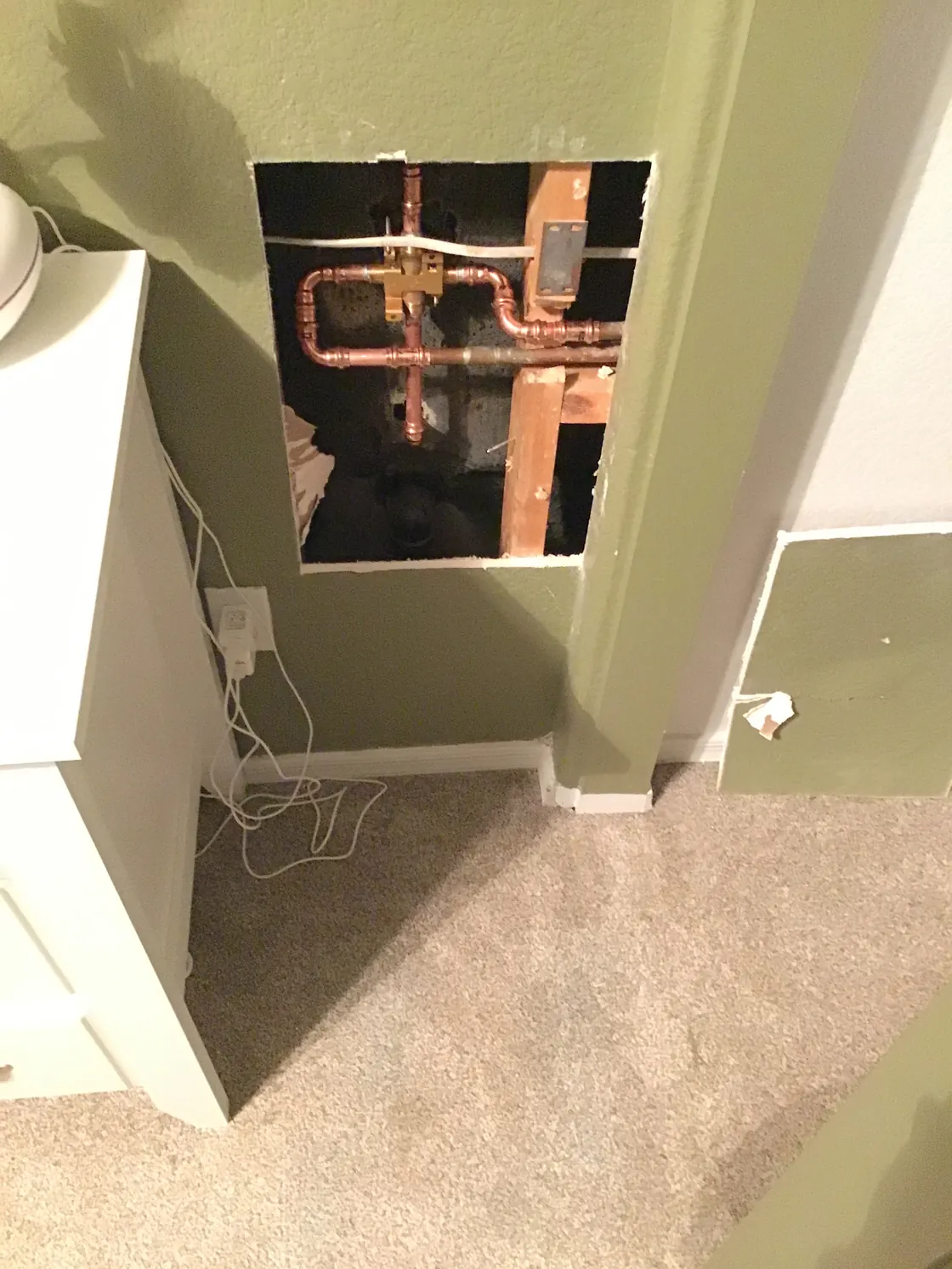
New copper water lines exposed through an opening in a painted bedroom wall
Copper supply piping exposed through a wall opening.

Because slab leaks occur beneath concrete, the signs are often subtle. Watch for an unexplained rise in your water bill, damp or warm spots on the floor, lower water pressure throughout the home and the sound of running water when every tap is off.

Mold or mildew along walls or flooring and new cracks in the floor or foundation can also appear. Any one of these can have other causes, so note where and when you noticed them; that record helps the detection work start in the right place.
Find it first

Locating the leak before opening the floor

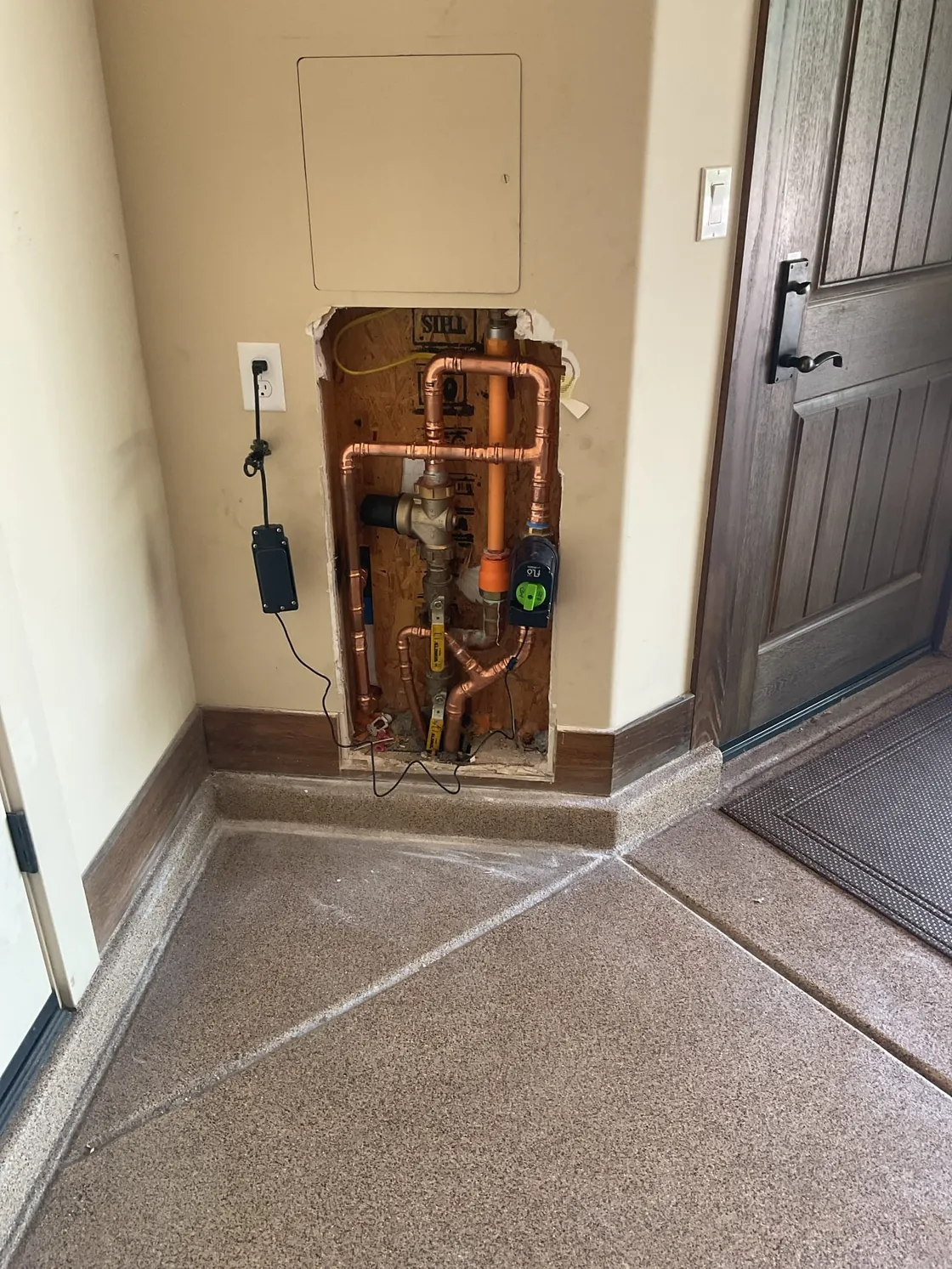
An access opening beside an entry door showing new copper piping and a device mounted on the line
Copper piping behind a wall access opening.

Slab leaks are not always visible at the surface, so detection relies on specialized equipment to narrow down where the water is escaping. The aim is to identify the affected line and its location before deciding how to reach it.

Ask what the detection results showed and how the location was confirmed. If water is actively spreading, say so when you call so the office understands the urgency. If you know how to read your water meter, note whether it moves while all fixtures are off.

Choose the approach

Direct repair or rerouting the line

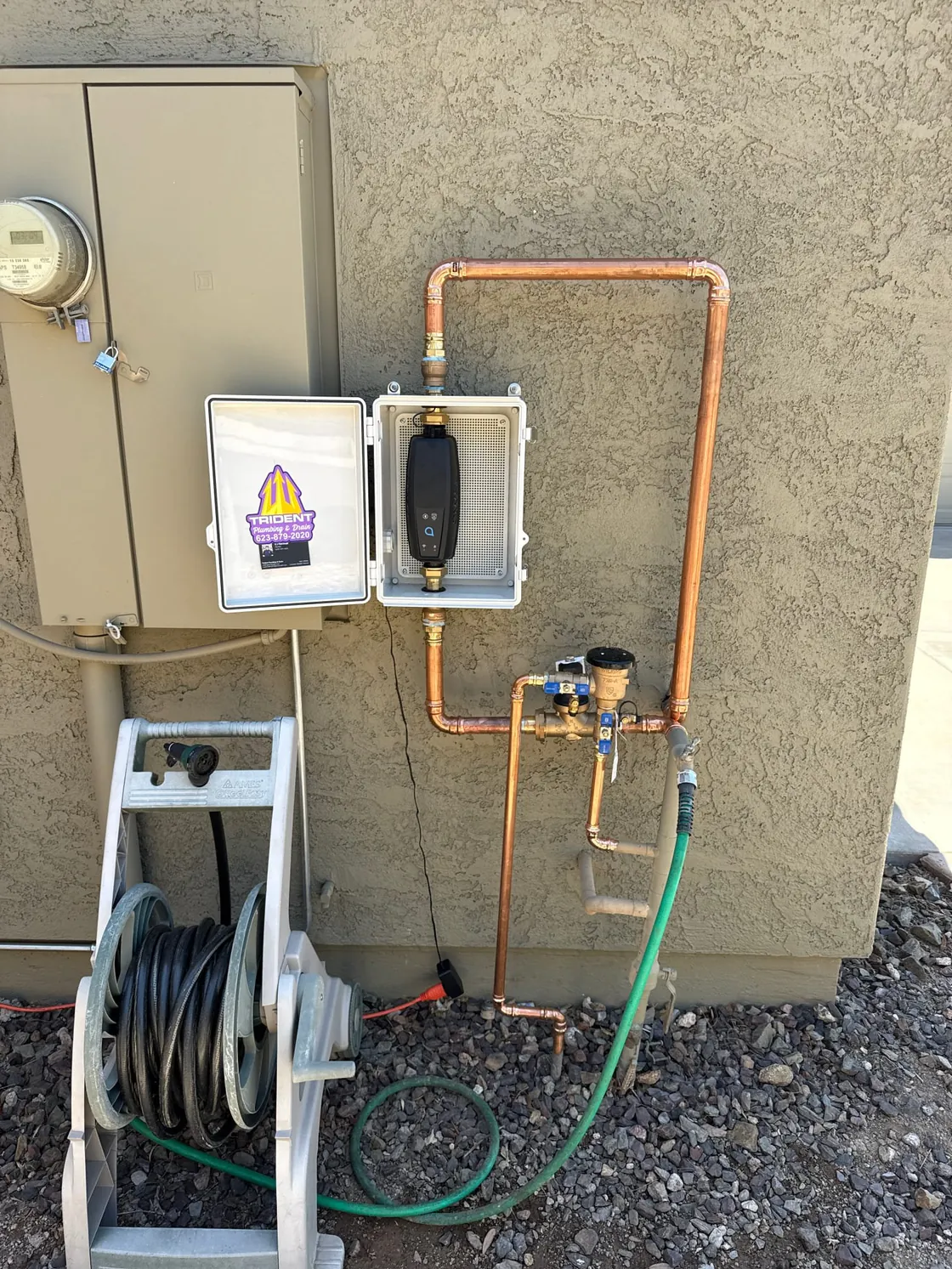
An installed leak monitoring device connected to exterior water-supply piping
An installed leak monitoring device and its water-line connections.

Once the leak is located, the repair can take different forms. A direct access repair reaches the damaged section through the slab, while rerouting runs a new line that bypasses the leaking section. The leak location, the pipe condition and the layout of the home shape which fits.

Ask which approach is being recommended, why it suits the findings and what access the work will need. If the leak is one of several or the pipe shows wider corrosion, repiping may also be worth discussing.

Why timing matters

Why a slab leak should not wait

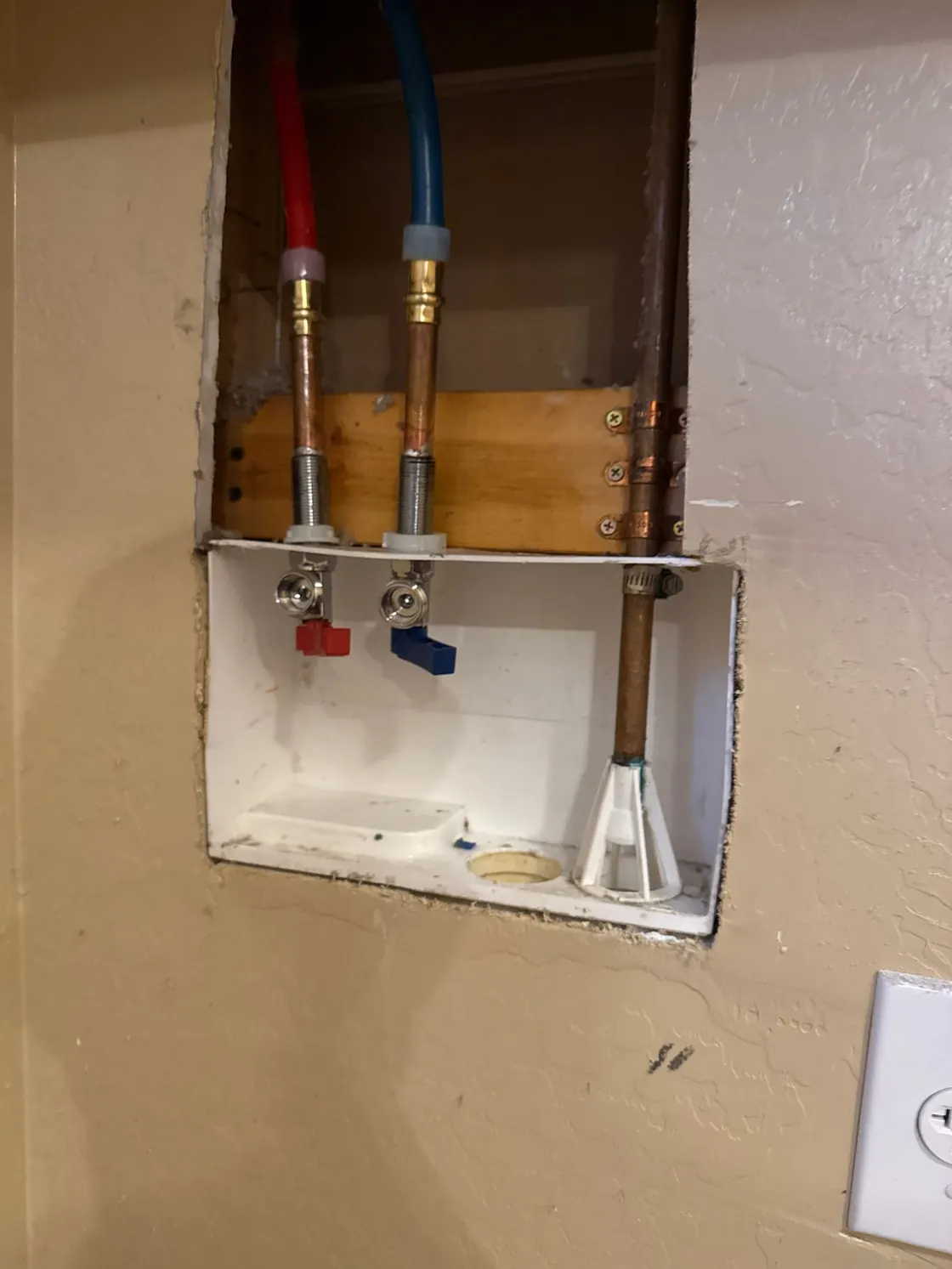
An opened laundry box wall showing the hot and cold supply lines and valves
Supply lines exposed above a laundry box.

A slab leak does not resolve itself. Water escaping beneath the floor keeps adding to utility bills, can soak flooring and, over time, can affect the foundation and surrounding structure. Addressing the leak early limits how far that damage can spread.

After the repair, ask what testing confirmed the fix and file the paperwork with your home records. If moisture, sounds or pressure concerns continue, report them to the office so the next assessment can build on what was already found.

Read the meter

Your meter, your side of the line

Glendale City Code divides the water system at the meter. The City maintains and repairs the meter itself, while the owner maintains the lines on the property and is responsible for leaks, and the damage they cause, from any equipment past it. A supply line leaking under the slab is on the owner's side, so finding and repairing it falls to you and the plumber you choose. If water is pooling in the meter box itself, report it to the City instead.

The City recommends reading your meter to confirm a leak and watching your bill for an early warning. It puts the average single-family home at 9,000 gallons a month and advises checking for leaks after a sudden rise in use. Meters are changing too: the City is replacing all of them with electronic models, starting with a pilot of about 3,500 locations, and it will notify customers when portal leak alerts are available.

Repair choices

Factors behind a slab leak estimate

No two slab leaks are priced the same, because the method depends on where the leak is and the condition of the pipe around it. These factors make the difference.

A reroute or other large repair can be financed through GreenSky®. Our preventative maintenance members save 10% on plumbing services.

  • How precisely the leak can be located before the floor is opened.
  • Opening the slab at the leak, or bypassing it with a new line overhead.
  • Flooring that has to come up, and its replacement.
  • Pipe condition near the leak and whether more than one leak turns up.
  • Pressure control, if high pressure is adding strain.

Below the slab

What to know about leaks on your side of the meter

A leak under the floor sits on the owner's side of the line. These City figures help you spot one and plan the repair.

Where the owner's responsibility for leaks begins
Past the meter

City Code makes owners responsible for leaks, and the damage they cause, from any equipment on the owner's side of the meter.

Source: Glendale City Code, Sec. 33-28 (opens in a new tab)
Monthly use of an average single-family home
9,000 gal

That is the City's figure for an average single-family home. When your usage jumps without a reason, the City's advice is to check for leaks.

Source: City of Glendale, 2025 Water Quality Report (opens in a new tab)
First phase of the City's electronic meter rollout
3,500 meters

The City is replacing every meter with an electronic one that can send leak alerts, starting with a pilot of about 3,500 locations.

Source: City of Glendale, Water Meter Replacement (opens in a new tab)

Your local team

Here for your
Glendale home.

Our Peoria office serves Glendale. Call about your address, tell us what needs attention, and we'll help you arrange service.

Explore Glendale on the map (opens in a new tab)
Glendale, ArizonaLocal service
Glendale and Trident's Peoria office Major roads near Glendale, with separate markers for the city location and the Peoria office that serves it. PhoenixYoungtownSurprise
City locationTrident office
Roads © OpenStreetMap (opens in a new tab) contributors. Locations: U.S. Census Bureau.

Your Peoria team

Have the leak located

Tell our Peoria office what you have noticed in or around the floors of your Glendale home.

Peoria office
26134 N. 121st Ave
Peoria, AZ 85383
Office directions (opens in a new tab)Send a service request

Trident memberships

Yearly care, 10% off repairs.

  • Preventative maintenanceOne year: water heater flush, whole-home inspection, 10% off plumbing services, waived emergency fee
  • Salt serviceOne year: softener salt added every 6–8 weeks
  • Reverse osmosisFive years: annual filter changes; sanitizing not included

Ask our Peoria team for current pricing.

From a Trident customer

Good work.
Real experiences.

Read more customer stories
The Trident team standing together in front of their purple and gold service vans
The Trident team from our Peoria office.
We had one of those Saturdays that started out great until water starting coming out of one of our ceiling lights… she sent Quintin who got right on the problem and had us all fixed up in no time.
Edward O.Peoria Google review ·

Answers before you book

Questions about
slab leak repair in Glendale.

Questions about slab leak repair in Glendale? Start here, or tell us what is happening at your home.

Ask our team
What causes slab leaks?

Corrosion of buried pipes, shifting soil and foundation movement are among the possible causes. The detection and repair work focuses on finding the damaged line rather than assuming a cause.

How is a slab leak found without breaking up the floor?

Specialized detection equipment is used to narrow down the leak's location before any access is made. That keeps the repair focused on the affected section.

Is rerouting better than repairing the pipe directly?

Neither is right for every home. The choice depends on where the leak is, the condition of the line and the layout of the building. Trident explains the recommended option and why.

Can a slab leak wait until it gets worse?

Waiting lets water keep escaping beneath the floor, which can increase damage and water use. Arrange an assessment once the signs appear.

Will Glendale's new water meters warn me about a leak?

That is the plan. The City says its new electronic meters can send leak alerts, and a customer portal will show your water use, leak alerts and usage trends. Every meter will be replaced over several years, starting with a pilot of about 3,500 locations, and the City will notify customers when the features are available.

Why is my water bill suddenly higher?

A hidden leak is one possibility. The City puts the average single-family home at 9,000 gallons a month and suggests checking for leaks when use jumps without explanation. If there is no obvious cause, such as a running toilet or a broken sprinkler, a leak detection visit can help locate it.

24 hours · 7 days

Have the leak located

Tell our Peoria office what you have noticed in or around the floors of your Glendale home.

Call Now Book Online