The toilet is the one fixture nobody ignores for long. It runs after every flush, refuses to clear, rocks slightly on the floor or leaves a damp ring at its base, and the household notices at once. Most toilet problems have a short list of causes, and a few of them are easy to check on your own.
This guide explains the common failures behind toilet repair in Peoria, AZ, what you can safely look at and when it makes sense to call Trident Plumbing & Drain.
Why a toilet runs on and on
Inside the tank, a rubber flapper seals the opening to the bowl, and a fill valve refills the tank after each flush. When the flapper hardens or warps, water leaks past it into the bowl, the tank level drops and the fill valve opens again to top it off.
You hear a trickle or a periodic refill with nobody using the toilet. A fill valve that is slow to shut off sends water down the overflow tube instead. Either cause wastes water around the clock and shows up on the bill before it shows up anywhere else.
Quick checks for a running toilet
You can test the flapper without any tools. Add a few drops of food coloring to the tank, wait twenty minutes without flushing and see whether color appears in the bowl. If it does, the flapper is not sealing. Look at the chain too, since one that is too short holds the flapper open and one that is too long can tangle under it.
The EPA's WaterSense toilet guidance explains why a silent leak can waste a surprising amount of water.
Have a toilet that will not behave? Call Trident Plumbing & Drain at (623) 879-2020.
Toilet repair in Peoria, AZ for a stubborn clog
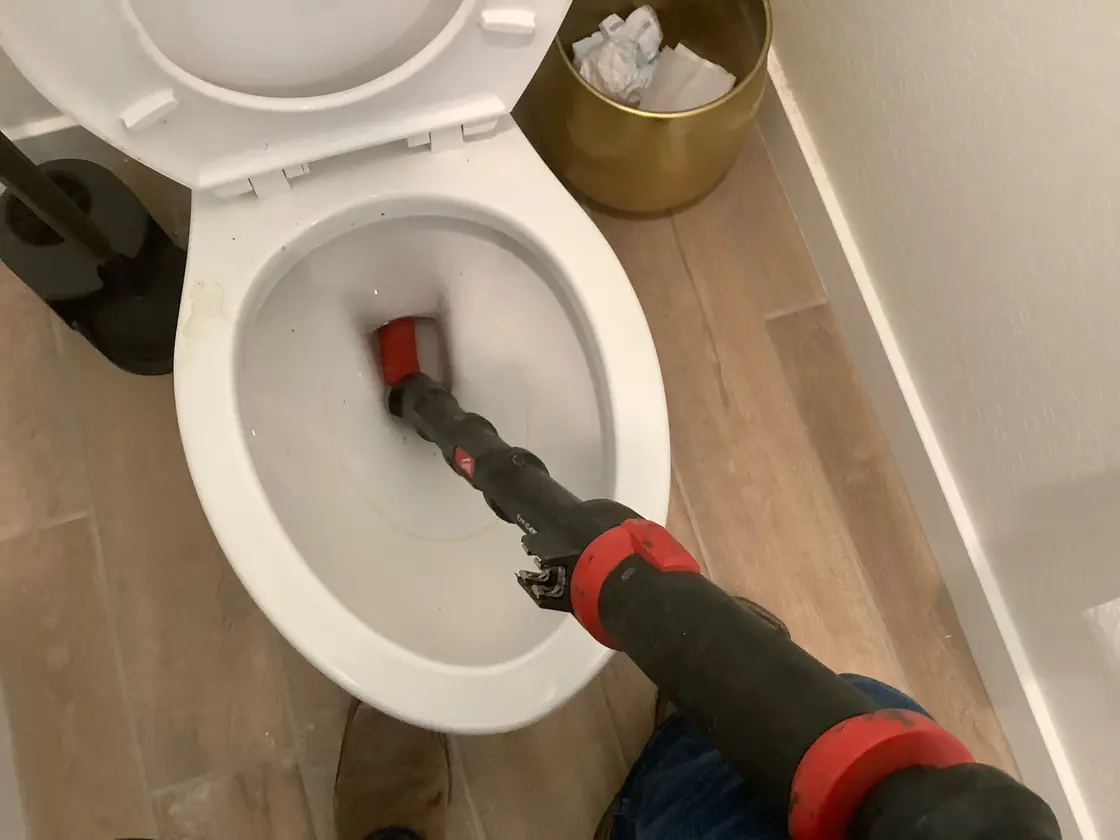
A toilet that clogs once is usually a user issue. One that clogs repeatedly points to something in the drain. Trident's toilet repair page for Peoria covers weak flushes and repeated blockages, and the cause may be a partial obstruction in the trap, a buildup in the branch line or a problem further down.
If several fixtures drain slowly or gurgle together, the trouble is probably in the main line rather than the toilet, and that is a drain question that Trident's drain cleaning in Peoria service addresses.
When the leak is at the base
Water around the foot of a toilet can come from three places. The supply line or its shutoff valve may be dripping, the tank bolts or gasket may be leaking, or the wax or rubber seal between the toilet and the floor flange may have failed. The last one matters most, because a bad seal lets water seep beneath the toilet and into the subfloor without making a visible puddle.
A toilet that rocks, a soft spot in the floor or a persistent odor can all be signs of a failing seal, and the longer it continues, the more damage the floor takes.
A scenario, the toilet with the slow trickle
Picture a homeowner who notices the toilet in the hall bathroom refilling every half hour. The water bill has gone up, but nothing visibly leaks. The plumber opens the tank, finds a flapper that has stiffened with age and sees mineral deposits on the valve seat that keep it from sealing.
Replacing the flapper and cleaning the seat stops the trickle in a short visit, and the homeowner learns how to do the dye test in the future. The savings were quiet, but they were real, and they began the moment the toilet stopped running.
What causes a toilet to flush weakly
A weak flush has its own mechanism. When the toilet flushes, water rushes from the tank into the bowl through rim holes and a jet at the bottom, and the surge pushes waste through the trap. Mineral deposits can block the small rim holes and weaken the surge, a low tank level reduces the volume available and a partial obstruction in the trap slows the whole process.
Checking the water level in the tank against the fill line and looking at the rim holes with a small mirror are safe first steps, and a plumber can handle the rest, including cleaning the jets and testing the drain.
What a plumber looks at during a toilet visit
The technician checks the tank components, the supply line and shutoff valve, the seal at the base and the way the toilet sits on the flange. For a clog, the plumber considers whether the obstruction is in the toilet or beyond it. For a rocking or leaking base, the toilet may need to be lifted so the flange and subfloor can be inspected before the new seal goes in.
Ask what was found and why the repair was recommended, and whether other parts, such as the supply line, should be replaced at the same time.
Repair or replace the toilet
Most toilet problems are repairs, since the porcelain rarely wears out. Replacement makes sense when the bowl or tank is cracked, when the toilet clogs constantly despite a clear drain or when you want a different style or a more water-efficient model. Trident also handles fixture installation and repair when a toilet is part of a larger bathroom project.
Call about toilet repair in Peoria, AZ
If a toilet is running, clogging or leaking, an inspection can usually find the cause in one visit. Call Trident Plumbing & Drain at (623) 879-2020 and describe what the toilet is doing.