
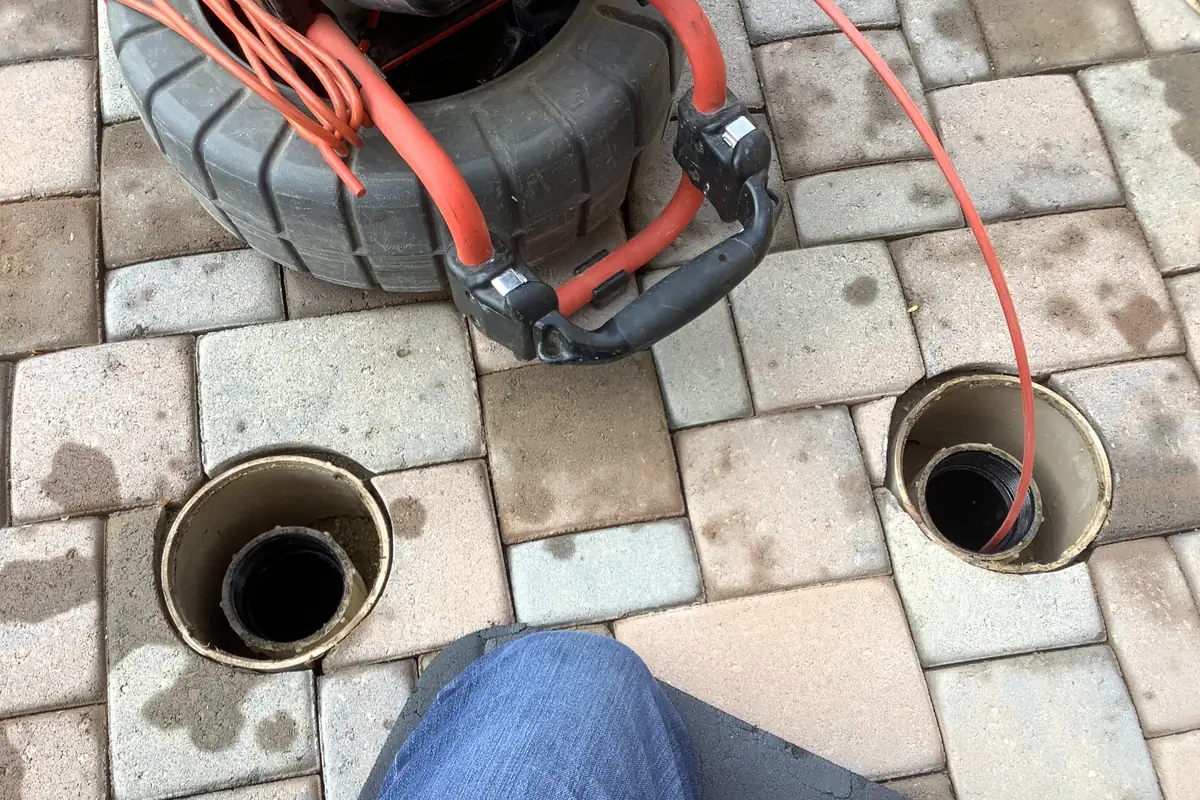
If you are buying a home in Peoria, a sewer scope is the inspection that looks at the one pipe you cannot walk up to: the buried line that carries wastewater from the house to the public sewer. A general home inspection is worth doing, but it stops at the ground. A sewer scope puts a camera inside that line so you can see its condition while you are still under contract.
InterNACHI’s sewer scope inspection standards define the service as a video inspection of the lateral sewer line, also called the building sewer, from the house at or near the foundation to the municipality’s or HOA’s tap or septic tank. Plumbers usually call that pipe the sewer lateral.
Why a home inspection stops at the ground
The InterNACHI Home Inspection Standards of Practice say a home inspector is not required to inspect underground utilities, and that an inspection will not identify concealed or latent defects. Your sewer lateral is both underground and hidden inside a pipe. An inspector can flush every toilet and run every faucet, and the drains can seem fine even while roots work into a joint near the street.
Ownership matters too. The City of Phoenix, for example, says on its water and sewer line page that property owners are responsible for maintaining and repairing the sewer and water lines that run through their property and connect to the city’s main lines. The same page notes that responsibility may vary and that condo owners should check with their HOA.
Ask the City of Peoria or your HOA how this works for the address you are buying. Where the owner holds that responsibility, the buyer inherits the line, defects included, at closing.
What a sewer scope finds, and what causes it
The sewer scope standards list what an inspector reports as needing correction, including visible cracks, root intrusion, any offset over 1/4 inch, an egg-shaped line, standing water over 1 inch, blockages, and crushed, broken, separated or collapsed pipe. Each of those findings has a physical cause:
- Root intrusion. Roots grow toward moisture, and a sewer joint, where the bell end of one pipe fits over the next, gives off a little water vapor. In a hot, dry climate like ours, that damp joint draws fine roots through any gap, where they thicken and catch paper and solids until flow slows.
- Offsets and sags. Soil settles and shifts, and the pipe moves with it. When one section drops or slides against the next, the joint forms a lip, called an offset, that snags waste. A low spot, called a belly, holds water that should drain away, so solids settle there. Soil pressure can also squeeze a pipe out of round into the egg shape the standards mention.
- Pipe breakdown. Metal pipe such as cast iron rusts from the inside and grows scale, a rough crust that narrows the opening. Some pipe walls delaminate, meaning they peel apart in layers, and concrete pipe can crumble. Cracks follow and let roots and soil in. Plastic pipe, such as black ABS or white PVC, does not rust, but its joints can still pull apart or sag when the soil moves.
- Grease. Cooking fat goes down warm and liquid, then cools and hardens on the pipe wall, narrowing the line layer by layer.
- Collapse or separation. When a section breaks, gets crushed or pulls apart at a joint, wastewater leaks into the soil and soil washes into the pipe.
How a sewer camera inspection works
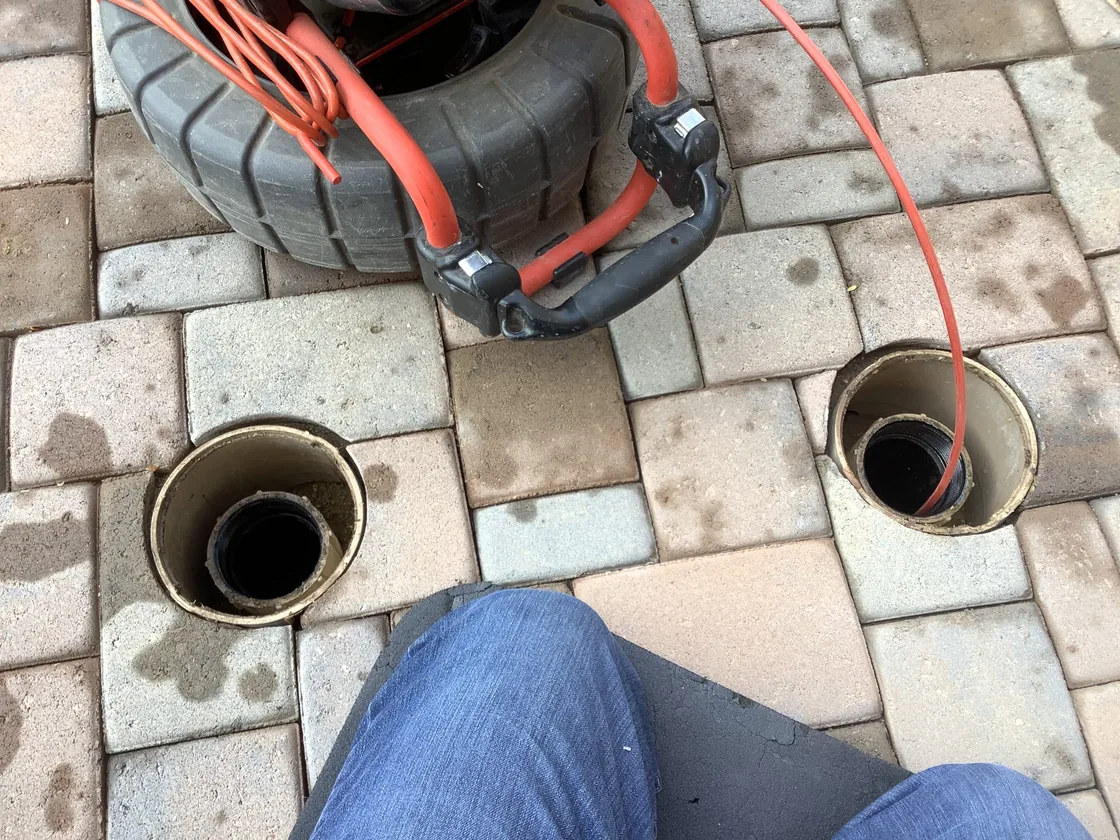
A sewer camera inspection uses a few pieces of equipment you may see named in the report:
- Cleanout: an access fitting on the drain line, closed with a threaded plug and often outside near the foundation. A two-way cleanout has one opening that faces the house and one that faces the street.
- Camera head: a waterproof camera with its own lights that shows the pipe wall on a monitor while the footage records.
- Push cable and reel: the stiff but flexible rod that carries the camera head, fed by hand from a reel with a distance counter.
- Sonde and locator: a small transmitter in the camera head and a handheld receiver that finds it from above ground.
When we run a camera down a lateral, the distance counter tells us how far out each joint, material change or pool of standing water sits.
The InterNACHI standard says the report describes the pipe material when possible and outlines which portions were inspected, which were not, and why. Ask for the video file too, so a plumber can review the same footage later.
The standard also spells out its limits. The inspection is not technically exhaustive and will not identify concealed or latent defects. The inspector is not required to pull toilets, enter unsafe areas, scope the in-house portion of the building drain, or locate and mark defects.
A plumber fills that gap, using the sonde and locator to find a defect from above ground and mark the spot, so any repair targets the right part of the yard.
A safety note for buyers: leave the cleanout caps to the inspector or plumber. If the line is backed up, wastewater can surge out the moment a cap loosens, and raw sewage carries germs you do not want on your hands or face.
When a sewer scope is most worth it
A sewer scope makes sense on most purchases, and some homes raise the stakes:
- Big trees near the line. Mature trees in the front yard can share ground with the lateral on its way to the street.
- A history of slow drains or backups. If anyone mentions gurgling drains, repeat clogs or a past backup, the camera shows whether the cause is a simple clog or a pipe defect.
- A house that sat vacant. An empty house has had little water moving through its line, so a partial blockage can go unnoticed until a new household starts daily showers and laundry.
- Additions over the line. A room addition or patio over the lateral makes any repair beneath it more involved, so know the pipe’s condition first.
Timing the scope and reading the results
Book the sewer scope early in your inspection period, so there is room for a follow-up visit or a repair plan if the video shows trouble. Deadlines and the handling of findings depend on your purchase contract, so talk with your real estate agent, and an attorney if needed, before you decide anything.
Picture a buyer in Peoria who loves a house with mature trees out front. The seller mentions no drain trouble and the home inspection comes back clean, but the sewer scope tells a different story: the camera’s distance counter marks fine roots at a joint partway out, then a sag near the street where water stands in the pipe.
That gap is why the two inspections work as a pair. Here is how they compare on the points buyers ask about:
- What each one looks at: a home inspection covers the systems an inspector can readily reach, while a sewer scope runs a camera through the buried lateral.
- The sewer line itself: InterNACHI’s home inspection standards do not require the inspector to inspect underground utilities, and its sewer scope standards are written for exactly that pipe.
- What you receive: a written home inspection report, versus a video plus a report that lists defects and any sections the camera could not reach.
- What neither one does: neither identifies concealed or latent defects, so a clear result shows the pipe’s condition that day, not every hidden flaw.
-
Cleaning (the roots). Light roots, grease or scale in an otherwise sound pipe can usually be cleared with drain cleaning, using a cable machine (a motorized drain snake) with a root-cutting head, or hydro jetting, which sends a high-pressure stream of water through a jetter nozzle to scour the pipe wall. Roots that came in through a joint can grow back, so plan on a follow-up camera check.
-
Repair (the sag). Offsets, breaks, separations and sags that hold water are structural, and no amount of cleaning moves a pipe back into line. A plumber needs to locate the defect and repair that section, which falls under sewer services rather than drain cleaning.
Frequently asked questions
Is a sewer scope part of a home inspection?
Usually not. InterNACHI’s home inspection standards do not require the inspector to inspect underground utilities, and the buried lateral is one. A sewer scope is a separate inspection with its own standards and report, so ask for it by name.
What can a sewer scope miss?
The camera sees only the inside surface of the pipe it can reach. The standards say the inspection will not identify concealed or latent defects, and a heavy blockage can stop the camera short. The report should say which portions were not inspected and why.
Who is responsible for the sewer line?
That depends on the city and the property. In Phoenix, for example, the city places the lines on private property with the owner. For a home in Peoria, confirm with the city or your HOA, and ask your agent how your contract treats the line.
Schedule your sewer scope with Trident Plumbing & Drain
A sewer scope will not decide whether you buy the house, but it swaps a guess about the most hidden pipe on the property for video you can review with your agent. If you are under contract, call Trident Plumbing & Drain at our Peoria office, (623) 879-2020, or our North Phoenix office, (623) 257-3481, or schedule a sewer camera inspection online. When you book, mention your inspection deadline and where the cleanouts are, if you know.