
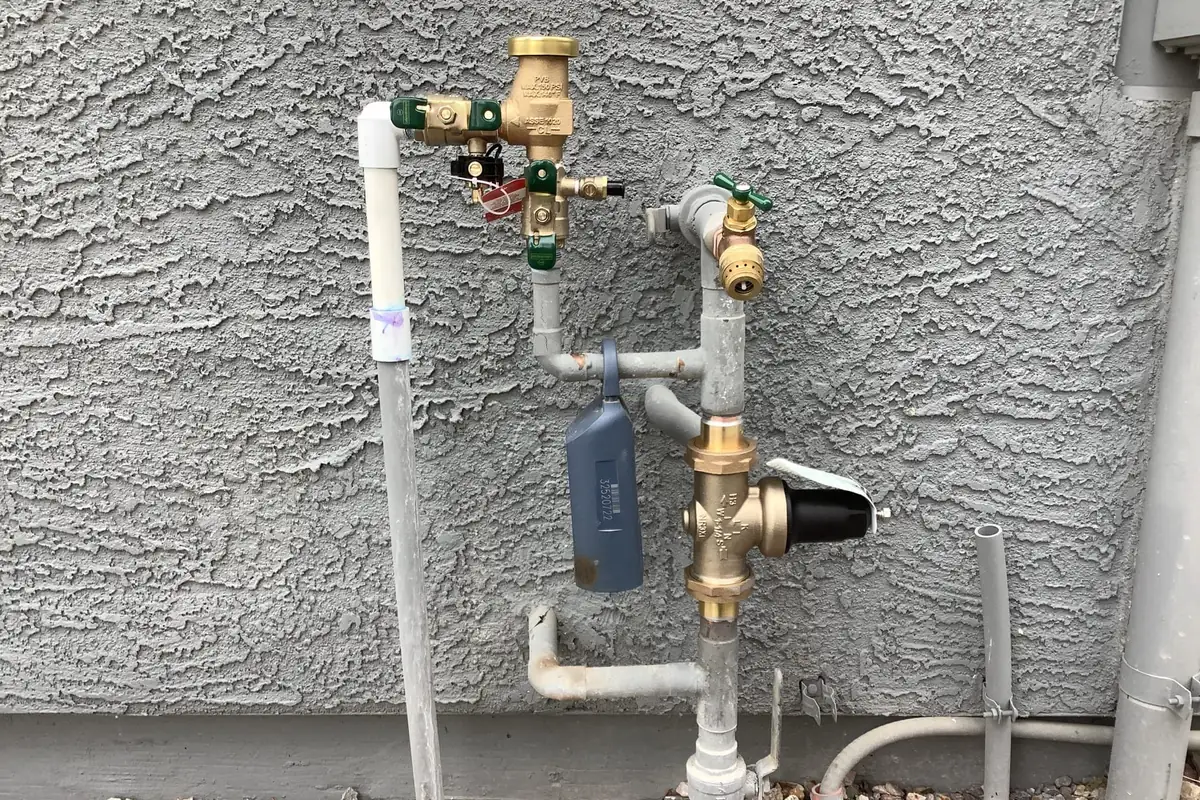
A Phoenix homeowner opens a city notice that mentions “backflow testing” and gives a due date. In the front yard, beside the irrigation valves, a brass fitting with two small handles sticks up from the gravel. Few people think about that fitting, yet its job is to keep sprinkler water from flowing back toward the kitchen tap.
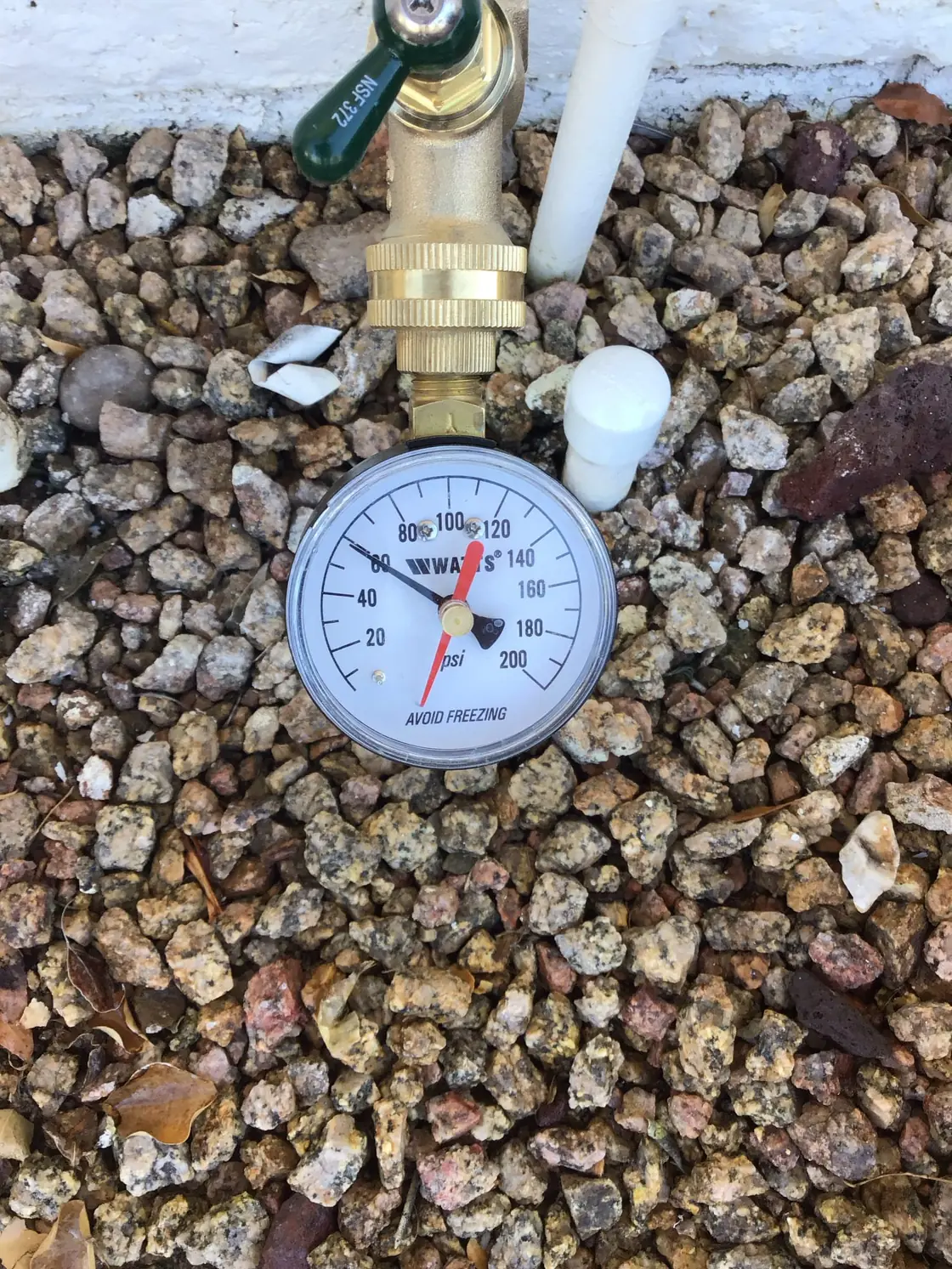
What causes backflow
Water in a home should move one way: from the city main, through the meter, and out of your fixtures and sprinklers. Backflow is that flow reversing, so water that has left the drinking-water supply travels back into it. Two physical forces can cause it.
- Back-siphonage happens when pressure in the supply main drops, such as during a main break or heavy hydrant use during a fire. The falling pressure acts like a straw, pulling water backward out of irrigation lines or a hose left in a bucket.
- Backpressure happens when something downstream pushes harder than the supply, such as a booster pump or a pressurized system, and forces water back toward the main.
Either force needs a cross-connection, which is any point where drinking water can touch something it should not. Irrigation is the classic case, because sprinkler heads sit in soil where fertilizer, weed killer and pet waste collect, and a pressure drop gives that dirty water a path into your pipes.
The assemblies that stop backflow
A backflow preventer keeps water moving only one way, and three testable types are common.
- A pressure vacuum breaker (PVB) has one check valve plus an air inlet that opens when supply pressure falls, letting in air to break the siphon. PVBs are common on home irrigation and guard against back-siphonage only.
- A reduced pressure principle assembly (RP) has two check valves with a relief valve between them. If pressure between the checks rises too close to supply pressure, the relief valve dumps water through a port on the bottom, so an RP handles both forces on higher-hazard connections.
- A double check valve assembly uses two check valves in a row with no relief valve. It handles both forces on lower-hazard connections, such as many fire sprinkler services.
By comparison, a hose bib vacuum breaker, the little cap on an outdoor faucet, is a simple device and not a testable assembly. Inside a testable assembly, these are the parts worth knowing by name:
- Check valve: a spring-loaded one-way valve that seals when its rubber check disc presses against the check seat.
- Relief valve: on an RP, a diaphragm-operated valve that opens to drain the zone between the checks.
- Air inlet poppet: on a PVB, the spring-loaded valve under the bonnet that lets air in.
- No. 1 and No. 2 shutoff valves: the inlet and outlet valves that isolate the assembly for testing.
- Test cocks: small valves where the tester’s gauge hoses attach.
When we connect gauge hoses to a failing irrigation assembly, the reading usually points to a check valve that cannot seal, often because sand or a flake of pipe scale is caught on the seat. Phoenix-area hard water leaves mineral scale on moving parts, discs harden, and springs lose tension. A worn assembly still delivers water normally, so only a gauge test shows whether it protects you.
What the City of Phoenix requires for backflow testing
City of Phoenix Planning & Development lays out the rules in its technical guideline, Backflow Tester Requirements, Customer Responsibilities. According to that guideline:
- Whoever controls an assembly must keep it in good working condition and have it tested at installation, after any repair or relocation, and at least annually after that, or more often when the city requires it.
- Testing and repairs must be done by a certified tester on the city’s list. Accepted certifiers are ASSE Series 5000, the Arizona State Environmental Technology Training (ASETT) Center, the American Backflow Prevention Association (ABPA), or another certifier approved by the Arizona Department of Environmental Quality.
- The customer must submit an original test report for each assembly, on the city’s form, by the due date on the work order.
- For assemblies required under Phoenix City Code Chapter 37, the tester sends the original report to Planning & Development within 10 days of each test.
- A copy stays on the premises, and the customer keeps test records for at least three years.
- Defective assemblies must be repaired or replaced, and no assembly may be removed or swapped without approval.
The guideline also makes testing downstream of a fire line backflow preventer the Phoenix Fire Department’s job. This is a summary, not legal advice, so for questions about your property, contact the city’s Backflow Prevention Program at 602-534-2140 or Backflow.Prevention@phoenix.gov. The program also publishes its tester list.
Peoria and other water providers
The City of Peoria regulates backflow, which its code calls cross-connection control, under its own chapter of the municipal code. Peoria residents should follow the notice and requirements from the City of Peoria, not Phoenix’s forms or deadlines. Elsewhere, backflow testing rules depend on who supplies your water, so read your notice or call your provider.
So not every home needs backflow testing. If your property has a testable assembly on record, often on an irrigation line, a fire sprinkler system or a commercial service, expect a notice when a test is due. For a small Peoria shop with an RP on its water service, the City of Peoria notice sets the deadline and paperwork. Business owners can also see our commercial plumbing services.
What happens during a backflow test
A routine test usually follows this sequence.
-
The tester confirms the assembly’s type and size for the report.
-
Closing the No. 2 shutoff valve turns off water to that line, usually the sprinklers, during the test.
-
Hoses from a differential pressure test kit, the tester’s gauge with its own bleed valves, go onto the test cocks, and the Phoenix guideline requires gauges calibrated within the prior 12 months.
-
The tester checks each part: the check valves must hold tight, an RP’s relief valve must open at the right point, and a PVB’s air inlet must open as pressure drops.
-
The assembly passes or fails, the valves are reopened, and the result goes on the report.
Repairing a failed assembly usually means cleaning the check seats and fitting new rubber parts and springs from the manufacturer’s repair kit and retesting, while a cracked or corroded body means replacement.
When to call a professional
Call a professional rather than reaching for a wrench when:
- You have a testing notice with a due date.
- The relief valve on an RP is dripping or discharging water.
- The assembly is leaking, cracked, or was hit by a mower.
- You are adding, moving or removing an irrigation system that has an assembly.
Safety warning: never plug or cap the relief opening on an RP to stop a drip, because that removes the protection, and never remove or bypass an assembly without your water provider’s approval. Never leave a hose submerged in a bucket, pool or chemical sprayer tank. If tap water suddenly turns cloudy or smells of chemicals, stop using it and call your water provider.
Before you book backflow testing, ask any tester to confirm they are on your city’s current list and which certification they hold. A yearly plumbing maintenance visit is a good time to check outdoor faucets and the assembly for leaks.
Frequently asked questions
How often does a backflow preventer need testing?
In Phoenix, the city’s guideline calls for a test at installation, after any repair or relocation, and at least annually after that. Elsewhere, follow your water provider’s notice.
Who can test a backflow preventer in Phoenix?
Only a certified tester on the City of Phoenix list, according to the city’s guideline. Check the tester’s name against the city’s published list before the appointment.
What happens if my backflow test fails?
It must be repaired or replaced and retested before the report goes in.
Does a home inspection check the backflow preventer?
Not as part of a standard inspection. The InterNACHI Home Inspection Standards of Practice say the inspector is not required to determine the effectiveness of back-flow prevention devices or to inspect lawn sprinkler systems. If you are buying a home with an irrigation assembly, ask the seller for the latest test report and ask your real estate agent or attorney how to add a test before closing.
Schedule backflow testing with Trident Plumbing & Drain
Backflow testing and certification is one of the services Trident Plumbing & Drain offers, so a notice on your counter has a clear next step. With the notice in hand, call the Peoria office at (623) 879-2020 or the North Phoenix office at (623) 257-3481, or schedule backflow testing online. When you book, ask the technician to confirm their place on your city’s tester list.