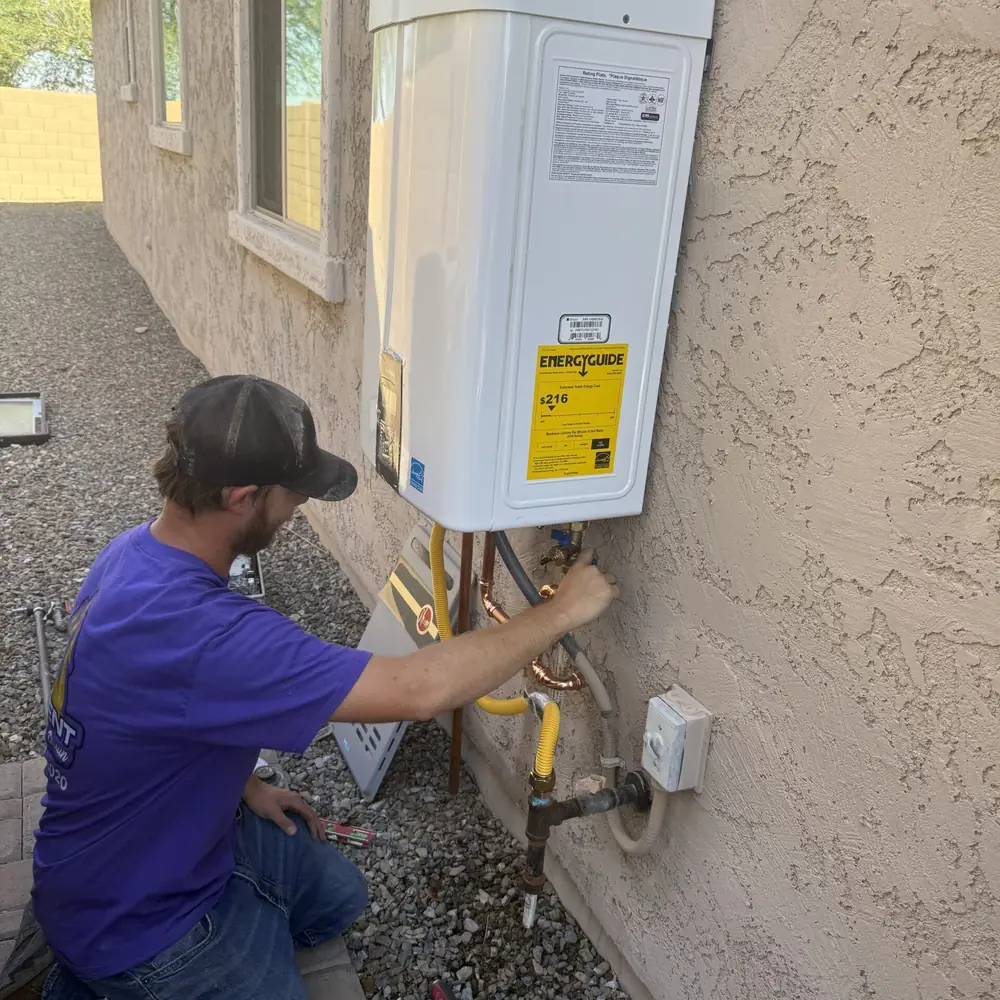
Quick Summary
If you’re planning a water heater replacement, choosing between a traditional storage tank water heater and a tankless water heater is one of the biggest decisions you’ll make. The best option depends on your household’s hot water demand, budget, available installation space, long-term energy savings, and Phoenix’s hard water conditions.
A traditional tank water heater typically costs less upfront and is easier to install, making it a practical choice for many homeowners. A tankless water heater, on the other hand, provides continuous hot water, uses energy more efficiently, takes up less space, and generally lasts much longer with proper maintenance.
This guide compares both systems, explains their advantages and drawbacks, outlines installation and maintenance considerations, and helps Arizona homeowners determine which water heater replacement offers the best long-term value for their home and family.
When It’s Time for a Water Heater Replacement, Which System Should You Choose?
Replacing a water heater is not something most homeowners think about until the hot water suddenly disappears.
Unfortunately, waiting until your existing unit fails often leaves little time to research your options. Many Arizona homeowners simply replace their old storage tank with another one because that’s what they’ve always had. Others hear about tankless systems and wonder whether upgrading is worth the investment.
The truth is that both systems offer distinct advantages, and the right choice depends on your home’s plumbing, your family’s hot water usage, your long-term plans, and your budget.
Arizona homeowners face unique considerations that buyers in other parts of the country may never think about. Hard water, long cooling seasons, energy costs, and growing families all influence which type of water heater provides the best value over time.
Understanding these differences before scheduling your water heater replacement allows you to make an informed decision rather than rushing into one during a plumbing emergency.
In this guide, we’ll explain how both systems work, compare their advantages and disadvantages, discuss installation costs, maintenance requirements, and long-term operating expenses, and help you determine which option makes the most sense for your Arizona home.
Why Water Heater Replacement Is an Important Investment
A water heater is one of the hardest-working appliances in your home.
Every shower, load of laundry, dishwasher cycle, and sink full of dishes depends on a reliable source of hot water. When the system begins to fail, it affects far more than comfort. Delaying replacement can lead to higher utility bills, water damage, emergency plumbing repairs, and unexpected inconvenience.
Many homeowners only replace their water heater after it completely stops working. While that approach is understandable, replacing the unit before failure often provides more flexibility. You have time to compare equipment, review installation options, and choose the solution that best fits your household instead of accepting whatever is immediately available.
Professional water heater installation also ensures the new system meets current plumbing codes, is properly sized for your home’s demand, and operates safely for years to come.
Signs You May Need a Water Heater Replacement
Water heaters rarely stop working without warning.
Most provide several signs that replacement may be approaching.
Common indicators include:
- Water is no longer consistently hot
- Hot water runs out much faster than it used to
- Rust-colored water from hot water faucets
- Strange popping or rumbling sounds
- Water leaking around the base of the tank
- Frequent repairs
- Rising energy bills
- Unit is more than 10 to 15 years old
If you notice any of these issues, scheduling a professional inspection can help determine whether water heater repair is still practical or whether replacement offers better long-term value.
Traditional Tank Water Heaters Explained
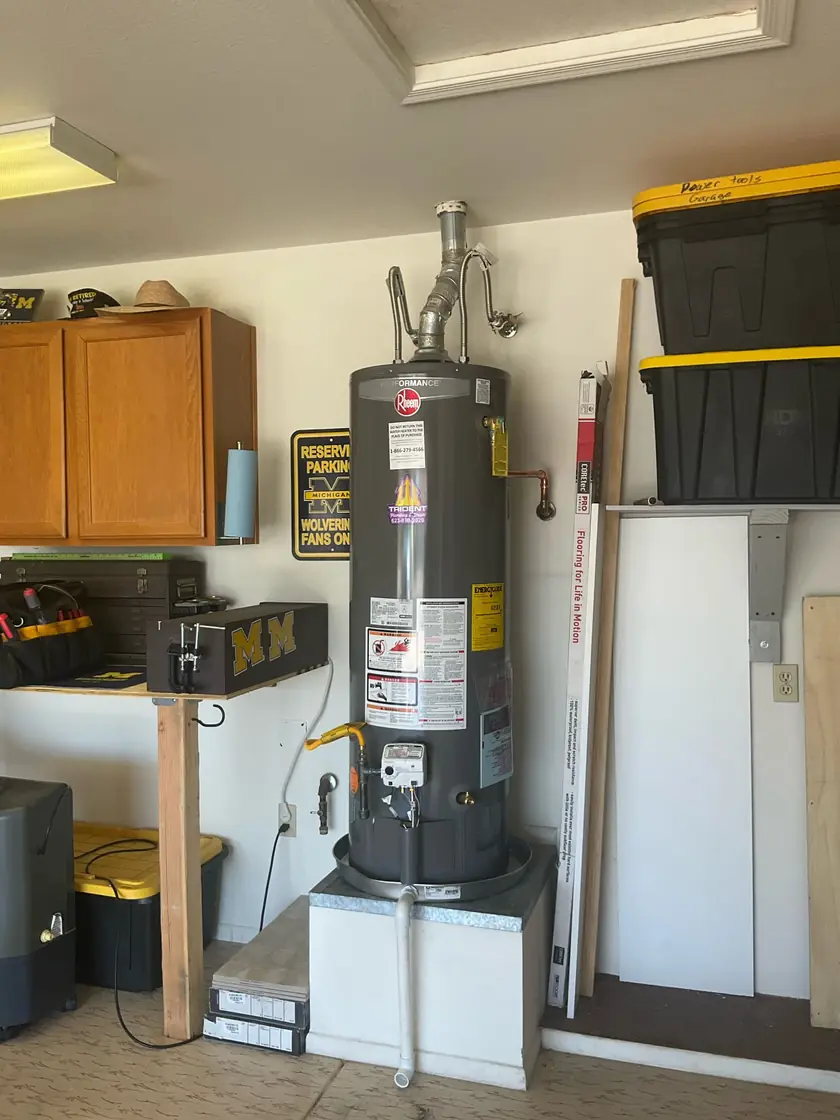
Traditional storage tank water heaters remain the most common system installed throughout Arizona.
They work by storing a reservoir of heated water inside an insulated tank. As hot water leaves the tank, cold water enters through the bottom and is heated to maintain the desired temperature.
Tank sizes typically range from:
- 30 gallons
- 40 gallons
- 50 gallons
- 75 gallons
- 80 gallons
The larger the household, the larger the tank generally required.
Storage tank water heaters have remained popular for decades because they are relatively affordable, straightforward to install, and familiar to most homeowners.
However, they also have limitations.
Once the stored hot water has been used, the household must wait while the tank reheats another supply.
For larger families, this can lead to cold showers during busy mornings.
Benefits of Traditional Tank Water Heaters
Traditional systems continue to offer several advantages.
Lower Initial Cost
The biggest advantage is affordability.
Most homeowners pay less upfront when replacing an existing tank water heater with another storage tank because little modification to the home’s plumbing or gas supply is typically required.
Simpler Installation
Replacing an older tank with a similar model is usually a straightforward process for an experienced plumber.
Installation often takes less time compared to converting to a tankless system.
Familiar Technology
Because storage tanks have been used for generations, homeowners generally understand how they operate.
Routine service is simple and replacement parts are widely available.
Reliable Performance
A properly sized tank provides dependable hot water for most average-sized households.
When maintained through regular water heater maintenance, these systems continue providing reliable service for many years.
Limitations of Traditional Tank Water Heaters
Although dependable, storage tanks have several disadvantages.
Limited Hot Water Supply
Every tank contains a fixed amount of heated water.
Once that supply has been used, everyone must wait for the water to heat again.
Large families often experience this issue during mornings when multiple showers, laundry, and dishwashing occur at the same time.
Higher Energy Usage
Traditional water heaters continuously maintain water temperature.
Even when nobody is using hot water, the burner or heating element periodically activates to replace heat lost through the tank walls.
This standby energy loss increases operating costs over time.
Larger Space Requirements
Storage tanks occupy considerably more floor space than modern tankless systems.
Many homeowners upgrading their garage or utility room appreciate the compact design of wall-mounted alternatives.
Shorter Expected Lifespan
Most conventional storage tank water heaters last approximately:
- 8 to 12 years
- Occasionally longer with excellent maintenance
Eventually corrosion inside the tank leads to leaks that cannot usually be repaired.
What Is a Tankless Water Heater?
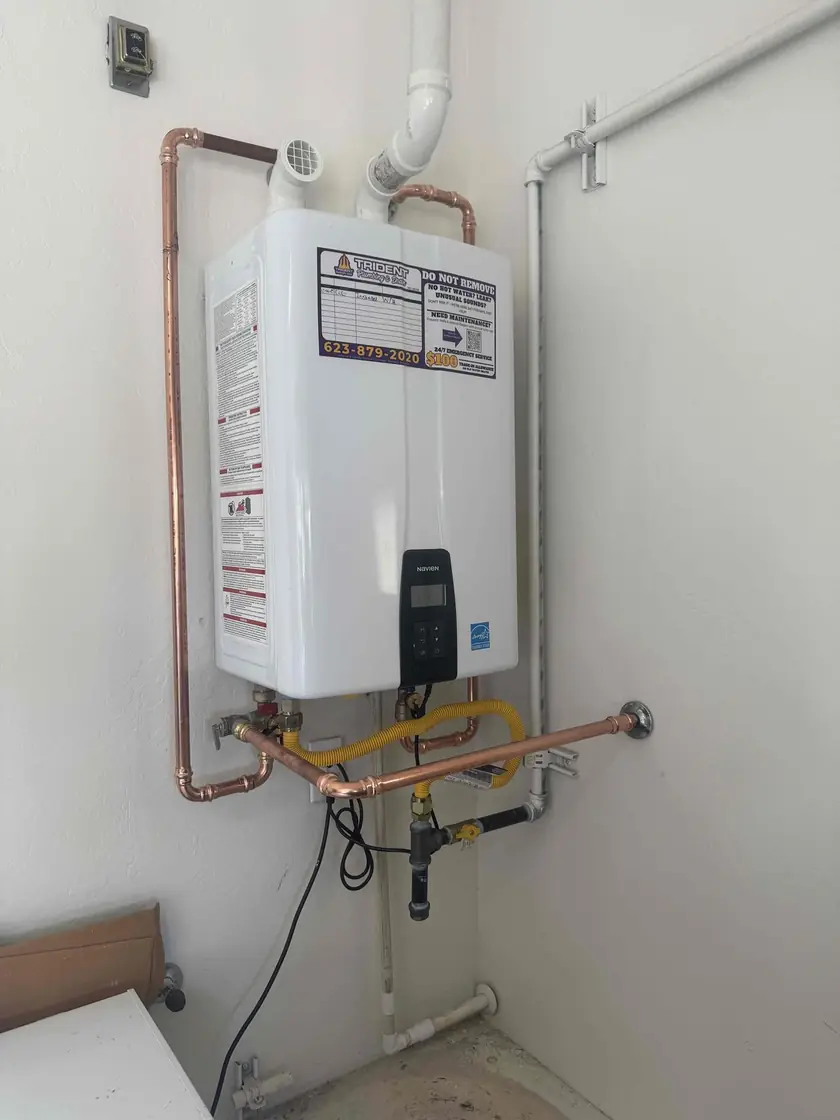
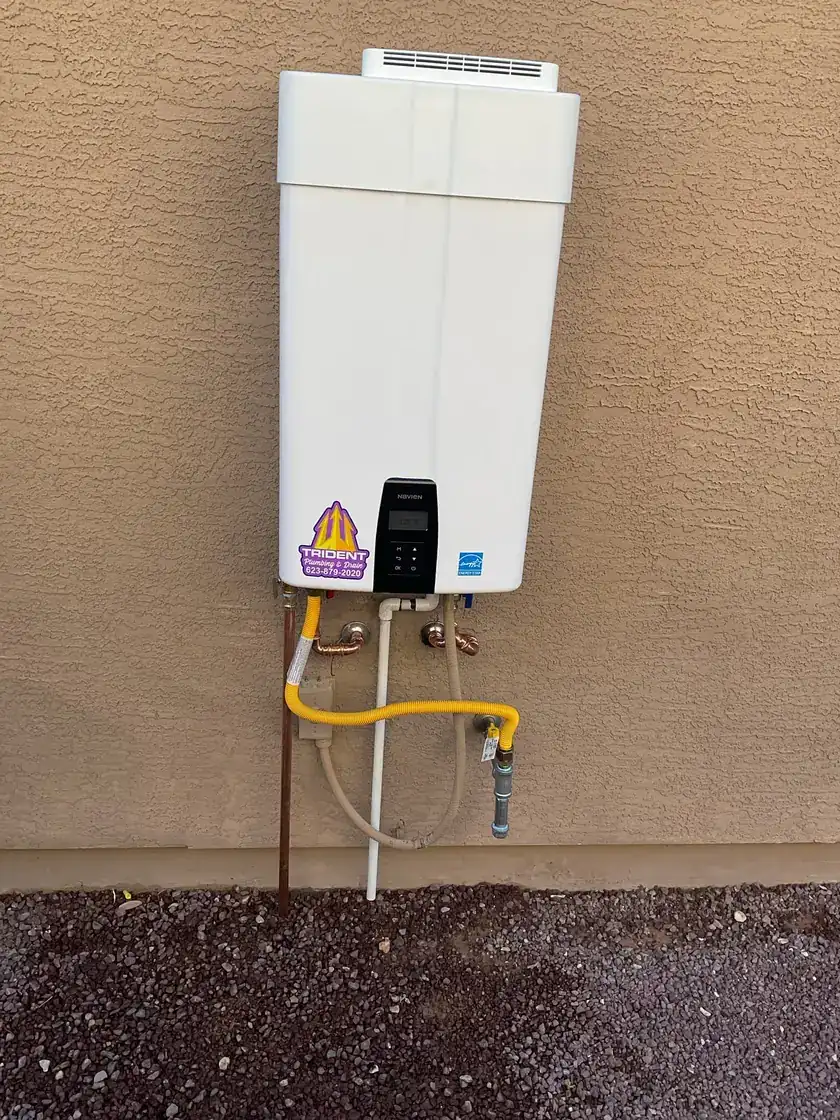
Unlike a traditional storage tank system, a tankless water heater heats water only when you need it.
When a hot water faucet is turned on, cold water flows through the unit where a powerful gas burner or electric heating element rapidly heats it before it reaches your fixtures. Because water is heated on demand, there is no storage tank and no waiting for a tank to refill after the hot water runs out.
For many Arizona homeowners, a tankless system offers greater convenience, improved energy efficiency, and a modern solution that can adapt to changing household needs.
However, the benefits come with a higher upfront installation cost, making it important to evaluate whether the investment aligns with your family’s long-term goals.
Benefits of a Tankless Water Heater
Tankless systems have become increasingly popular for good reason. They solve many of the limitations associated with traditional storage tanks.
Endless Hot Water
One of the biggest advantages is the ability to enjoy continuous hot water.
As long as the system is correctly sized for your household, multiple family members can shower one after another without worrying about the hot water running out.
This is especially beneficial for larger families or homes where several appliances may be using hot water simultaneously.
Greater Energy Efficiency
Because tankless systems only operate when hot water is needed, they eliminate the standby heat loss associated with storage tanks.
Rather than constantly reheating stored water throughout the day, they consume energy only during use.
For many homeowners, this translates into lower monthly utility bills over the life of the system.
Longer Equipment Life
A quality tankless water heater often lasts 20 years or more when professionally maintained.
Compared to the typical 8 to 12-year lifespan of many traditional tanks, this longer service life can make the higher initial investment worthwhile.
Compact Design
Tankless units mount directly to the wall, freeing valuable floor space in garages, utility rooms, or closets.
Homeowners planning garage storage improvements or home renovations often appreciate the extra room this creates.
Lower Risk of Tank Leaks
Since there is no large storage tank filled with water, homeowners avoid the risk of a catastrophic tank failure flooding the garage or utility room.
While plumbing components can still develop leaks over time, the chance of hundreds of gallons escaping from a ruptured storage tank is eliminated.
Potential Drawbacks of Tankless Water Heaters
While tankless technology offers numerous benefits, it is not automatically the right choice for every home.
Higher Installation Cost
Tankless systems typically require a greater upfront investment.
Depending on the home’s existing plumbing and gas supply, installation may involve:
- Upgrading the gas line
- Installing new venting
- Electrical modifications
- Water line adjustments
- Relocating plumbing connections
Although these improvements increase installation costs, they also ensure the new system operates safely and efficiently.
Flow Rate Limitations
While tankless systems provide endless hot water, every unit has a maximum flow rate.
If several showers, appliances, and fixtures operate simultaneously, the demand may exceed the unit’s capacity.
A professional plumber will calculate your household’s peak demand before recommending the proper system size.
Professional Installation Is Essential
Tankless systems require precise sizing, venting, gas pressure calculations, and plumbing connections.
Attempting shortcuts during installation can significantly reduce performance and shorten equipment life.
Working with experienced professionals for your tankless water heater installation helps ensure your investment performs as intended from day one.
Tank vs. Tankless Water Heater Comparison
Choosing between these systems often comes down to your family’s priorities.
Below is a side-by-side comparison.
|
Feature |
Traditional Tank Water Heater | Tankless Water Heater |
|
Initial Installation Cost |
Lower |
Higher |
|
Energy Efficiency |
Moderate |
High |
|
Hot Water Supply |
Limited by tank size | Continuous on demand |
|
Equipment Lifespan |
8 to 12 years | 20+ years |
|
Space Required |
Larger floor space |
Compact wall-mounted unit |
| Monthly Energy Costs | Generally higher |
Generally lower |
| Maintenance | Annual flushing recommended |
Annual flushing and descaling recommended |
| Best For | Budget-conscious homeowners |
Long-term savings and larger households |
How Arizona’s Hard Water Affects Your Water Heater
Arizona homeowners deal with one challenge that significantly impacts water heater performance: hard water.
The Phoenix area has naturally high mineral levels, particularly calcium and magnesium. As water is heated, these minerals settle inside the unit and gradually form scale buildup.
For traditional storage tanks, sediment collects at the bottom of the tank. Over time, this buildup reduces heating efficiency, increases energy consumption, and forces the system to work harder to maintain water temperature.
Tankless water heaters are not immune to hard water either. Mineral deposits can accumulate inside the heat exchanger, restricting water flow and reducing efficiency if the unit is not properly maintained.
Fortunately, annual maintenance helps minimize these issues and extends the lifespan of both types of systems.
Many Arizona homeowners also choose to install a whole-home water softener to reduce scale buildup throughout the plumbing system, helping protect water heaters, fixtures, and household appliances.
Which Water Heater Is Right for Your Home?
The right water heater replacement depends on how your household uses hot water, your long-term plans, and your budget.
Here are some general recommendations.
A Traditional Tank Water Heater May Be Best If:
- You’re replacing an older tank with minimal plumbing changes.
- You have a smaller household with moderate hot water usage.
- Your priority is a lower upfront installation cost.
- You plan to sell your home in the near future.
- You have sufficient space for a storage tank.
For many homeowners, a quality tank water heater remains a dependable and cost-effective solution.
A Tankless Water Heater May Be Best If:
- Your family frequently runs out of hot water.
- Multiple people shower at similar times each day.
- You want to reduce long-term energy costs.
- You plan to remain in your home for many years.
- Garage or utility room space is limited.
- You’re looking for a longer-lasting water heating solution.
Although the initial investment is typically higher, many homeowners find that the long-term benefits outweigh the added installation cost.
Understanding the Long-Term Cost of Ownership
When comparing water heaters, many homeowners focus only on the purchase price.
However, the total cost of ownership includes much more than installation.
Factors to consider include:
- Monthly utility costs
- Expected equipment lifespan
- Annual maintenance
- Repair frequency
- Future replacement costs
- Potential energy savings
A traditional tank water heater generally has a lower purchase price but may consume more energy over its lifetime.
A tankless system usually requires a larger initial investment but may offset some of that cost through improved efficiency and a longer service life.
Looking at the full picture rather than the initial price alone often leads to a better long-term decision.
Common Mistakes to Avoid During Water Heater Replacement
Replacing a water heater is a significant investment, and avoiding these common mistakes can help ensure you get the best value.
Choosing Based Only on Price
The least expensive option is not always the most economical over time.
Consider operating costs, maintenance requirements, and expected lifespan before making your decision.
Buying the Wrong Size
An undersized water heater may leave your family without enough hot water.
An oversized system can increase installation and operating costs unnecessarily.
Proper sizing is one of the most important parts of a successful installation.
Ignoring Water Quality
Arizona’s hard water affects every water heater.
Failing to flush or descale the system regularly can shorten equipment life and reduce efficiency.
Routine maintenance is one of the simplest ways to protect your investment.
Delaying Replacement Too Long
Many homeowners wait until their water heater completely fails.
Unfortunately, this often results in emergency service, water damage, and rushed purchasing decisions.
Replacing an aging unit before failure gives you time to compare options and choose the system that best fits your home.
Hiring an Inexperienced Installer
Water heaters involve gas connections, water lines, venting, electrical components, and local plumbing codes.
Professional installation helps ensure your new system operates safely, efficiently, and according to manufacturer specifications.
Frequently Asked Questions
How long does a traditional water heater last?
Most traditional storage tank water heaters last between 8 and 12 years, depending on water quality, maintenance, and usage.
How long does a tankless water heater last?
With proper maintenance, many tankless systems last 20 years or longer.
Are tankless water heaters more energy efficient?
Yes. Because they heat water only when needed, tankless systems generally use less energy than storage tank water heaters that continually reheat stored water.
Does Phoenix hard water affect tankless systems?
Yes.
Mineral buildup can occur inside the heat exchanger over time. Annual flushing and descaling help maintain efficiency and extend equipment life.
Is a tankless water heater worth the extra cost?
For homeowners planning to stay in their home for many years, a tankless system can provide excellent long-term value through lower energy usage, longer lifespan, and continuous hot water.
Can I replace my water heater before it fails?
Absolutely.
In fact, replacing an aging water heater before it fails often allows homeowners to compare options, avoid emergency service calls, and schedule installation at a convenient time.
Make an Informed Water Heater Replacement Decision

Whether you choose a traditional storage tank or a modern tankless system, the goal is the same: reliable hot water that meets your family’s needs while providing lasting value.
Every home is different. Household size, daily water usage, available space, budget, and Arizona’s hard water all influence which system is the better investment.
If you’re unsure which option is right for your home, speaking with an experienced plumbing professional can help you compare the advantages of each system and select equipment that will perform efficiently for years to come.
Trident Plumbing proudly provides professional water heater services throughout the greater Phoenix metro area, including expert water heater installation, tankless water heater installation, water heater repair, and water softener installation to help protect your plumbing system from Arizona’s hard water.
We also offer financing options and seasonal special offers to make upgrading your home’s hot water system more affordable. Request your free estimate today and let our experienced team help you choose the right water heater replacement for your home.